Everything about female hair loss: causes, diagnosis, treatment and how to recover hair health
Medical guide to hair loss in women

Female hair loss is one of the most frequent reasons for consultation in the field of hair health. It can be due to multiple factors, including androgenetic alopecia, even with normal hormonal tests. An early diagnosis and a personalised treatment make it possible to slow hair loss and to significantly improve hair density.
Female hair loss is much more frequent than people think
Losing hair is not only an aesthetic issue.
For many women, hair is part of their identity, of their femininity and of the image they have of themselves.
That is why, when hair density begins to decrease, worry, anxiety and even an important loss of self-esteem appear.
However, there is a very important message: most female forms of alopecia can be treated and many can be stabilised or improve significantly when they are diagnosed early.
The key consists of correctly identifying the cause.
What is female hair loss?
Female hair loss is not a single disease.
It is a term that encompasses different processes that cause a decrease in hair density.
Each type of alopecia has different causes, evolution and treatments.
Therefore, the diagnosis is the most important step.
Is it normal to lose hair?
Yes.
All women lose hair every day.
The usual thing is to lose approximately between 50 and 100 hairs per day, since each follicle follows a natural cycle of growth, rest and shedding.
The problem appears when:
- The loss clearly increases.
- The hair grows increasingly thin.
- The density decreases.
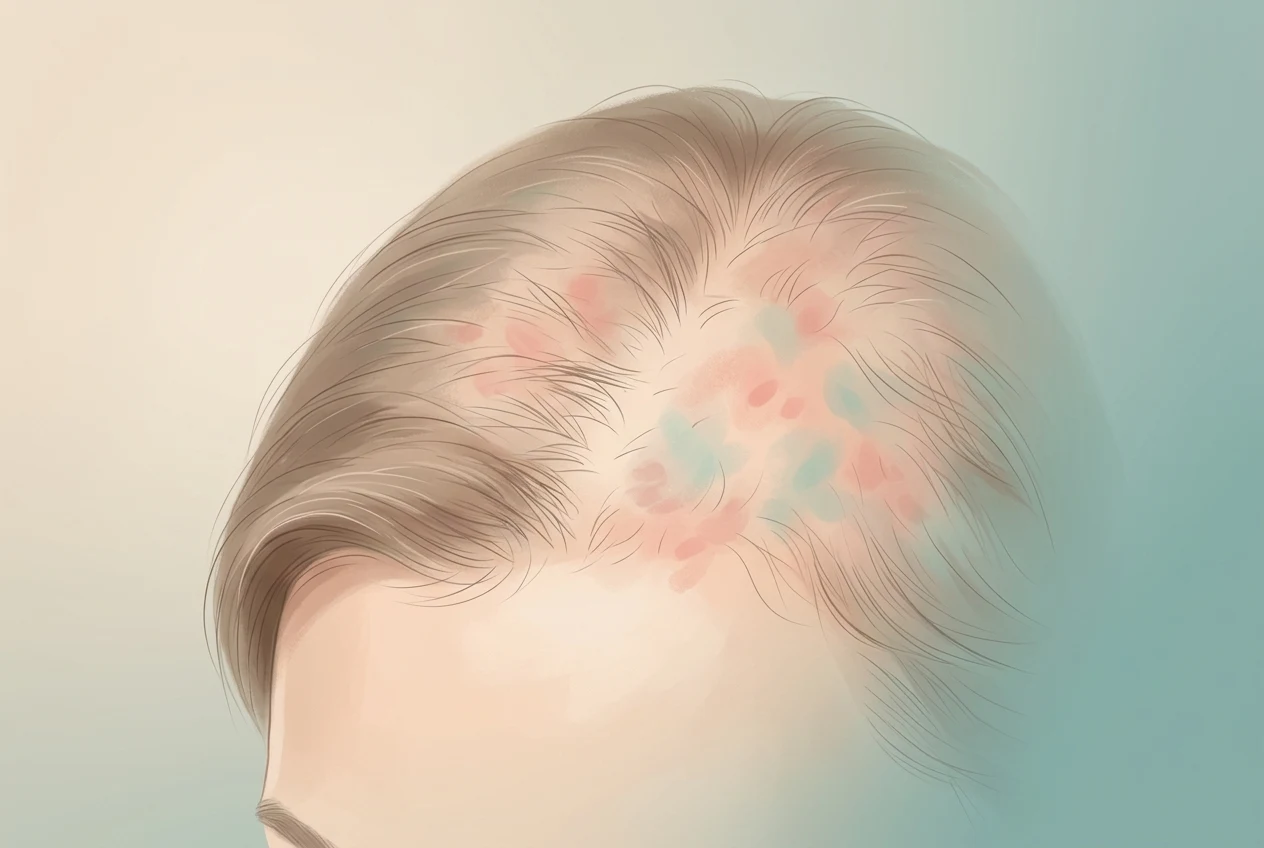
- The central parting widens.
- The scalp becomes visible.
What are the most frequent causes?
The main causes are:
- Female androgenetic alopecia.
- Telogen effluvium.
- Iron deficiency.
- Vitamin D deficiency.
- Thyroid alterations.
- Hormonal changes.
- Menopause.
- Pregnancy and postpartum.
- Autoimmune diseases.
- Scarring alopecias.
- Some medications.
- Significant physical or emotional stress.
In many patients several causes can coexist.
Female androgenetic alopecia
It is the most frequent form of alopecia in women.
It is characterised by:
- A progressive decrease in density.
- Thinning of the hair.
- A widening of the middle parting.
- Preservation, in most cases, of the frontal line.
Its origin combines:
- A genetic predisposition.
- A sensitivity of the follicle to androgens.
It is important to understand a fundamental concept: many women present androgenetic alopecia with completely normal hormonal levels. The problem is not always producing too many hormones, but that the hair follicle responds in an exaggerated way to normal concentrations.
Are hormones always altered?
No.
This is one of the most frequent doubts in the consultation.
Many patients arrive saying: "My gynaecologist has told me that the hormones are fine." And that may be completely true.
The test may be within the reference values and, even so, an androgenetic alopecia may exist. This occurs because:
- There is a greater genetic sensitivity of the follicle.
- Some patients present relatively high levels within normality.
- The response of the follicle also depends on local factors that are not always reflected in a test.
Therefore, the diagnosis must never be based only on the tests.
Telogen effluvium
It produces a diffuse loss of hair.
It usually appears between two and four months after a trigger such as:
- Surgery.
- Infections.
- Intense stress.
- Restrictive diets.
- Childbirth.
- Important diseases.
In most cases it is reversible when the cause is corrected.
Menopause and hair
The decrease in oestrogens favours changes in the hair follicle.
It is frequent to observe:
- Lower density.
- Thinner hair.
- Slower growth.
- Greater fragility.
Not all women develop alopecia during menopause, but the risk does increase.
Which tests may be necessary?
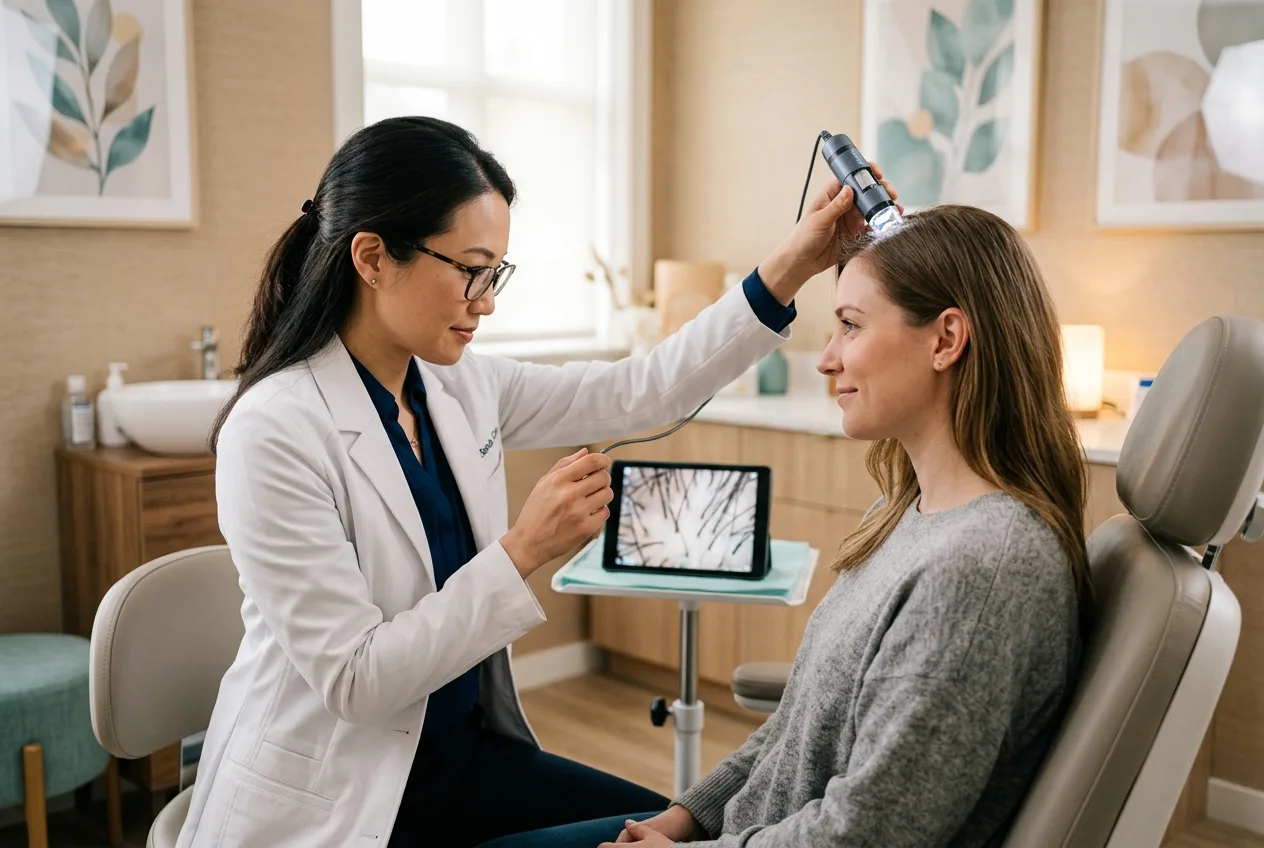
The study begins with a detailed clinical history.
Subsequently the following may be carried out:
- An examination of the scalp.
- Digital trichoscopy.
- A pull test.
- Clinical photographs for follow-up.
According to each patient, the following may be requested:
- A blood count.
- Ferritin.
- An iron profile.
- Vitamin D.
- Vitamin B12.
- Zinc.
- Thyroid function.
- A hormonal profile when it is indicated.
The tests are requested in an individualised way and not all patients need the same study.
How is it treated?
The treatment depends completely on the diagnosis.
There is no single treatment valid for all women.
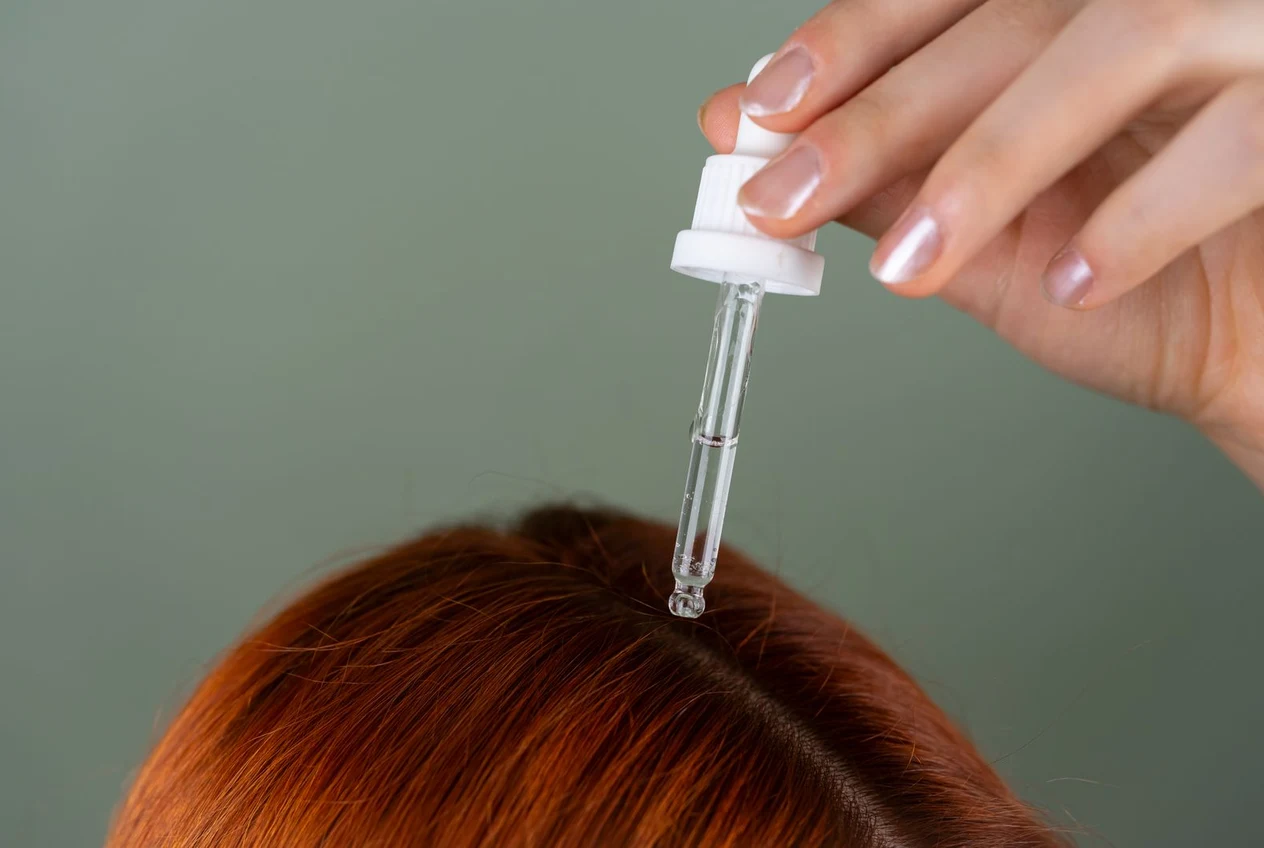
Topical treatments. According to each case the following may be used:
- Minoxidil.
- Compounded formulas.
- Anti-inflammatories when there is inflammation.
- Other individualised treatments.
Oral treatments. In selected patients the following may be considered:
- Low-dose oral minoxidil.
- Spironolactone.
- Finasteride in carefully selected postmenopausal women.
- Dutasteride in specific situations.
- Supplementation only when there is a demonstrated deficit.
All these treatments require prescription and medical follow-up.
What is the role of spironolactone?
Spironolactone is one of the most used treatments in women with androgenetic alopecia when there is an indication.
It reduces the effect of androgens on the hair follicle.
Not all women are candidates. Before starting it, it is necessary to assess:
- The medical history.
- Pregnancy or the desire for pregnancy.
- The usual medication.
- Possible contraindications.
In well-selected patients it can offer very satisfactory results.
Regenerative medicine
We currently have treatments aimed at stimulating the hair follicle.
Among them the following stand out:
- Platelet-rich plasma (PRP).
- Polynucleotides.
- Other regenerative therapies with growing evidence.
These procedures do not replace the medical treatment of the cause, but act as a complement in selected patients.
When should the treatment be started?
As soon as possible.
The longer a follicle remains subjected to the process of miniaturisation, the more difficult it is to recover its activity.
Early treatment offers the best results.
Can the hair recover?
It depends on the type of alopecia and the moment of the diagnosis.
In many women it is possible to:
- Slow the progression.
- Increase the density.
- Thicken the diameter of the hair.
- Clearly improve the overall appearance.
It is important to understand that the results require patience. Hair growth is slow and most treatments need several months to show their efficacy.
Frequent mistakes
- Thinking that "it is normal because my mother also has it".
- Waiting too long before consulting.
- Continuously changing products.
- Buying supplements without a diagnosis.
- Stopping the treatment when the improvement begins.
- Trusting miracle products advertised on the Internet.
Emotional impact
Female hair loss can deeply affect the quality of life.
Many women experience:
- A decrease in self-esteem.
- Anxiety.
- Avoidance of social gatherings.
- Insecurity.
- Sadness.
These feelings are completely understandable. Hair loss must not be minimised or considered a superficial problem.
Receiving a precise diagnosis and an individualised therapeutic plan usually represents a great relief for many patients.
Myths and facts
- Myth: Female hair loss only appears after menopause. Fact: It can begin even in young women.
- Myth: If the hormonal test is normal, the problem is not hormonal. Fact: Many women present androgenetic alopecia with completely normal tests.
- Myth: Shampoos make the hair grow. Fact: They can improve the scalp, but on their own they do not treat most forms of alopecia.
- Myth: Supplements always work. Fact: They are only useful when they correct a real deficit.
- Myth: If I wait a few months, it will grow back. Fact: Some forms of alopecia progress slowly and early treatment clearly improves the prognosis.
The essential points to remember
- Female hair loss is frequent and has multiple causes.
- A normal hormonal test does not exclude an androgenetic alopecia.
- The diagnosis must be based on the clinical history, the examination and, when necessary, complementary tests.
- There are effective medical treatments capable of slowing the progression and improving hair density.
- The sooner the treatment is started, the greater the chances of preserving the hair.
- Female hair loss deserves specialised medical attention, since it can deeply affect the quality of life.
Frequently asked questions
Does female hair loss have a treatment?
Yes. Today we have multiple effective therapeutic options.
Is it mandatory to do a test?
Not always. It will depend on the clinical history and the examination.
Can menopause favour hair loss?
Yes.
Does stress have an influence?
It can trigger a telogen effluvium or worsen a preexisting alopecia.
Does spironolactone work?
In correctly selected women it can be a very effective treatment.
Will I need treatment for my whole life?
It will depend on the type of alopecia. In androgenetic alopecia a maintenance treatment is usually necessary to preserve the results.
Do regenerative treatments replace medication?
No. They are complementary.
Can I recover all the density?
It will depend on the time of evolution and the state of the follicles. The sooner it is treated, the better the results usually obtained.
Will the hair grow back immediately?
No. Hair growth is slow and requires patience.
What is the most important step?
Obtaining a precise diagnosis before starting any treatment.
Need personalised guidance?
This guide is for information only and does not replace a medical consultation. For an assessment tailored to your case, you may request a consultation.
Request a consultation