Male androgenetic alopecia
Common baldness: causes and treatment

Male androgenetic alopecia is the most frequent cause of baldness in men. Learn about its causes, how it is diagnosed and the most effective medical and surgical treatments to slow its progression and improve hair density.
What is male androgenetic alopecia?
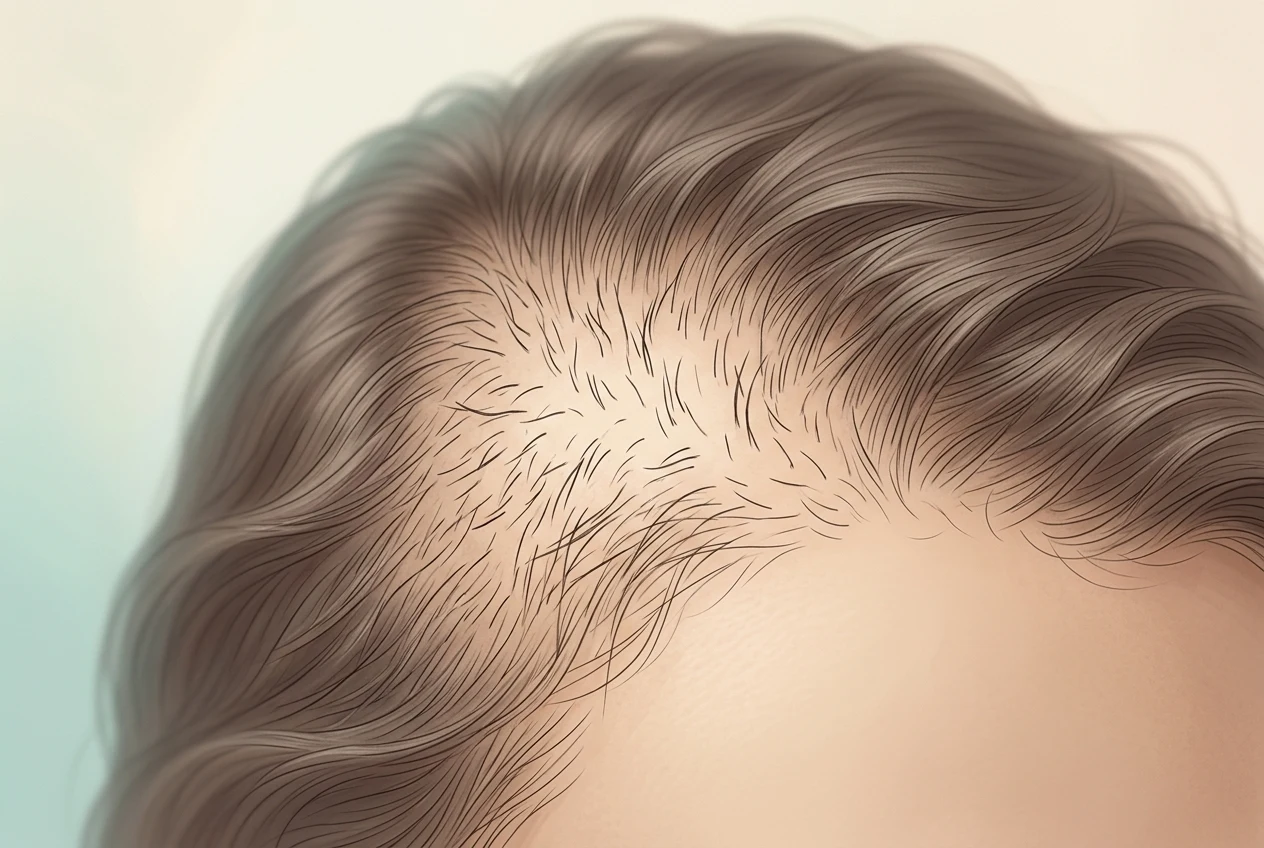
Male androgenetic alopecia is the most frequent cause of hair loss in men. It is a chronic and progressive process in which the hair follicles are sensitive to the action of androgenic hormones, especially dihydrotestosterone (DHT). As a consequence, the hair becomes increasingly fine, short and weak until some follicles stop producing visible hair.
It is important to know that androgenetic alopecia does not mean that there is an excess of testosterone. Most men with baldness have normal hormone levels. What exists is a genetic predisposition that makes certain follicles more sensitive to DHT.
It is a very frequent disease: it can begin from 18-20 years of age, approximately half of men present some degree of alopecia at 50 years and its frequency increases with age. The good news is that today we have effective treatments capable of slowing the progression and even recovering part of the lost hair when they are started early.
Why does it appear?
Androgenetic alopecia is produced by the combination of two factors: genetic predisposition and the action of dihydrotestosterone (DHT). DHT is formed from testosterone by means of the enzyme 5-alpha reductase.
In genetically predisposed follicles, this hormone causes a progressive miniaturisation: each new hair is born finer, its growth phase is shorter, the follicle decreases in size and finally stops producing a visible hair. This process occurs slowly over years.
Is it hereditary?
Yes. Androgenetic alopecia has an important genetic component. It can be inherited from both the maternal and the paternal line.
Having family members with baldness increases the risk, although it does not determine exactly when it will appear nor what its intensity will be.
How does it evolve?
The evolution is usually slow and progressive. It generally begins with the frontal recessions and the temporal region. It can subsequently affect the crown and the middle zone of the scalp.
Over the years both areas can join together, usually preserving the hair of the nape and the sides.
What are the symptoms?
Androgenetic alopecia does not usually produce pain or itching. Patients usually notice a progressive decrease in density, increasingly fine hairs, more marked recessions, a more visible crown, greater transparency of the scalp and difficulty combing as before.
At the start many people observe an increase in hair loss, although the main problem is not the loss, but the miniaturisation of the follicle.
How is it classified?
The most used classification is the Hamilton-Norwood scale, which describes the progression from the first recessions to the most advanced degrees of baldness.
This classification helps to assess the evolution, choose the most appropriate treatment and compare the results over time.
How is it diagnosed?
The diagnosis is usually made through the clinical history, the examination of the scalp and dermatoscopy (trichoscopy). Trichoscopy makes it possible to observe the miniaturisation of the follicles, the variability in the thickness of the hairs and the decrease in density.
In some patients blood tests may be requested to rule out other causes of hair loss when there are diagnostic doubts or signs of other diseases.
What treatments are available?
Currently there is no definitive cure, but there are very effective treatments to slow the progression and improve hair density. The best results are obtained when treatment is started early.
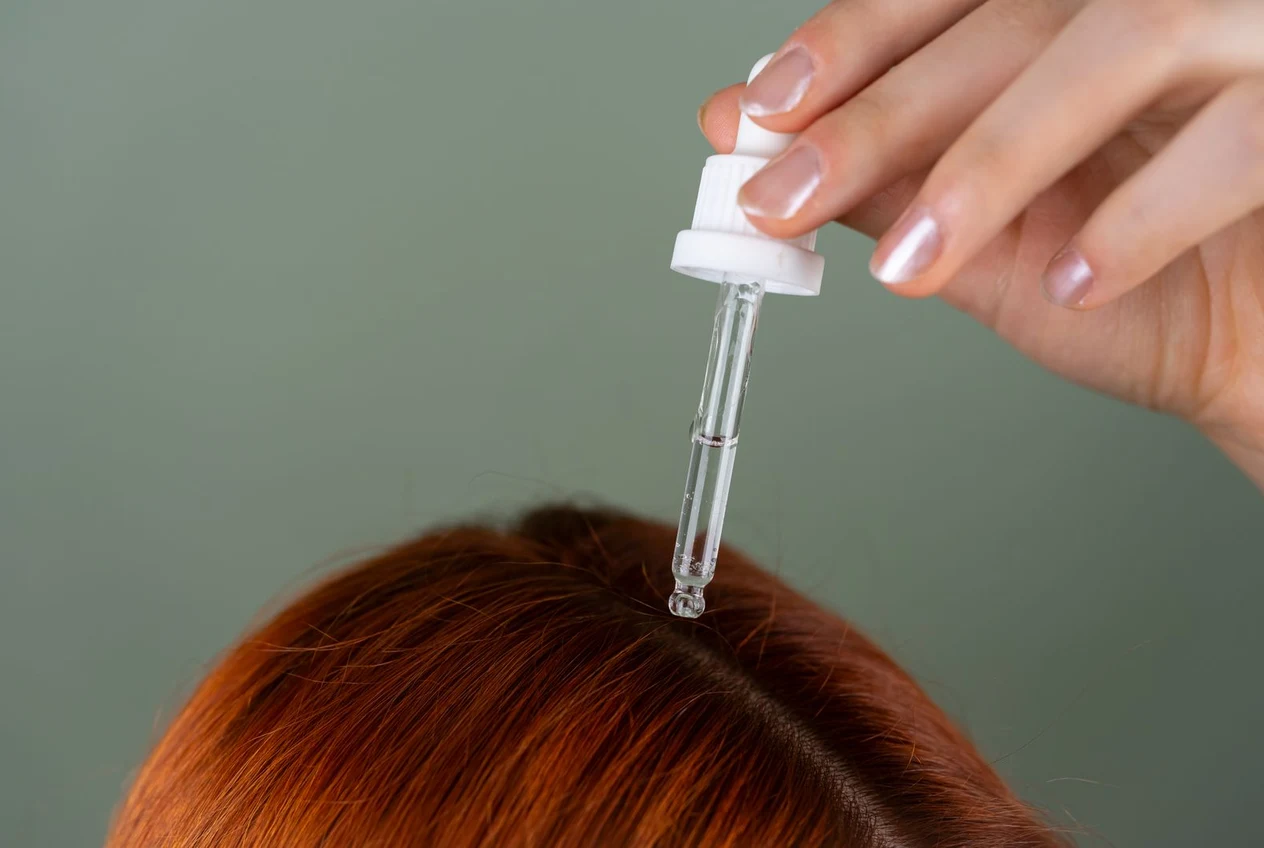
Minoxidil. It is one of the most used treatments. It can be administered topically or orally at low doses (under medical supervision). It helps to prolong the growth phase of the hair, increase the thickness of the hair and reduce miniaturisation. The results usually begin to be appreciated between 3 and 6 months, reaching their maximum effect around 12 months.
5-alpha reductase inhibitors. They decrease the production of DHT. The main ones are finasteride and dutasteride. They constitute one of the most effective treatments to slow the progression of alopecia. Like any medication, they can produce side effects in a small percentage of patients, so they must always be used under medical control.
Hair injections. In certain patients complementary treatments such as platelet-rich plasma (PRP), polynucleotides and other regenerative treatments selected according to each case can be used. Their objective is to improve the quality of the follicle and enhance the medical treatments, although they do not replace the base treatment.
Low-level laser (LLLT). Some photobiomodulation devices can contribute to improving hair density in selected patients as a complementary treatment.
Hair transplant. It is an excellent option when there is significant hair loss and the donor area preserves good density. It is important to understand that the transplant redistributes follicles, but does not stop the evolution of the alopecia. Therefore, it is usually recommended to maintain medical treatment to preserve the non-transplanted hair.
What can you do day to day?
To take care of hair health, maintain a balanced diet, avoid tobacco, control stress when possible, use a shampoo appropriate for your scalp, avoid hairstyles that exert excessive traction and be consistent with the treatment.
Consistency is one of the most important factors to obtain good results.
When should you consult the doctor?
It is advisable to consult when you observe a progressive decrease in hair density, increasingly marked recessions appear, you notice a more visible crown, the loss begins at an early age, there is a significant family history or the current treatment does not offer results.
An early assessment makes it possible to start treatment before the follicles miniaturise irreversibly.
Myths and facts
- Myth: Baldness means having too much testosterone. Fact: No. Most men with androgenetic alopecia have normal hormone levels.
- Myth: Wearing a cap causes baldness. Fact: There is no scientific evidence to demonstrate it.
- Myth: Washing the hair every day increases the loss. Fact: No. Washing removes hairs that had already finished their cycle.
- Myth: Shaving makes the hair grow back stronger. Fact: No. The thickness of the hair depends on the follicle, not the cut.
- Myth: Food supplements cure androgenetic alopecia. Fact: No. They are only useful when there is a demonstrated nutritional deficiency. They do not replace specific treatments.
The key points to remember
- Androgenetic alopecia is the most frequent cause of hair loss in men.
- It is caused by a genetic predisposition and the sensitivity of the follicles to DHT.
- It does not mean having elevated testosterone levels.
- Early diagnosis makes it possible to start treatments before the damage is irreversible.
- Minoxidil, finasteride, dutasteride and other complementary treatments can slow the progression and improve density.
- Consistency in the treatment is essential to maintain the results in the long term.
Frequently asked questions
Is there a cure?
Currently there is no definitive cure, but there are effective treatments that allow slowing the progression and improving hair density.
When should I start treatment?
As soon as possible. The best results are obtained when there are still viable follicles.
If I stop the treatment will I lose the recovered hair?
Yes. In most cases, when stopping the treatment, the alopecia continues its natural evolution and the benefit obtained is progressively lost.
Does minoxidil produce an initial shedding?
Yes. Some patients present a transient loss during the first weeks, known as shedding, which usually indicates the beginning of follicular renewal.
Can I combine several treatments?
Yes. In fact, the best results are usually achieved through individualised combined treatments.
Does stress produce androgenetic alopecia?
No, although it can trigger a telogen effluvium that makes an already existing androgenetic alopecia more evident.
Is the transplant definitive?
The transplanted follicles usually remain for many years, but the non-transplanted hair continues to age if it is not treated.
Does diet have an influence?
A healthy diet favours hair health, although it does not by itself avoid androgenetic alopecia.
Do vitamins make hair grow?
Only when there is a demonstrated deficiency. In people without deficits they have not demonstrated slowing androgenetic alopecia.
Does it have a good prognosis?
Yes. With an early diagnosis, appropriate treatment and periodic follow-up, it is possible to stabilise the disease and significantly improve hair density in many patients.
Need personalised guidance?
This guide is for information only and does not replace a medical consultation. For an assessment tailored to your case, you may request a consultation.
Request a consultationTopics