Lichen planopilaris
Inflammatory scarring alopecia: symptoms and treatment
Lichen planopilaris is an inflammatory scarring alopecia that can cause permanent hair loss. Discover its symptoms, how it is diagnosed and the treatments available to slow its progression.
What is lichen planopilaris?
Lichen planopilaris (LPP) is an inflammatory scarring alopecia in which the immune system attacks the hair follicles, causing chronic inflammation that ends up destroying them and replacing them with scar tissue. As it is a scarring alopecia, the hair lost in the areas where the follicle has been destroyed cannot grow back.
The objective of treatment is to stop the inflammation as soon as possible in order to preserve the follicles that still remain healthy. It can affect both women and men, although it is more frequent in middle-aged women. Frontal fibrosing alopecia is currently considered a clinical variant of lichen planopilaris.
Why does it appear?
The exact cause is still unknown. It is considered an autoimmune or immune-mediated disease, in which certain cells of the immune system abnormally attack the hair follicle. Several factors are probably involved: genetic predisposition, immunological alterations, hormonal factors and environmental factors not yet completely identified.
It is not related to an infection, it is not contagious and it is not caused by poor hygiene.
Who can develop it?
It can appear at any age, although it is more frequent between 30 and 60 years of age, in women and in people with a history of other autoimmune diseases.
What are the symptoms?
The symptoms can vary according to the degree of activity of the disease. The most frequent are: progressive hair loss, decreased density, patches of alopecia, intense itching, burning, stinging and pain when touching the scalp.
Many patients describe a "burning" sensation in the inflamed areas.
What are the lesions like?
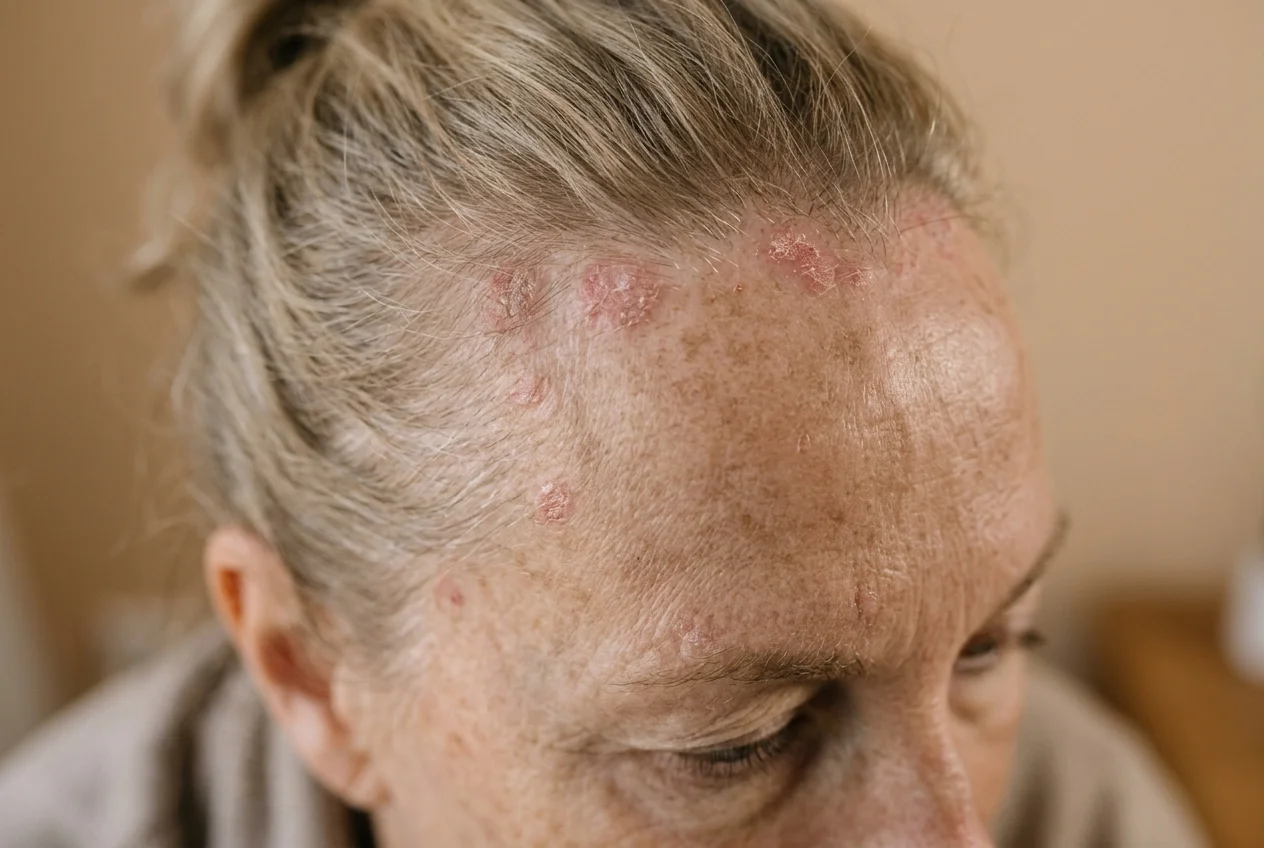
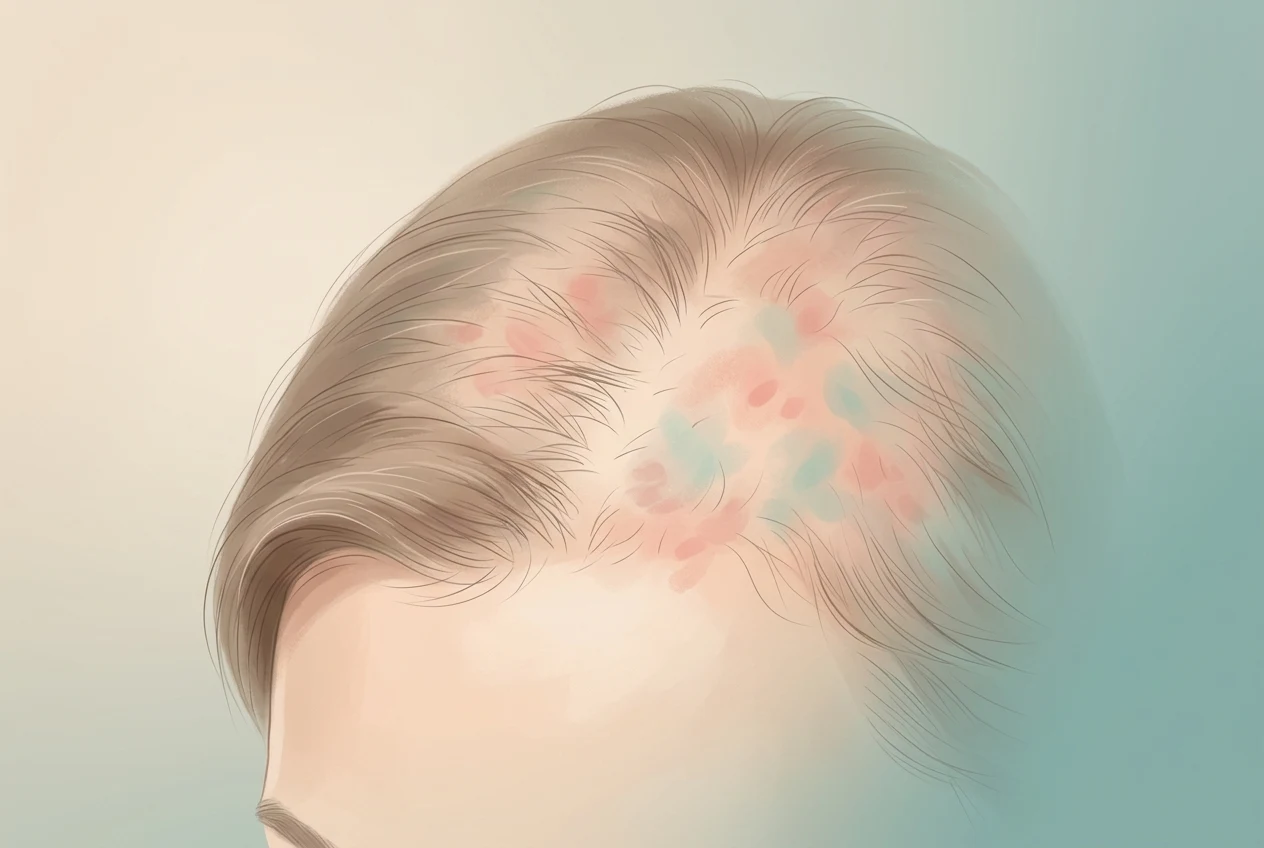
On examination it is possible to observe patches of hair loss, erythema around the follicles, perifollicular scaling, progressive decrease in density and absence of follicular openings in the scarred areas. When the disease progresses, smooth areas appear where the hair can no longer grow back.
Can it affect other areas?
Yes. Although the scalp is the main location, it can also affect the beard, the eyebrows and body hair. Some patients also present lichen planus lesions on the skin, the oral mucosa and the nails.
How is the diagnosis made?
The diagnosis is based on the clinical history, the medical examination of the scalp and trichoscopy. Trichoscopy usually shows perifollicular erythema, scaling around the follicle, isolated follicles, disappearance of the follicular openings and signs of scarring.
In most cases it is advisable to perform a scalp biopsy, as it allows the diagnosis to be confirmed and differentiated from other scarring alopecias.
What treatments exist?
Treatment aims to control the inflammation and prevent the destruction of new follicles.
Corticosteroids. High-potency topical corticosteroids, intralesional injections and oral corticosteroids can be used in specific situations.
Calcineurin inhibitors. Topical medications such as tacrolimus and pimecrolimus can be used as a complementary treatment in some patients.
Hydroxychloroquine. It is one of the most used systemic treatments. It can decrease the inflammatory activity and help to stabilize the disease. It requires periodic ophthalmological check-ups.
Antibiotics with an anti-inflammatory effect. Doxycycline can be useful in some patients because of its anti-inflammatory action.
Retinoids. In certain cases low doses of isotretinoin or acitretin can be used, especially when there is persistent inflammation.
Immunomodulators. In extensive or resistant forms methotrexate, mycophenolate mofetil, ciclosporin and other immunomodulators selected by the specialist can be used.
Minoxidil. Topical or oral minoxidil can be used as a complementary treatment to stimulate the follicles that still remain active. It does not control the inflammation.
Can a hair transplant be performed?
Yes, but only when the disease remains completely inactive for a prolonged period, usually of at least two years. If the disease continues to be active, there is a high risk of also losing the transplanted hair.
What can you do in your daily life?
Strictly follow the treatment, attend the scheduled check-ups, avoid traumatizing the scalp, protect the skin from the sun, avoid manipulating the crusts or the inflamed areas and take periodic photographs to monitor the evolution.
When should you consult quickly?
You should consult if progressive hair loss appears accompanied by itching or burning, if you observe patches without hair, if you notice persistent redness of the scalp, if the treatment stops controlling the symptoms or if the hair loss progresses rapidly.
The sooner treatment is started, the greater the chances of preserving the follicles.
Myths and facts
- Myth: It is an alopecia just like androgenetic alopecia. Fact: No. Lichen planopilaris is an inflammatory scarring alopecia.
- Myth: When the itching disappears, the disease is already cured. Fact: The inflammation can continue even if the symptoms are minimal. Specialized follow-up is necessary.
- Myth: The hair will grow back when the inflammation ends. Fact: Only the follicles that have not yet been destroyed can recover.
- Myth: It is a contagious disease. Fact: No. It cannot be transmitted between people.
- Myth: Special shampoos cure the disease. Fact: Shampoos can relieve some symptoms, but they do not replace medical treatment.
The essential points to remember
- Lichen planopilaris is a scarring alopecia of immune-mediated origin.
- It produces inflammation around the follicle, which can destroy it irreversibly.
- The most frequent symptoms are hair loss, itching, burning and redness of the scalp.
- Trichoscopy and biopsy make it possible to confirm the diagnosis.
- Treatment seeks to stop the inflammation and preserve the follicles that still remain active.
- Early diagnosis is fundamental to avoid permanent hair loss.
Frequently asked questions
Is there a cure?
Currently there is no definitive cure, but there are effective treatments to control the inflammation and stabilize the disease.
Can the lost hair be recovered?
Only the hair corresponding to follicles that are still viable. The scarred areas no longer produce hair.
Will I need a biopsy?
In many cases yes, as it helps to confirm the diagnosis and guide the treatment.
Is it a frequent disease?
No. It is much less frequent than androgenetic alopecia.
Can it reappear?
Yes. It can present periods of activity and of stability.
Does stress cause lichen planopilaris?
It is not considered the cause, although it can influence the evolution of some inflammatory diseases.
Can I dye my hair?
Generally yes, as long as the scalp does not present significant inflammation and the doctor authorizes it.
Will I need treatment for years?
Frequently yes. Prolonged follow-up is usual to keep the disease under control.
Can it be associated with other alopecias?
Yes. Some patients present androgenetic alopecia simultaneously.
Does it have a good prognosis?
It depends on how quickly it is diagnosed. Early treatment considerably increases the chances of preserving the hair.
Need personalised guidance?
This guide is for information only and does not replace a medical consultation. For an assessment tailored to your case, you may request a consultation.
Request a consultationTopics