Female androgenetic alopecia
Female pattern hair loss: causes and treatment

Female androgenetic alopecia is the most frequent cause of progressive hair loss in women. Discover how it is diagnosed, what factors favour it and what the most effective medical treatments are to preserve and recover hair density.
What is female androgenetic alopecia?
Female androgenetic alopecia, also known as female pattern hair loss, is the most frequent cause of progressive hair loss in women. It is a chronic disease in which the hair follicles progressively miniaturise. As a consequence, the hair loses thickness, volume and density.
Unlike male alopecia, the frontal hairline is usually preserved, while the loss of density appears mainly in the upper and central part of the scalp. It is important to know that most women with androgenetic alopecia present normal hormone levels: the problem is not usually an excess of male hormones, but a greater genetic sensitivity of the hair follicles.
The disease can appear at any age, although it is more frequent after puberty, from 30-40 years of age, during the menopause and after the menopause. There are currently effective treatments that allow slowing the evolution of the disease and improving hair density in a large number of patients.
Why does it appear?
Female androgenetic alopecia is the consequence of the combination of several factors.
Genetic predisposition. There is an important hereditary component. It can be inherited from both the maternal and the paternal line.
Hormonal influence. Androgens participate in the process, although most women have normal hormone levels. In some patients hormonal alterations can exist, especially when persistent acne, excess body hair (hirsutism), irregular periods, polycystic ovary syndrome (PCOS) or infertility also appear. In these cases a hormonal study may be necessary.
Follicle ageing. Over the years the hair follicle loses its capacity to produce thick and long hairs.
How does it evolve?
The evolution is usually slow and progressive. The hair becomes finer, shorter, less pigmented and less abundant. Completely bald areas generally do not appear.
The loss of density mainly affects the central parting, the upper part of the head and the middle frontal region. The lateral areas and the nape usually remain relatively preserved.
What are the symptoms?
Patients usually notice a progressive decrease in volume, a widening of the hair parting, greater visibility of the scalp, an increasingly thin ponytail and difficulty combing as before.
Androgenetic alopecia normally does not produce pain, does not produce scars and does not usually produce significant inflammation. In some women it can coexist with an increase in daily hair loss.
How is it classified?
The most used classification is the Ludwig scale, which describes three main grades according to the loss of density in the upper zone of the scalp.
The Sinclair classification can also be used to assess earlier stages.
How is it diagnosed?
The diagnosis is based on the clinical history, the examination of the scalp and dermatoscopy (trichoscopy). Trichoscopy makes it possible to observe follicular miniaturisation, the variability of the hair diameter and the decrease in density.
In certain patients tests may be requested to rule out other associated causes of hair loss, such as iron deficiency, thyroid alterations, vitamin D deficiency, vitamin B12 deficiency, zinc deficiency or hormonal alterations when there are clinical data suggesting them.
What treatments are available?
The treatment must be individualised according to the age, the degree of alopecia, the medical history and the pregnancy wish of each patient.
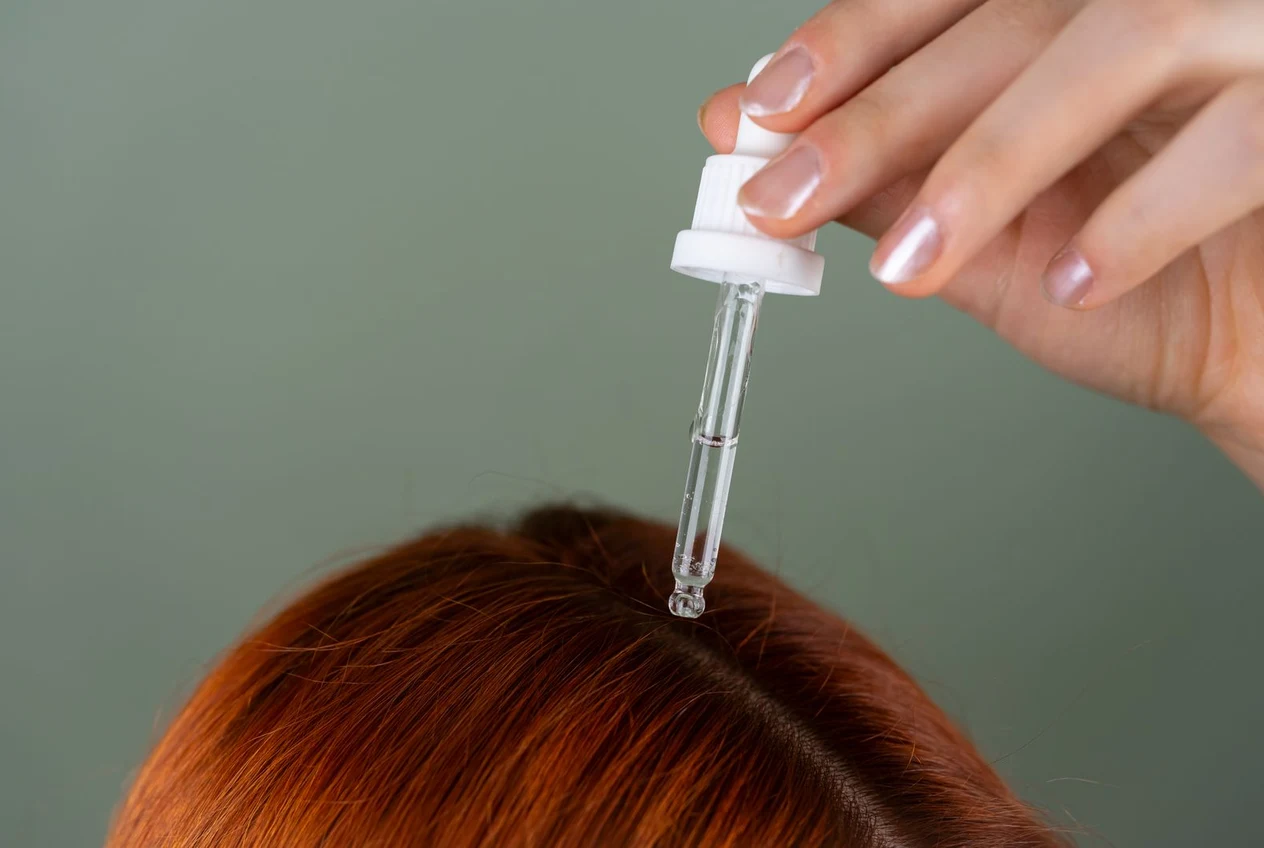
Minoxidil. It is one of the first-line treatments. Topical minoxidil or low-dose oral minoxidil, under medical supervision, can be used. It favours hair growth, the increase in thickness and the prolongation of the growth phase. The results usually begin to be observed between 3 and 6 months, with maximum improvement around the first year.
Antiandrogenic treatments. In selected women medications that decrease the effect of androgens on the follicle can be used. These include spironolactone, finasteride (in selected women, especially after the menopause), dutasteride (selected cases) and cyproterone acetate in specific situations. These treatments always require medical assessment and are contraindicated during pregnancy.
Platelet-rich plasma (PRP). It can be used as a complementary treatment to stimulate follicular activity and improve the quality of the hair.
Polynucleotides and regenerative therapies. In certain patients they can be used as a complement to the medical treatment, seeking to improve the biological environment of the follicle.
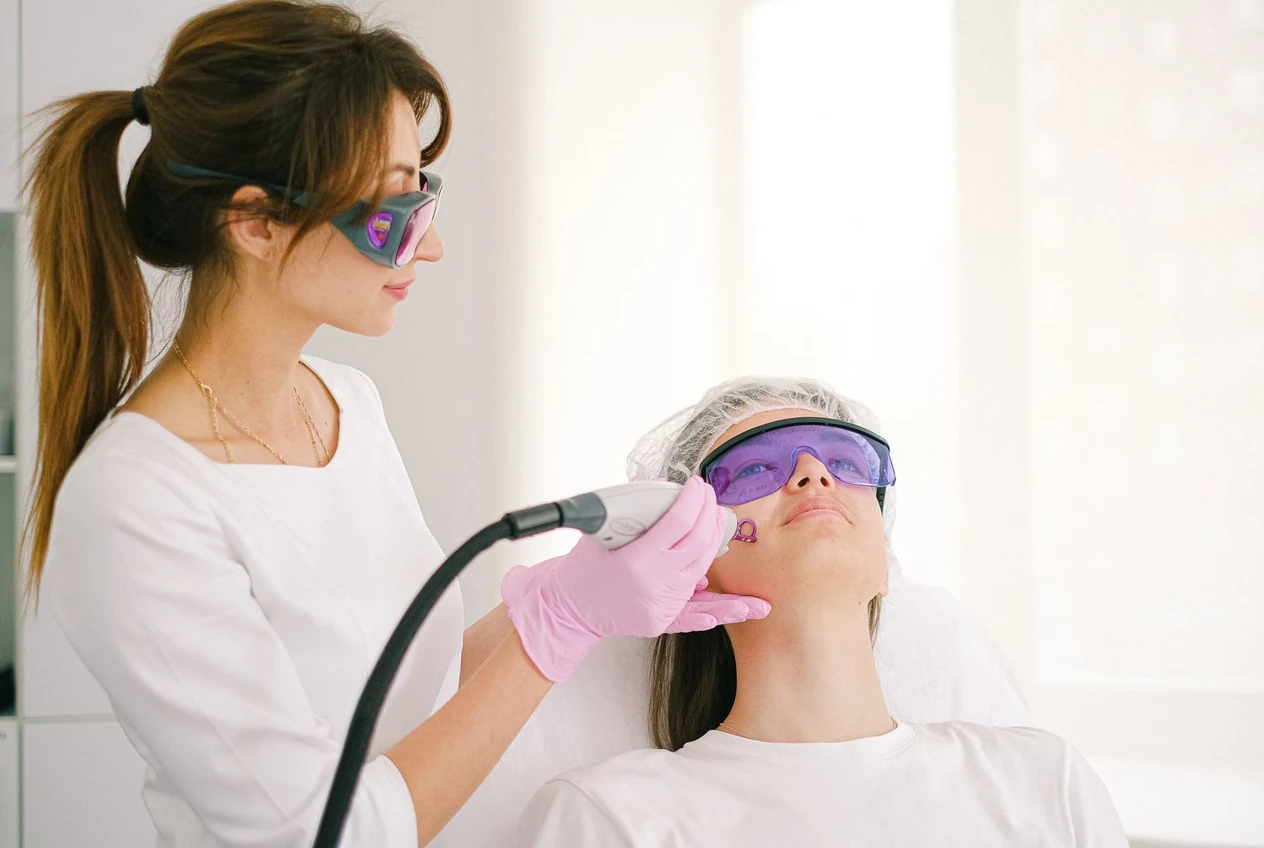
Low-level laser (LLLT). Photobiomodulation can improve hair density in some patients as a complementary treatment.
Hair transplant. It can be an excellent option in carefully selected women who present an adequate donor area and stabilised alopecia. Not all patients are candidates for the transplant, so the assessment must be carried out by a specialist in trichology.
What can you do day to day?
To favour hair health, maintain a balanced diet, avoid very restrictive diets, correct nutritional deficiencies when they exist, control stress as far as possible, use products appropriate for your scalp, avoid hairstyles with a lot of traction and be consistent with the treatment.
Pregnancy and alopecia?
During pregnancy some treatments are contraindicated.
If you are pregnant, seeking pregnancy or breastfeeding, always inform your doctor before starting any treatment for alopecia.
When should you consult the doctor?
You should consult if you notice a progressive decrease in density, if the central parting widens, if the ponytail loses thickness, if the loss lasts more than three months, if there is a family history or if menstrual alterations, intense acne or an increase in body hair also appear.
An early diagnosis makes it possible to preserve a greater number of active follicles and obtain better results.
Myths and facts
- Myth: Female alopecia means having too many male hormones. Fact: No. Most women have normal hormone levels.
- Myth: Washing the hair frequently causes alopecia. Fact: No. Washing does not damage the hair follicles.
- Myth: Dyes produce androgenetic alopecia. Fact: No. They can damage the hair shaft if used inappropriately, but are not the cause of this disease.
- Myth: Vitamins make hair grow. Fact: They only help when there is a demonstrated nutritional deficiency.
- Myth: If I start treatment I will have to use it my whole life. Fact: Androgenetic alopecia is a chronic disease. If the treatment is stopped, the hair usually evolves again according to the natural course of the disease.
The key points to remember
- Female androgenetic alopecia is the most frequent cause of progressive hair loss in women.
- Most patients present normal hormone levels; the problem is usually a genetic predisposition.
- The most characteristic sign is the progressive widening of the central parting and the loss of volume.
- Early diagnosis through examination and trichoscopy improves the treatment possibilities.
- Minoxidil, antiandrogenic treatments, PRP and other complementary therapies can stabilise the disease and improve hair density.
- Consistency and medical follow-up are fundamental to maintain the results.
Frequently asked questions
Is there a cure?
Currently there is no definitive cure, but there are effective treatments to slow the progression and improve hair density.
Is it hereditary?
Yes. Genetics play a very important role.
Can I recover all the lost hair?
It depends on the time of evolution. The follicles that still remain active respond much better to treatment.
Does minoxidil produce an initial shedding?
Yes. Some patients present a transient increase in loss during the first weeks (shedding), which is usually part of the beginning of the treatment.
Can I combine several treatments?
Yes. The combination of different therapies usually offers better results than a single treatment.
Does stress produce this alopecia?
Not directly, although it can trigger a telogen effluvium that makes an already existing androgenetic alopecia more evident.
Do I need hormonal tests?
Only when there are clinical data suggesting a hormonal alteration.
Can I dye my hair?
Yes, as long as the scalp is healthy and appropriate products are used.
Is a hair transplant an option?
Yes, but only in selected patients after a specialised assessment.
Does it have a good prognosis?
Yes. With an early diagnosis, personalised treatment and adequate follow-up, many women manage to stabilise the disease and significantly improve their hair density.
Need personalised guidance?
This guide is for information only and does not replace a medical consultation. For an assessment tailored to your case, you may request a consultation.
Request a consultationTopics