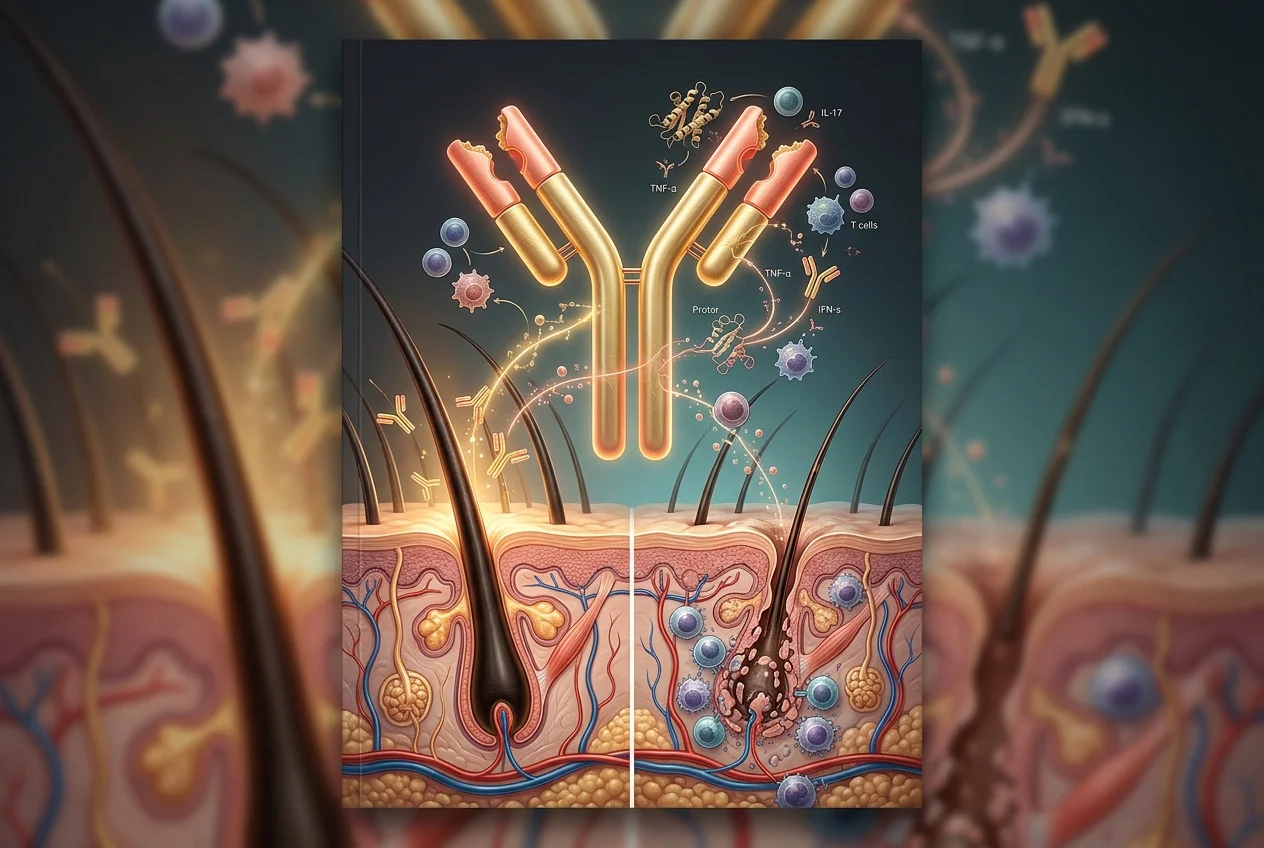
Telogen effluvium
Diffuse hair loss: causes and treatment

Telogen effluvium is one of the most frequent causes of diffuse hair loss. Learn why it appears, how it is diagnosed, how long it takes for the hair to recover and what treatments can help to accelerate its recovery.
What is telogen effluvium?
Telogen effluvium is a diffuse and abundant loss of hair that appears when a high number of hair follicles prematurely enter the resting phase (telogen phase) of the hair cycle. It is one of the most frequent causes of consultation for hair loss in both women and men.
Unlike other alopecias, the follicle is not destroyed nor miniaturised, so the hair usually grows back once the triggering cause disappears. Although the loss can be very striking and generate great concern, the prognosis is usually excellent in most patients.
How does the hair normally grow?
Each hair follicle goes through three phases. Anagen phase (growth): it lasts between 2 and 7 years, and approximately 85-90% of the hair is in this phase. Catagen phase (transition): it is a very short phase that lasts a few weeks. Telogen phase (rest): it lasts approximately 2 or 3 months; at the end, the hair falls out and a new one begins to grow.
In telogen effluvium, a large number of hairs simultaneously pass into the telogen phase, causing an abundant loss a few months later.
Why does it appear?
Telogen effluvium is usually triggered 2-3 months after an event that alters the normal cycle of the hair follicle.
Significant physical stress: surgery, hospitalisation, accidents, traumas. Diseases: high fever, significant infections, COVID-19, systemic diseases. Hormonal changes: childbirth (postpartum effluvium), discontinuation of contraceptives, thyroid alterations, menopause. Nutritional deficiencies: iron, ferritin, vitamin D, vitamin B12 or zinc deficiency, very restrictive diets and rapid weight loss. Medications: some treatments can favour a telogen effluvium. Emotional stress: it can act as a trigger in predisposed people.
What are the symptoms?
Patients usually notice an abundant loss of hair, hairs on the pillow, a lot of hair when showering, a greater amount of hair in the brush and a decrease in volume. The loss usually affects the whole scalp uniformly.
Hairless patches, scars or the progressive recessions typical of androgenetic alopecia do not appear.
Does it produce baldness?
Usually not. Although the loss can be very intense and the loss of volume very striking, the follicles remain alive and the hair usually recovers progressively.
Only very prolonged effluviums or those associated with other diseases can produce a significant decrease in density.
What difference exists with androgenetic alopecia?
Telogen effluvium produces a lot of loss, diffuse loss and hairs of normal thickness. Androgenetic alopecia mainly produces progressive miniaturisation, increasingly fine hairs and a slow decrease in density.
Both diseases can coexist, especially in women. In these cases the effluvium makes a previously existing androgenetic alopecia more evident.
How is it diagnosed?
The diagnosis is based on a detailed clinical history, the physical examination and trichoscopy (hair dermatoscopy). The doctor will try to identify a possible event that occurred approximately three months before the start of the loss.
In many patients tests are requested to rule out correctable causes. The most frequent include a complete blood count, ferritin, iron, TSH, vitamin D, vitamin B12, zinc and other studies according to each case.
What treatments are available?
The treatment mainly consists of identifying and correcting the triggering cause.
Correct the cause. It may include treating a disease, correcting nutritional deficiencies, improving the diet, reviewing certain medications and treating hormonal alterations.
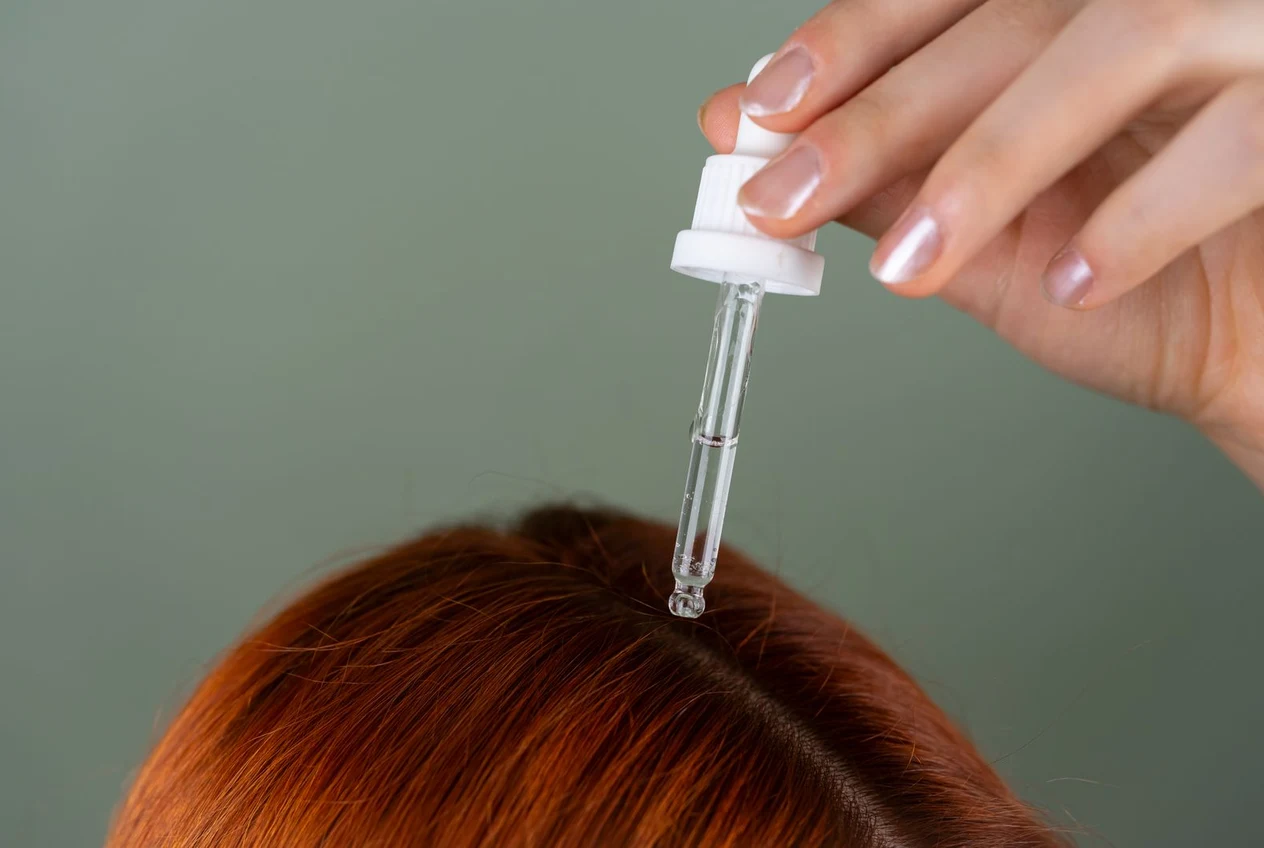
Minoxidil. In some patients topical or low-dose oral minoxidil can be used. Its objective is to accelerate the recovery of the hair cycle, especially when the loss is intense or there is an associated androgenetic alopecia.
Supplementation. It is only indicated when there is a deficiency demonstrated by tests. Administering supplements unnecessarily does not accelerate recovery.
Follow-up. The evolution is usually monitored through periodic reviews and clinical photographs to assess the recovery of density.
How long does it take to recover?
It is one of the most frequent questions. Generally the loss lasts between 2 and 4 months; regrowth then begins. The recovery of volume may require between 6 and 12 months.
In people with very long hair the visual improvement may take a little longer.
What can you do day to day?
Maintain a balanced diet, avoid very restrictive diets, do not stop treatments without consulting, continue washing your hair normally, avoid obsessing over counting the hairs that fall out and be patient.
The hair needs time to complete its growth cycle again.
When should you consult the doctor?
You should consult if the loss persists for more than six months, if you observe hairless areas, if intense itching or inflammation appears, if the loss of density continues to worsen, if there is a history of androgenetic alopecia or if the loss begins without an evident cause.
Myths and facts
- Myth: If I lose a lot of hair I will end up bald. Fact: No. In telogen effluvium the follicles remain alive and the hair usually recovers.
- Myth: Washing the hair makes it fall out more. Fact: No. Washing only removes hairs that had already completed their cycle.
- Myth: Vitamins cure all effluviums. Fact: They are only useful when there is a demonstrated nutritional deficiency.
- Myth: Stress always produces hair loss. Fact: It can act as a trigger, but not all people develop an effluvium after a period of stress.
- Myth: If I cut my hair it will grow sooner. Fact: The cut does not modify the activity of the hair follicle.
The key points to remember
- Telogen effluvium is a diffuse and abundant loss of hair caused by a temporary alteration of the hair cycle.
- It usually appears two or three months after a disease, a surgery, a childbirth, significant stress or a nutritional deficiency.
- The follicles remain alive, so the hair usually grows back.
- Treatment consists of identifying and correcting the triggering cause and, in some cases, associating treatments such as minoxidil.
- Recovery usually requires between 6 and 12 months.
- If the loss persists or there are diagnostic doubts, an assessment by a doctor specialised in trichology is recommended.
Frequently asked questions
Is it reversible?
Yes. In most cases the recovery is complete.
How long does the loss last?
Usually between two and four months.
When does it start to grow again?
Generally a few months after the loss stops.
Can I dye my hair?
Yes, as long as the scalp is healthy.
Can COVID produce an effluvium?
Yes. It is one of the most frequent causes described in recent years.
Do I need tests?
In many patients yes, especially when there is no evident cause.
Can pregnancy produce it?
Yes. Postpartum telogen effluvium is very frequent.
Can I do sport?
Yes. There is no contraindication.
Is minoxidil always necessary?
No. It depends on each patient and on the existence or not of an associated alopecia.
Does it have a good prognosis?
Yes. The vast majority of patients progressively recover their hair density once the triggering cause is corrected.
Need personalised guidance?
This guide is for information only and does not replace a medical consultation. For an assessment tailored to your case, you may request a consultation.
Request a consultationTopics