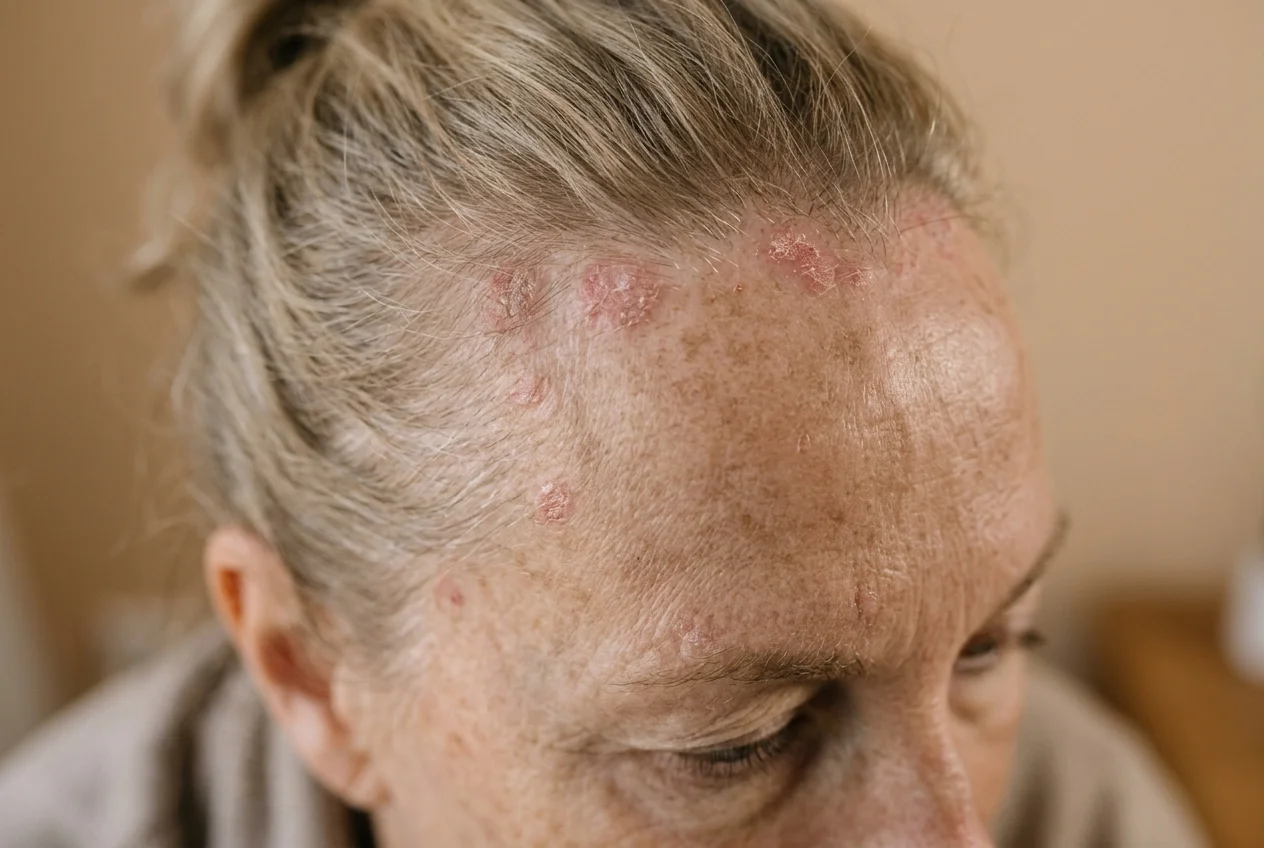
Vitamin D and skin health
Functions, deficit and supplements

Vitamin D intervenes in the function of the skin and the immune system. Its supplementation is only indicated when there is a confirmed deficit or a specific clinical situation, and never replaces medical skin treatments or photoprotection.
What role does vitamin D play in the skin?
Vitamin D is a vitamin with a hormonal function that participates in numerous processes of the organism, among them bone metabolism, the immune system and the functioning of the skin.
The skin cells have receptors for vitamin D, which explains its importance in the regulation of cellular growth, the barrier function of the skin and certain immunological mechanisms.
However, vitamin D is not a solution for all skin diseases nor should it be taken without a medical indication.
How does the organism obtain vitamin D?
Most of vitamin D is produced in the skin after exposure to ultraviolet B (UVB) radiation.
It can also be obtained, in smaller quantity, through some foods and supplements when they are indicated.
The main dietary sources are:
- Oily fish.
- Salmon.
- Sardines.
- Mackerel.
- Tuna.
- Egg yolk.
- Liver.
- Some fortified foods.
What functions does it have in the skin?
Vitamin D participates in:
- The renewal of the epidermis.
- The differentiation of the keratinocytes.
- The barrier function of the skin.
- The regulation of the immune system.
- The production of certain antimicrobial peptides.
These functions help to maintain healthy skin.
Can it influence some skin diseases?
Various studies have investigated the relation between vitamin D and diseases such as:
- Psoriasis.
- Atopic dermatitis.
- Vitiligo.
- Alopecias.
- Acne.
Although there are described associations, the scientific evidence does not yet demonstrate that supplementation systematically benefits all patients. Each case must be assessed individually.
What happens when there is a deficit?
A vitamin D deficit can be associated with:
- Alterations of bone metabolism.
- Muscular weakness.
- Greater risk of fractures.
- Alterations of the immune system.
In some patients with certain skin diseases low levels are observed, although this does not necessarily mean that the deficiency is the cause of the disease.
Is it advisable to take supplements?
Only when there is a medical indication.
Supplementation is usually considered in people with:
- A deficit confirmed by analysis.
- A greater risk of deficiency.
- Specific clinical situations.
Taking vitamin D without control can provoke adverse effects.
Is it better to sunbathe to increase vitamin D?
Sun exposure favours the synthesis of vitamin D, but it is not recommended to expose oneself to the sun for a prolonged time or without protection with the objective of increasing its levels.
Ultraviolet radiation accelerates skin ageing and increases the risk of skin cancer.
When there is a deficit, it is usually safer to correct it through diet or supplements prescribed by a professional.
Which people have the greatest risk of presenting a deficit?
Among them are:
- Older people.
- People with little sun exposure.
- Patients with intestinal diseases that hinder absorption.
- People with obesity.
- People with diets poor in vitamin D.
Can it influence hair health?
Some research has observed an association between low levels of vitamin D and certain forms of hair loss.
Nevertheless, the relation is complex and it has not yet been demonstrated that supplementing vitamin D improves alopecia in all patients.
How is a deficit diagnosed?
The diagnosis is made by means of a blood test that determines the concentration of 25-hydroxyvitamin D (25-OH vitamin D).
The interpretation of the results must be carried out by a health professional, taking into account the clinical situation of each patient.
Can it be obtained only through diet?
It is difficult to cover all the needs exclusively through diet.
Therefore, when there is a confirmed deficiency, the doctor can indicate supplements adapted to each patient.
Does vitamin D replace medical skin treatment?
No.
When there is a skin disease, the correction of a vitamin D deficit can be part of the global treatment, but it does not replace the specific treatments indicated by the doctor specialised in skin health.
Myths and facts
- Myth: The more vitamin D I take, the better my skin will be. Fact: It should only be supplemented when there is a medical indication.
- Myth: Sunbathing for hours is the best way to obtain vitamin D. Fact: Excessive sun exposure increases the risk of skin ageing and skin cancer.
- Myth: Vitamin D cures psoriasis. Fact: It can have a role in certain treatments, but it does not cure the disease on its own.
- Myth: All hair loss is due to a lack of vitamin D. Fact: There are multiple causes of alopecia and vitamin D deficit is only one of the possible ones.
- Myth: Supplements are always harmless. Fact: The excess of vitamin D can produce harmful effects and should be avoided.
The essential points to remember
- Vitamin D participates in numerous functions related to the health of the skin and the immune system.
- A deficit may require treatment, but it must be confirmed by analysis.
- Supplementation should not be carried out indiscriminately.
- It is not recommended to expose oneself to the sun without protection to increase vitamin D levels.
- A healthy diet and individualised treatment are the safest way to correct a deficiency.
- Vitamin D complements, but does not replace, medical skin treatments.
Frequently asked questions
Should I have a test before taking vitamin D?
Yes. In most cases it is advisable to confirm the existence of a deficit before starting supplements.
Can I obtain enough vitamin D only through diet?
In many people it is difficult, although a balanced diet contributes to maintaining adequate levels.
Does vitamin D improve atopic dermatitis?
Only in some patients with a confirmed deficit can it be part of the global approach.
Is it advisable to expose oneself to the sun without protection?
No. Photoprotection remains an essential measure to prevent skin cancer and photoageing.
Does vitamin D improve hair?
Not generally. It can only be useful when there is a deficiency related to the hair problem.
How long should I take supplements?
It will depend on the degree of deficit and on the medical indication.
Can it be harmful to take too much vitamin D?
Yes. The excess can produce hypercalcaemia and other complications.
Does vitamin D prevent skin cancer?
No. The prevention of skin cancer is based mainly on photoprotection and on avoiding sunburns.
Which test measures vitamin D?
The determination of 25-OH vitamin D in the blood.
Who should indicate the treatment?
Always a health professional after assessing the clinical situation and the analytical results.
Need personalised guidance?
This guide is for information only and does not replace a medical consultation. For an assessment tailored to your case, you may request a consultation.
Request a consultationTopics