
Stress-related hair loss: scalp TGF-β/BMP pathways and the emerging role of topical nutraceutical-peptide combinations
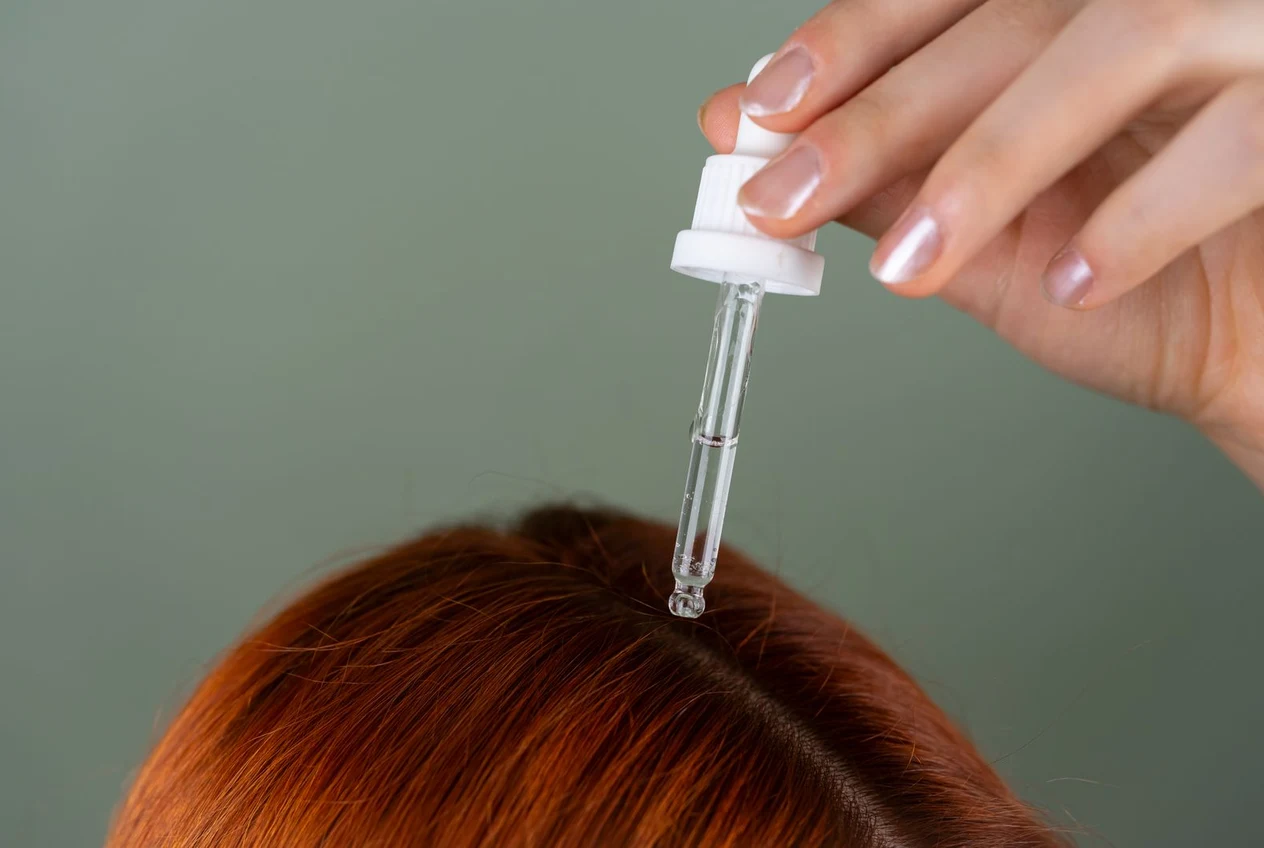
Hair shedding linked to stress is often a telogen effluvium, but stress can also unmask or worsen other alopecias. A recent study of EGCG, biotin, and Pal-GHK suggests modulation of scalp TGF-β/BMP signaling, with stronger mechanistic than practice-changing clinical implications so far [1].
Introduction
Stress-related hair loss is often described as increased diffuse shedding, commonly consistent with telogen effluvium. In clinical practice, however, stress rarely acts alone. It may trigger a transient shedding episode, worsen underlying androgenetic alopecia, coexist with alopecia areata, or arise in the setting of systemic illness, weight change, medications, or nutritional deficiency. For that reason, labeling hair loss as simply “from stress” can oversimplify a heterogeneous problem.
The most relevant update in this area is a 2026 study evaluating a topical composition containing EGCG, biotin, and the peptide Pal-GHK, proposing that it modulates TGF-β and BMP pathways in the scalp microenvironment for stress-induced alopecia [1]. This study strengthens a biologically plausible framework: stress may alter local signals that influence follicular cycling. Even so, its main value is mechanistic and translational; by itself it does not establish broad, durable, generalizable clinical efficacy [1].
How stress may affect the hair cycle
The hair follicle cycles through growth (anagen), regression (catagen), and rest (telogen). Acute or sustained stress may shift follicles out of anagen and promote earlier entry into catagen or telogen; visible shedding often appears weeks to months after the trigger. This time lag explains why many people misidentify when the process truly began.
What makes the European Journal of Pharmacology paper notable is that it does not merely test a product. It places stress-related shedding within a model of local scalp signaling [1]. Broadly, TGF-β is associated with inhibitory and catagen-promoting signals, whereas the BMP family helps regulate the follicular stem-cell niche and the balance between quiescence and activation [1]. If that balance is disturbed, it is biologically plausible that hair enters rest earlier or resumes growth more slowly.
What the EGCG-biotin-Pal-GHK study actually adds
The 2026 study proposes that the EGCG-biotin-Pal-GHK combination modulates TGF-β/BMP pathways in the scalp in the setting of stress-induced alopecia [1]. That matters because it moves discussion away from vague claims about “strengthening hair” and toward defined biological targets. EGCG is often investigated for antioxidant and cell-signaling properties; Pal-GHK belongs to a peptide class of cosmetic and tissue-repair interest; biotin is common in hair products, although its usefulness outside true deficiency is a separate question from the rationale for a topical formulation [1].
The careful interpretation is that this is a proof of concept. A plausible mechanism does not automatically equal robust clinical benefit. To change practice, clinicians would need consistent data on effect size, duration of benefit, relevant comparators, reproducibility, and safety across broader populations [1]. In other words, the combination is interesting as a therapeutic hypothesis, but it should not yet be presented as a universal solution for every case of hair loss attributed to stress.
Stress does not always mean telogen effluvium
A crucial part of evaluation is determining whether the pattern is truly diffuse and reversible or whether there is an underlying alopecia. In women, for example, female pattern hair loss may become more apparent after a period of stress or after an effluvium. In that setting, management is not just watchful waiting. A 24-month retrospective comparative study evaluated spironolactone versus bicalutamide for female pattern hair loss, underscoring that when the diagnosis is androgenetic, antiandrogen therapy may become relevant and must be weighed in terms of effectiveness and safety [2].
Likewise, patchy loss, recurrent flares, or inflammatory signs should raise concern for alopecia areata. In 2026, data were published on switching JAK inhibitors in alopecia areata [6], and another paper highlighted how genetic context shapes interpretation of AIRE and Notch4 in that disease [8]. These studies are not about “stress hair loss” per se, but they reinforce an important clinical point: not all hair loss triggered or worsened by stress shares the same mechanism or should be managed in the same way [6][8].
The value and limits of trichoscopy
Trichoscopy can help distinguish telogen effluvium, androgenetic alopecia, and other shaft or scalp disorders. But interpretation requires familiarity with normal variation. A 2026 study described normal trichoscopic features and hair shaft parameters in healthy women of African descent [4]. That information is valuable because it reduces the risk of mistaking normal findings for pathology and improves diagnostic accuracy in populations that have historically been underrepresented in reference datasets [4].
In a patient who attributes shedding to stress, trichoscopy does not prove stress as the cause. It can, however, provide clues to miniaturization, diameter variability, signs of alopecia areata, or absence of features suggesting scarring disease. Used well, it sharpens the differential diagnosis and reduces misdirected treatment.
Weight loss, medications, and mistaken attribution to stress
Another common clinical problem is attributing hair loss entirely to emotional stress when rapid weight loss, metabolic change, or new medications were also present. In 2026, a response was published regarding alopecia after glucagon-like peptide-1 receptor agonist therapy [7]. The practical takeaway is that such associations require careful interpretation: observed shedding may relate to the context of weight reduction, nutritional shifts, or physiologic stress, rather than a simple direct drug effect [7].
This fits the classic telogen effluvium model, in which multiple systemic stressors converge on the hair cycle. History taking should therefore review fever, surgery, postpartum state, dieting, iron status or thyroid context when appropriate, recent medication changes, and intercurrent illness in addition to psychological stress.
Where topicals fit, and when they are not enough
If the presentation is compatible with acute telogen effluvium and there are no signs of cicatricial alopecia or another primary process, topical treatments with a biologic rationale may be considered as supportive measures, provided the uncertainty of the evidence is explained. In that context, the EGCG-biotin-Pal-GHK combination is interesting because of its potential effect on the follicular microenvironment and TGF-β/BMP signaling [1].
But when the picture is female pattern hair loss, alopecia areata, or another defined entity, the therapeutic center of gravity changes. Antiandrogens may be needed [2], immunomodulatory treatment such as JAK inhibitors may be appropriate in selected alopecia areata cases [6], or management may simply require removing the systemic trigger and correcting contributing factors. The temptation to treat every case with “anti-stress” serums can delay accurate diagnosis.
Procedures, camouflage, and psychosocial support
For people with persistent hair loss or major emotional impact, hair restoration procedures are sometimes considered. A 2026 comprehensive review emphasized that such procedures require careful patient selection, expectation management, and rigorous attention to perioperative safety [3]. In pure telogen effluvium, they are usually not first-line; in stable, well-characterized alopecias, they may have a role [3].
It is also important not to underestimate camouflage measures. A narrative review of cranial prosthesis policies for medical hair loss showed major variability in access and coverage [5]. For some patients, wigs, hairpieces, or cosmetic fibers improve quality of life sooner than any biologic intervention [5].
What patients and clinicians can conclude now
The most accurate current reading is this: stress can genuinely contribute to hair loss, especially as a trigger for telogen effluvium or as a destabilizing factor in preexisting alopecias. The EGCG-biotin-Pal-GHK study adds an interesting mechanistic hypothesis centered on TGF-β/BMP signaling and the scalp microenvironment [1]. It is still one step in an evidence chain, not the endpoint of that chain.
Clinically, the most useful question is not only “was I stressed?” but “what pattern of hair loss do I have, what other triggers coexisted, and is there evidence of another alopecia?” That approach avoids overmedicalizing self-limited shedding, while also avoiding the dismissal of conditions that need specific diagnosis and treatment.
References
[1] . EGCG-Biotin-Pal-GHK Composition Modulates TGF-β and BMP Pathways in Scalp Microenvironment for Treating Stress-Induced Alopecia. European journal of pharmacology (2026). https://pubmed.ncbi.nlm.nih.gov/42575238/ [2] . Spironolactone versus Bicalutamide for Female Pattern Hair Loss: A 24-Month Unicenter Retrospective Comparative Study of Effectiveness and Safety. Dermatology and therapy (2026). https://pubmed.ncbi.nlm.nih.gov/42565959/ [3] . Safety Considerations in Hair Restoration Procedures: A Comprehensive Review. The Journal of craniofacial surgery (2026). https://pubmed.ncbi.nlm.nih.gov/42594307/ [4] . Normal trichoscopic features and hair shaft parameters in healthy women of African descent. Journal of the American Academy of Dermatology (2026). https://pubmed.ncbi.nlm.nih.gov/42586273/ [5] Anaeme A, Lu J, Mann C. Global landscape of cranial prosthesis policies for medical hair loss: a narrative review. Frontiers in public health (2026). https://pubmed.ncbi.nlm.nih.gov/42529207/ [6] . Are the Benefits of JAK Inhibitor Switching in Alopecia Areata Independent of Cumulative Treatment Exposure? Journal of the American Academy of Dermatology (2026). https://pubmed.ncbi.nlm.nih.gov/42562101/ [7] . Response to Jean et al's "Alopecia after glucagon-like peptide-1 agonist therapy: A TriNetX Database active comparator retrospective cohort study". Journal of the American Academy of Dermatology (2026). https://pubmed.ncbi.nlm.nih.gov/42637046/ [8] . Genetic context shapes interpretation of AIRE and Notch4 in alopecia areata. JID innovations : skin science from molecules to population health (2026). https://pubmed.ncbi.nlm.nih.gov/42633099/
References
- EGCG-Biotin-Pal-GHK Composition Modulates TGF-β and BMP Pathways in Scalp Microenvironment for Treating Stress-Induced Alopecia.Source
- Spironolactone versus Bicalutamide for Female Pattern Hair Loss: A 24-Month Unicenter Retrospective Comparative Study of Effectiveness and Safety.Source
- Safety Considerations in Hair Restoration Procedures: A Comprehensive Review.Source
- Normal trichoscopic features and hair shaft parameters in healthy women of African descent.Source
- Global landscape of cranial prosthesis policies for medical hair loss: a narrative review.Source
- Are the Benefits of JAK Inhibitor Switching in Alopecia Areata Independent of Cumulative Treatment Exposure?Source
- Response to Jean et al's "Alopecia after glucagon-like peptide-1 agonist therapy: A TriNetX Database active comparator retrospective cohort study".Source
- Genetic context shapes interpretation of AIRE and Notch4 in alopecia areata.Source