
Stress-related hair loss: scalp TGF-β/BMP pathways and the emerging role of topical nutraceutical-peptide combinations
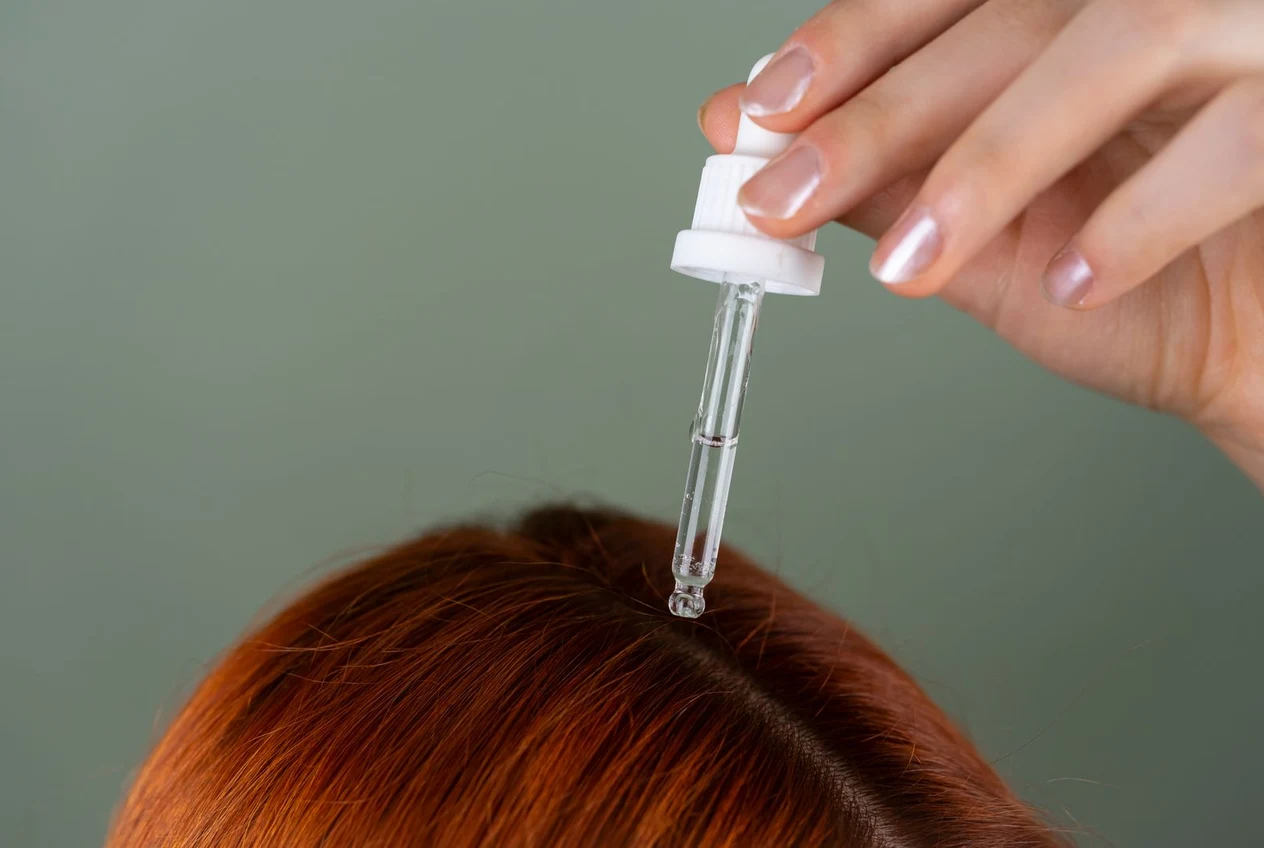
Hair shedding linked to stress is often described clinically as diffuse telogen effluvium, but it is frequently multifactorial. Newer evidence suggests that the scalp microenvironment and TGF-β/BMP signaling may contribute, although mechanistic findings alone do not prove broad clinical efficacy of novel topical combinations.
Introduction
Hair loss that patients attribute to stress is commonly described as diffuse shedding consistent with telogen effluvium. In real-world practice, however, stress is rarely the only factor. It may trigger temporary shedding, worsen underlying androgenetic hair loss, overlap with alopecia areata, or occur alongside systemic illness, weight change, medications, and other exposures [2,6,7,8]. For that reason, labeling all hair loss as “stress-related” can be misleading and may delay the correct diagnosis.
Recent interest has shifted toward the scalp microenvironment. A 2026 study evaluated a topical composition containing epigallocatechin gallate (EGCG), biotin, and the peptide Pal-GHK, proposing that it may modulate TGF-β and BMP pathways in the scalp in stress-induced alopecia [1]. The hypothesis is biologically appealing because it connects local follicular signaling with hair shedding, but it should still be interpreted as emerging mechanistic evidence rather than definitive proof of broad clinical efficacy [1].
How stress may affect the hair follicle cycle
The hair follicle cycles through anagen, catagen, and telogen. Clinically, physical or emotional stress can push a larger number of follicles prematurely into telogen, leading to increased shedding weeks to months after the trigger. That pattern fits telogen effluvium, but it does not exclude coexisting androgenetic alopecia or early alopecia areata [2,6,8].
The importance of the recent EGCG-biotin-Pal-GHK study is that it suggests measurable changes in scalp signaling pathways rather than a purely nonspecific systemic response [1]. Broadly speaking, TGF-β has been linked to growth-inhibitory signaling and catagen transition, whereas bone morphogenetic proteins (BMPs) help regulate the follicular stem-cell niche and the balance between quiescence and activation [1]. That does not mean every product that affects these pathways will reverse shedding in patients, but it does provide a rationale for studying interventions directed at the local follicular environment [1].
What the evidence on EGCG, biotin, and Pal-GHK actually shows
Topical nutraceutical-peptide combinations are attractive because they may influence oxidative stress, inflammation, follicular signaling, and structural support. In the 2026 paper, the EGCG-biotin-Pal-GHK combination was proposed as a modulator of TGF-β/BMP signaling within the scalp microenvironment [1]. Still, it is important to separate biologic plausibility from clinical proof.
A convincing mechanistic pathway does not guarantee meaningful patient benefit. Preclinical or mechanistic studies are useful for hypothesis generation, but they rank below comparative clinical studies when treatment decisions are made [1]. Patient heterogeneity matters as well: so-called stress-related hair loss may represent pure telogen effluvium, unmasked female or male pattern hair loss, or alopecia areata with physical or emotional triggers complicating the picture [2,6,8].
Accordingly, these formulations may be discussed as promising adjuncts, but they should not be presented as automatic substitutes for diagnostic evaluation or for better-supported therapies when a defined alopecia subtype is present. In women with female pattern hair loss, for example, therapeutic discussion may include systemic antiandrogens such as spironolactone or bicalutamide, whose comparative effectiveness and safety were assessed over 24 months in a retrospective study [2]. That scenario differs from isolated telogen effluvium and highlights why diagnosis remains the key step [2].
Differential diagnosis: not everything is stress
When someone notices increased shedding after a stressful period, the timing may be genuine, but the broader clinical context still matters. Female pattern hair loss is a common cause of progressive density reduction and can coexist with episodes of acute shedding [2]. Alopecia areata also deserves attention, especially because its immunobiology and genetic interpretation continue to evolve [6,8]. Recent literature emphasizes that in alopecia areata, the apparent benefit of switching JAK inhibitors cannot be reduced to a simple explanation, and cumulative treatment exposure as well as biologic context may matter [6]. Similarly, the interpretation of immune-related pathways such as AIRE and Notch4 in alopecia areata depends on genetic context, reinforcing caution against overly simple causal narratives [8].
Medications and metabolic change should also be considered. Recent discussion around alopecia after GLP-1 receptor agonist therapy underscores that observed hair loss may reflect associated factors such as weight loss or underlying disease, rather than a straightforward direct drug effect in every case [7]. In practice, both “stress” and “medication-related” can be incomplete labels if the whole clinical picture is not examined [7].
Trichoscopy and scalp assessment
Clinical evaluation can be supported by trichoscopy, serial photographs, and assessment of density pattern, shaft diameter, and miniaturization. Interpretation should also account for normal variation. A 2026 study described normal trichoscopic features and hair shaft parameters in healthy women of African descent, reminding clinicians that visual norms and reference values are not universal [4]. This matters because physiological variation can otherwise be mistaken for pathology or attributed incorrectly to stress-related damage [4].
Where combined topical products may fit
If assessment points toward stress-related telogen effluvium and there are no strong signs of scarring alopecia, active alopecia areata, or predominantly androgenetic miniaturization, management often focuses on correcting triggers, monitoring the natural course, and in some cases using adjunctive topical products. In that setting, a formulation designed to influence the scalp microenvironment may be a reasonable complementary option, provided patients understand that current evidence is still emerging and individual benefit may be modest or uncertain [1].
If hair restoration procedures are being considered, it is worth remembering that they are not a first-line response to active diffuse shedding and that they carry specific safety considerations reviewed in recent literature [3]. For patients with substantial visible loss and psychosocial burden, cranial prostheses and insurance or policy coverage may also be relevant parts of comprehensive care [5].
Conclusion
Stress-related hair loss remains a useful clinical concept, but often an incomplete one. The newer literature supports a more nuanced view in which stress interacts with androgenetic alopecia, alopecia areata, metabolic change, medications, and features of the scalp microenvironment itself [1,2,6,7,8]. TGF-β/BMP pathways offer an appealing mechanistic framework and justify further study of topical combinations such as EGCG, biotin, and Pal-GHK, but they do not remove the need for accurate diagnosis or amount to robust clinical proof across heterogeneous patient populations [1].
References
[1] Authors not provided. EGCG-Biotin-Pal-GHK Composition Modulates TGF-β and BMP Pathways in Scalp Microenvironment for Treating Stress-Induced Alopecia. European journal of pharmacology (2026). https://pubmed.ncbi.nlm.nih.gov/42575238/ [2] Authors not provided. Spironolactone versus Bicalutamide for Female Pattern Hair Loss: A 24-Month Unicenter Retrospective Comparative Study of Effectiveness and Safety. Dermatology and therapy (2026). https://pubmed.ncbi.nlm.nih.gov/42565959/ [3] Authors not provided. Safety Considerations in Hair Restoration Procedures: A Comprehensive Review. The Journal of craniofacial surgery (2026). https://pubmed.ncbi.nlm.nih.gov/42594307/ [4] Authors not provided. Normal trichoscopic features and hair shaft parameters in healthy women of African descent. Journal of the American Academy of Dermatology (2026). https://pubmed.ncbi.nlm.nih.gov/42586273/ [5] Anaeme A, Lu J, Mann C. Global landscape of cranial prosthesis policies for medical hair loss: a narrative review. Frontiers in public health (2026). https://pubmed.ncbi.nlm.nih.gov/42529207/ [6] Authors not provided. Are the Benefits of JAK Inhibitor Switching in Alopecia Areata Independent of Cumulative Treatment Exposure? Journal of the American Academy of Dermatology (2026). https://pubmed.ncbi.nlm.nih.gov/42562101/ [7] Authors not provided. Response to Jean et al's "Alopecia after glucagon-like peptide-1 agonist therapy: A TriNetX Database active comparator retrospective cohort study". Journal of the American Academy of Dermatology (2026). https://pubmed.ncbi.nlm.nih.gov/42637046/ [8] Authors not provided. Genetic context shapes interpretation of AIRE and Notch4 in alopecia areata. JID innovations : skin science from molecules to population health (2026). https://pubmed.ncbi.nlm.nih.gov/42633099/
References
- EGCG-Biotin-Pal-GHK Composition Modulates TGF-β and BMP Pathways in Scalp Microenvironment for Treating Stress-Induced Alopecia.Source
- Spironolactone versus Bicalutamide for Female Pattern Hair Loss: A 24-Month Unicenter Retrospective Comparative Study of Effectiveness and Safety.Source
- Safety Considerations in Hair Restoration Procedures: A Comprehensive Review.Source
- Normal trichoscopic features and hair shaft parameters in healthy women of African descent.Source
- Global landscape of cranial prosthesis policies for medical hair loss: a narrative review.Source
- Are the Benefits of JAK Inhibitor Switching in Alopecia Areata Independent of Cumulative Treatment Exposure?Source
- Response to Jean et al's "Alopecia after glucagon-like peptide-1 agonist therapy: A TriNetX Database active comparator retrospective cohort study".Source
- Genetic context shapes interpretation of AIRE and Notch4 in alopecia areata.Source