
7 min read
Solar protection on the Costa del Sol: a complete guide
By Clínica Valorian
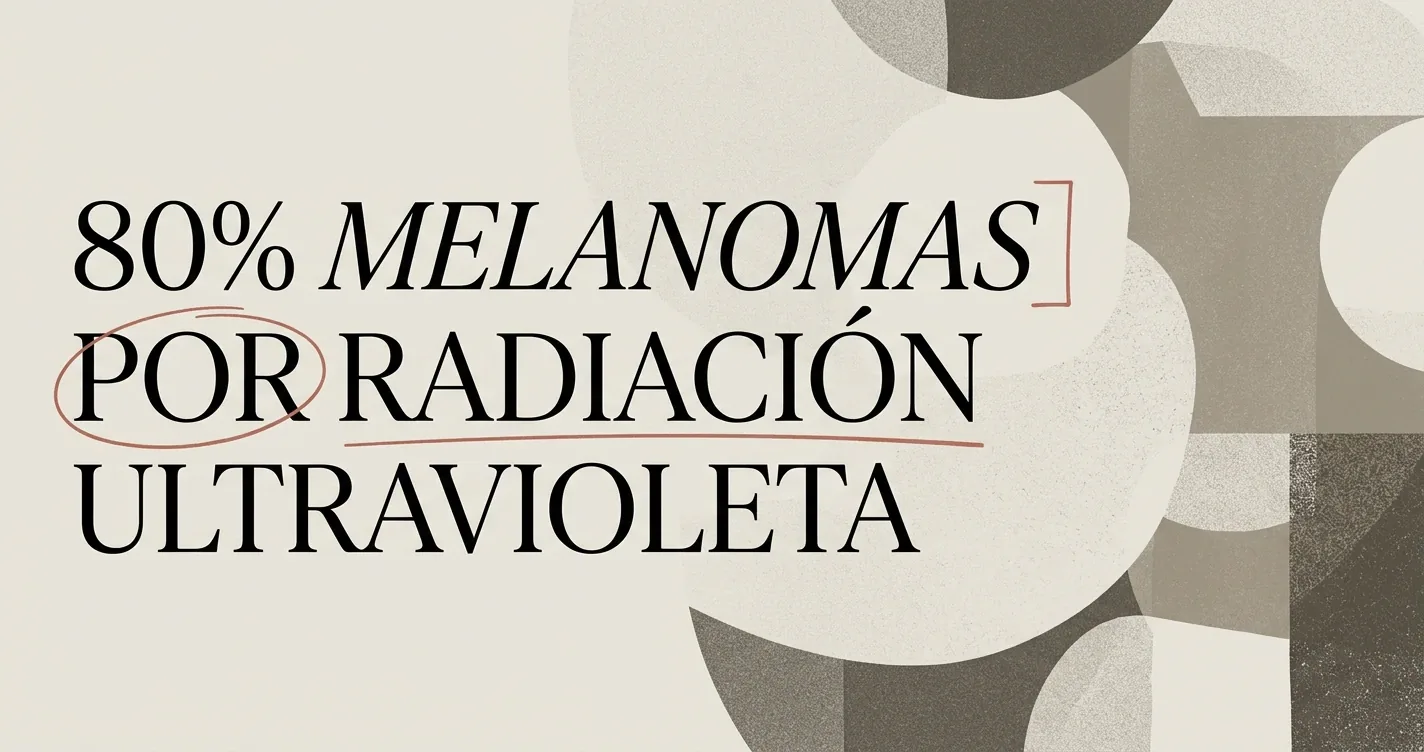
A complete guide to solar protection on the Costa del Sol: how to choose the right SPF, avoid application mistakes and protect your skin all year round.
Key points
- More than 80% of cutaneous melanomas worldwide are attributed to ultraviolet radiation, making sun protection a medical measure, not a cosmetic one.
- In Málaga, the UV index reaches very high levels in summer and remains relevant even in autumn and winter, making year-round skin protection essential.
- The correct amount of sunscreen for the face and neck is equivalent to two fingers' worth of product, and it must be reapplied every two hours.
- A broad-spectrum SPF 50+ (UVA and UVB) is the general recommendation for intense Mediterranean sun exposure.
- Daily photoprotection also prevents dark spots and photoageing, which are responsible for a large part of the visible ageing of the skin.
Sun protection on the Costa del Sol is a year-round routine, not a gesture reserved for summer. The Marbella sun is intense, constant, and capable of damaging the skin even on cloudy or winter days.
This guide brings together what truly matters: how to choose the right SPF and filter type for your skin, what mistakes we make when applying it, and how to build a sustainable photoprotection routine in a Mediterranean climate. The aim is twofold: to protect your health and to preserve the appearance of your skin over time.
Why the Marbella sun demands specific protection all year round
The Costa del Sol receives more hours of sunshine than most of Europe, and that climatic advantage comes at a cost for the skin. According to the Spanish State Meteorological Agency, the UV index in the province of Málaga reaches very high values during the summer months, when radiation peaks between 12:00 and 16:00.
The most important point is that exposure is not limited to summer. UVA radiation — responsible for skin ageing and much of the accumulated damage — passes through clouds and through the glass of windows and car windscreens. This means the skin continues to receive radiation in autumn, winter, and on grey days. In a place where clear skies are the norm, that damage accumulates quickly.
Ultraviolet radiation does not only cause sunburn. It is the primary risk factor for skin cancer. A study published in 2025 by the International Agency for Research on Cancer, a body of the World Health Organization, estimates that more than 80% of cutaneous melanoma cases worldwide are attributable to ultraviolet radiation. In a high-sun environment like Marbella, protecting the skin is a medical decision before it is a cosmetic one.
How to choose the right SPF and filter type for your skin
SPF, or sun protection factor, indicates a product's ability to protect against UVB radiation — the type that causes sunburn. For everyday sun exposure on the Costa del Sol, the general recommendation is a broad-spectrum SPF 50+, meaning it covers both UVB and UVA. An SPF 30 may be sufficient on a cloudy day or with minimal exposure, but it is rarely enough in the height of a Mediterranean summer.
Broad-spectrum coverage is just as important as the number. A sunscreen that only filters UVB prevents sunburn but allows UVA radiation to pass through — the radiation that ages the skin and contributes to long-term damage. Always check that the packaging states UVA protection, usually indicated by the UVA seal inside a circle.
As for the type of filter, there are two main families:
- Mineral or physical filters (zinc oxide, titanium dioxide): they act as a barrier that reflects radiation. They are the most suitable for sensitive, reactive or rosacea-prone skin, and for children. They are generally very well tolerated.
- Chemical or organic filters: they absorb radiation and convert it into heat. They have a lighter, more cosmetically elegant texture, which makes them easier to use daily under makeup.
Texture also plays a role in how well you apply your sunscreen. Oily or acne-prone skin tends to benefit from gel or fluid formulas with a matte finish, while dry skin tolerates richer, more nourishing creams. The best sunscreen is the one you actually want to put on every day. If you have any doubts about your skin type or a history of skin lesions, it is worth consulting a professional; in our guide on when to visit a dermatology doctor in Marbella we explain which warning signs you should not overlook.
Common mistakes when applying sunscreen and how to correct them
A good product that is applied incorrectly offers little protection. Here are the most frequent mistakes and how to fix them:
- Applying too little. Most people apply only half the amount needed. For the face and neck, a practical reference is the "two-finger rule": two strips of product along the index and middle fingers. For the body, the equivalent of a shot glass.
- Not reapplying. Sunscreen breaks down with sweat, water and the passing hours. It must be reapplied every two hours, and always after swimming or towel-drying.
- Forgetting key areas. Ears, insteps, lips, the back of the neck and the scalp in thinning areas are frequently left unprotected. These are spots where sun-related lesions tend to develop over time.
- Applying it too late. It is best to apply sunscreen 15 to 30 minutes before sun exposure, so that the protective film can settle onto the skin.
- Relying on sunscreen alone. Sunscreen is one protective measure, not a total shield. Shade, clothing, hats and sunglasses remain essential during the peak hours of the day.
A common misconception is thinking that, because we are wearing sunscreen, we can spend more time in the sun. This false sense of security can ultimately increase the total dose of radiation the skin receives.
Protection against dark spots, photoageing and skin cancer
Sun protection works on three fronts. The first is health: in Spain, 20,854 new cases of skin cancer were diagnosed in 2024, according to data from the Spanish Association Against Cancer, which also warns that incidence has risen by around 40% over the past four years. The vast majority of these cases are linked to sun exposure and are therefore largely preventable.
The second front is dark spots. Ultraviolet radiation stimulates the production of melanin in an uneven way, giving rise to solar lentigines and hyperpigmentation conditions such as melasma. Once they appear, they are very difficult to correct, and they return easily if the skin continues to be exposed without protection.
The third front is photoageing. It is estimated that the majority of visible facial skin ageing results from cumulative sun exposure, not from the passage of time itself. UVA radiation breaks down collagen and elastin, leading to wrinkles, loss of firmness and a dull texture. Protecting your skin every day is, by far, the most cost-effective anti-ageing treatment available.
This long-term perspective aligns with preventive medicine. Sun protection is one of the interventions with the best effort-to-benefit ratio within longevity medicine, because a simple daily habit reduces health risks and preserves skin quality for decades.
Daily Sun Protection Routine for Mediterranean Climates
In a climate like Marbella's, sun protection works best as a fixed habit rather than an occasional measure taken only at the beach. A realistic routine might look like this:
- Every morning, every day of the year. Apply a broad-spectrum SPF 50+ sunscreen to your face, neck, ears and the backs of your hands as the last step of your skincare routine, before makeup. This is the single habit that makes the biggest difference in the long run.
- Reapplication throughout the day. If you spend time outdoors, reapply protection every two hours. For a made-up face, mist or powder formats make touch-ups easy.
- At the beach or pool. Use a water-resistant product, apply it 15 to 30 minutes beforehand and reapply after every swim. Add a parasol, a shirt and a hat during peak radiation hours.
- Check the UV index. The Spanish State Meteorological Agency publishes the ultraviolet index forecast by province; it is a useful reference for adjusting your protection according to the day.
- Annual skin check. Keep an eye on moles and any new or changing spots, and see a doctor if you notice anything that does not seem right.
This consistency is compatible with every skin type and with broader skincare routines. If you are looking for a personalised approach, it is worth visiting a centre with a medical perspective; in our guide on how to choose an aesthetic clinic in Marbella we detail which aspects to consider.
At Clínica Valorian, Dr. Florian A. Vallecillo Cabrera approaches skin health from an evidence-based medicine standpoint, combining prevention, dermatological diagnosis and treatments tailored to each individual. The next concrete step is simple: if you have not yet added an SPF 50+ sunscreen to your daily routine, start tomorrow morning — and book a skin check if it has been more than a year since your last one.
Frequently asked questions
Is it necessary to use sunscreen in winter in Marbella?
Yes. On the Costa del Sol, the UV index remains relevant throughout the year, and UVA radiation passes through clouds and glass. A daily sunscreen on the face is advisable even during the colder months.
What SPF should I choose for the Costa del Sol?
For regular exposure to the intense Mediterranean sun, a broad-spectrum SPF 50+ is recommended, covering both UVA and UVB radiation. SPF 30 is the minimum acceptable for a cloudy day or limited exposure.
How often should sunscreen be reapplied?
Every two hours, and always after swimming, sweating, or towelling off. A single morning application does not maintain protection throughout the day.
Does sunscreen prevent dark spots and ageing?
Yes. Ultraviolet radiation is the leading cause of dark spots, loss of firmness, and premature wrinkles. Daily photoprotection is the most effective measure against photoageing.
Topics