Pyoderma gangrenosum
Inflammatory disease that produces painful skin ulcers
Pyoderma gangrenosum is an uncommon inflammatory disease that causes painful, rapidly evolving skin ulcers. Learn its causes, associated diseases, diagnosis and available treatments.
What is pyoderma gangrenosum?
Pyoderma gangrenosum is an uncommon inflammatory skin disease that produces painful, rapidly evolving ulcers. Despite its name, it is not caused by an infection or by gangrene. It is considered a neutrophilic dermatosis, that is, a disease in which certain cells of the immune system (the neutrophils) cause excessive inflammation of the skin.
It can appear in isolation or be associated with other diseases, especially inflammatory bowel diseases, inflammatory arthritis and some haematological diseases. It is a disease that requires early diagnosis and treatment to prevent the progression of the lesions.
Why does it appear?
The exact cause is still not known. It is thought that there is an alteration of the immune system that triggers an exaggerated inflammatory response.
In approximately half of the patients it is associated with other diseases, such as:
- Inflammatory bowel disease (Crohn's disease and ulcerative colitis).
- Rheumatoid arthritis.
- Spondyloarthritis.
- Monoclonal gammopathies.
- Leukaemias and other haematological disorders.
- Some autoimmune diseases.
In many patients no associated disease is identified.
What are the symptoms?
The disease usually begins as a small lump, a pustule, a blister or an inflamed nodule. In a few days it can evolve into a very painful ulcer, with raised, violaceous and irregular edges, a necrotic base or one with granulation tissue and rapid growth.
The most frequent locations are the legs, the ankles and the feet. It can also appear on the abdomen, the arms, the area around stomas and, exceptionally, on the face.
Some patients also present fever, general malaise and joint pain.
What is the pathergy phenomenon?
A very important characteristic of pyoderma gangrenosum is the pathergy phenomenon. This means that a minimal trauma, such as a small wound, a biopsy, an injection or a surgical intervention, can trigger the appearance or worsening of a lesion.
For this reason, unnecessary surgical procedures must be avoided while the disease is active.
How is the diagnosis made?
There is no single test that confirms the diagnosis. It is based on the clinical history, the clinical skin examination and the exclusion of other diseases that produce ulcers.
Biopsy. The biopsy is usually performed to rule out other causes, such as infections, vasculitis or skin tumours. Although it can provide useful information, on its own it does not confirm the diagnosis.
Other tests. Depending on the case, blood tests, cultures, immunological studies, colonoscopy if there are digestive symptoms and haematological studies when indicated may be requested.
What treatments exist?
Treatment must be started as soon as possible.
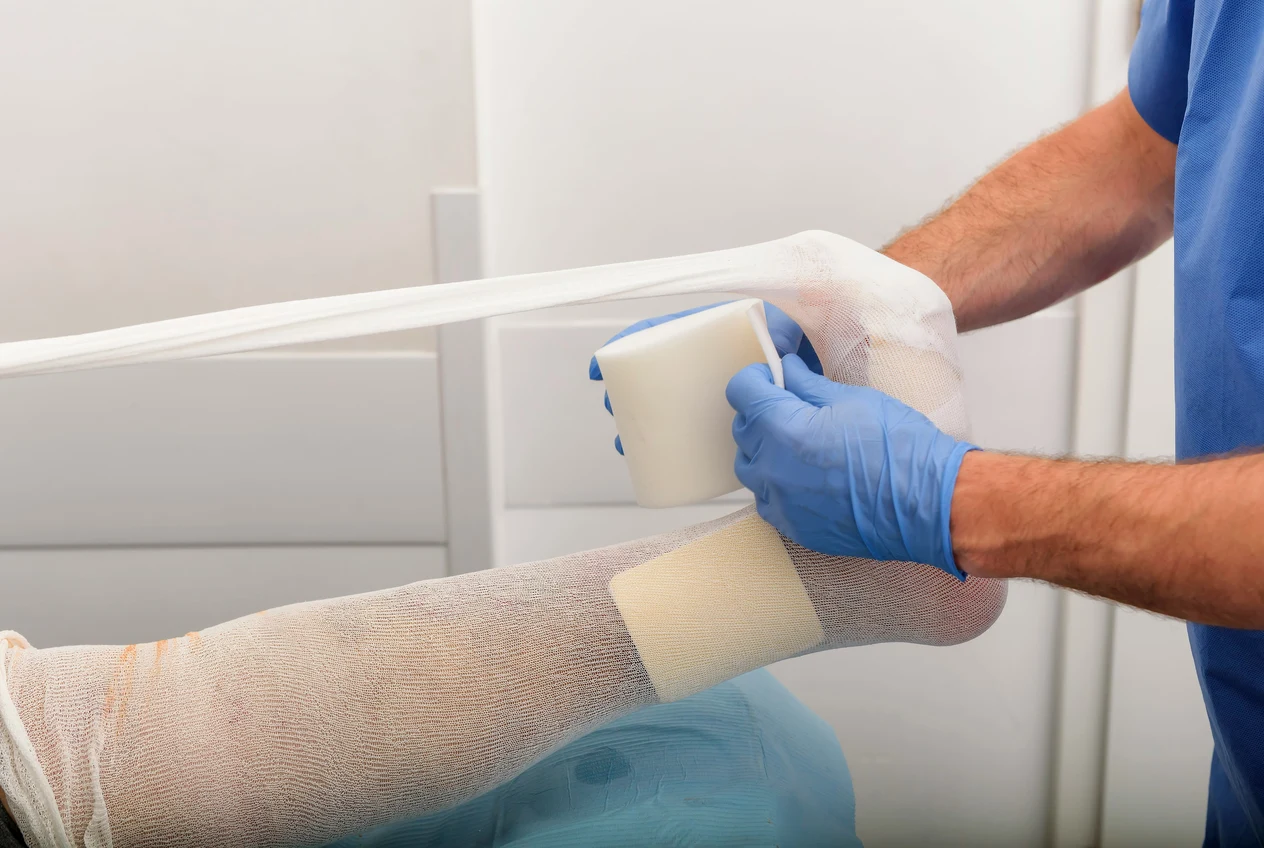
Local care. It includes gentle cleaning of the wound, appropriate dressings, pain control and prevention of secondary infections.
Corticosteroids. Corticosteroids are one of the first-line treatments. They can be administered topically, by means of infiltrations, orally or intravenously in severe cases.
Immunomodulatory treatments. Depending on the severity, ciclosporin, methotrexate, mycophenolate mofetil, azathioprine and topical tacrolimus in some cases can be used.
Biologic treatments. In patients with moderate or severe disease, infliximab, adalimumab, ustekinumab and other biologic treatments selected according to the clinical case can be employed.
What can you do in your daily life?
Strictly follow the indicated treatment, avoid trauma on the skin, do not manipulate the ulcers, attend the scheduled wound care, consult quickly if new lesions appear and keep the associated diseases under control.
When should you consult?
You should consult urgently if a very painful, rapidly growing ulcer appears, if the lesions increase in size within a few days, if you have fever, if you observe abundant discharge or a bad smell, if the pain worsens significantly or if new ulcers appear.
Myths and facts
- Myth: Pyoderma gangrenosum is an infection. Fact: No. It is an inflammatory disease of the immune system.
- Myth: Antibiotics always cure it. Fact: They are only necessary if there is a secondary infection. The main treatment consists of controlling the inflammation.
- Myth: The ulcer must be cleaned aggressively. Fact: Wound care must be gentle to avoid the pathergy phenomenon.
- Myth: It is contagious. Fact: It cannot be transmitted to other people.
- Myth: It is always associated with another disease. Fact: Approximately half of the patients do not present any identifiable associated disease.
The essential points to remember
- Pyoderma gangrenosum is an inflammatory disease, not an infection.
- It produces painful, rapidly evolving ulcers.
- It can be associated with inflammatory bowel, rheumatological and haematological diseases.
- The pathergy phenomenon means that small trauma can worsen the lesions.
- Treatment is based on immunosuppressants and adequate wound care.
- Early diagnosis improves the prognosis and reduces the risk of sequelae.
Frequently asked questions
Does pyoderma gangrenosum have a cure?
It can be controlled effectively, although some patients present relapses and require prolonged follow-up.
Is it an infection?
No.
Is it contagious?
No.
Can it leave scars?
Yes. The ulcers usually heal leaving permanent scars.
Will I need treatment for a long time?
It will depend on the severity and the response to treatment.
Is it advisable to operate on the lesions?
Generally not during the active phase, due to the risk of pathergy.
Can it reappear?
Yes. Some people present new flare-ups throughout their lives.
Who treats this disease?
Usually doctors specialising in skin health, in collaboration with internists, rheumatologists, gastroenterologists or haematologists depending on the associated disease.
Is it important to look for an underlying disease?
Yes. Identifying an associated disease can be fundamental for the treatment.
Does it have a good prognosis?
With early diagnosis and adequate treatment, most patients manage to control the disease, although relapses are not infrequent.
Need personalised guidance?
This guide is for information only and does not replace a medical consultation. For an assessment tailored to your case, you may request a consultation.
Request a consultation