Dermatomyositis
Autoimmune disease that affects the skin and muscles
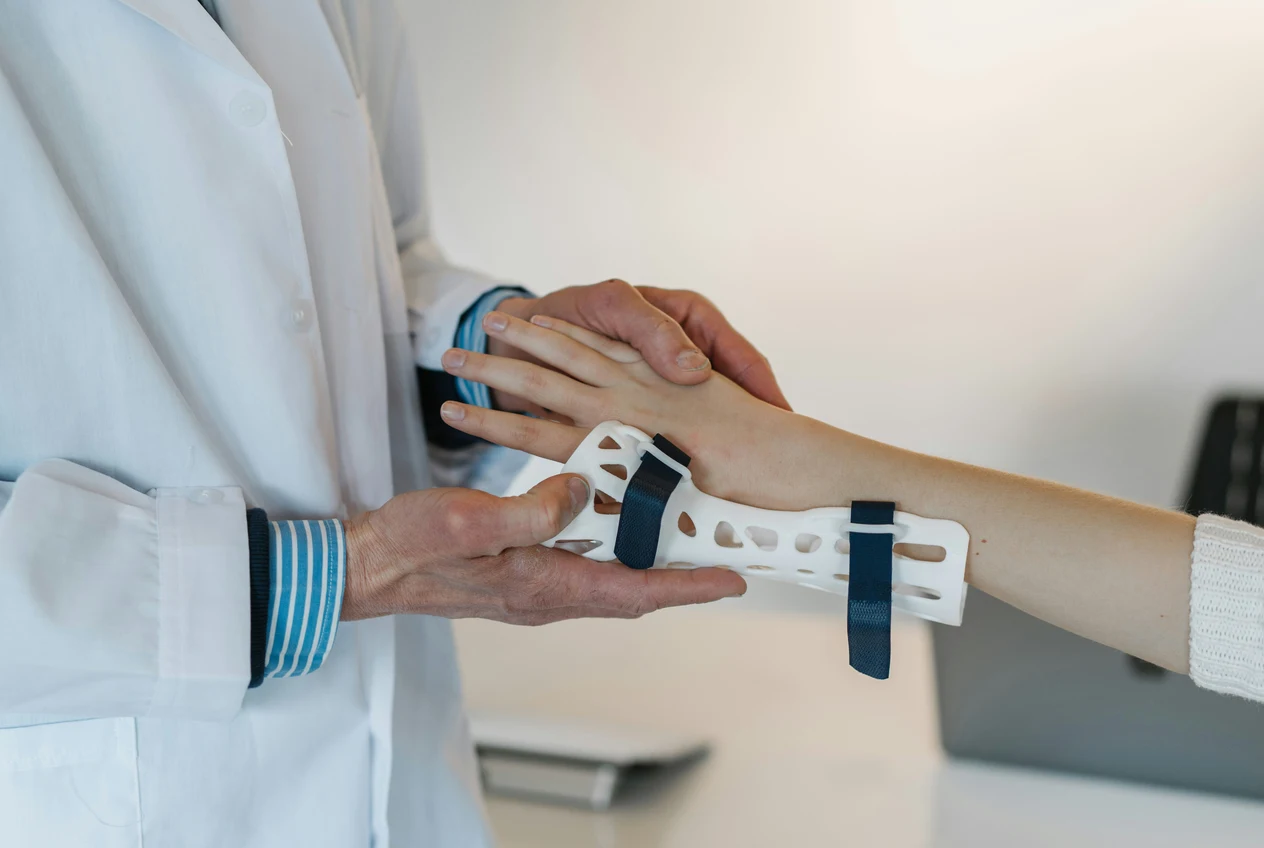
Dermatomyositis is an autoimmune disease that affects the skin and muscles, and can also be associated with lung involvement and, in some adults, with certain tumours. Learn its symptoms, how it is diagnosed and what the most effective treatments are.
What is dermatomyositis?
Dermatomyositis is an uncommon autoimmune disease that causes inflammation of the skin and muscles. In some patients it mainly affects the skin (amyopathic dermatomyositis), while in others it also produces progressive muscle weakness.
It is a systemic disease that can also affect other organs, such as the lungs, and that in certain adult patients can be associated with the presence of some types of cancer, so it requires a complete study and close follow-up. An early diagnosis makes it possible to start treatment before important complications appear.
Why does it appear?
The exact cause is still not known. Several factors are thought to be involved:
- Genetic predisposition.
- Alterations of the immune system.
- Environmental factors.
- Viral infections in predisposed people.
- Exposure to ultraviolet radiation.
In adults, especially from the age of 50, dermatomyositis can act as a marker of an underlying neoplasm, although this does not occur in all patients.
What are the symptoms?
Skin manifestations are usually one of the first signs of the disease. The most frequent symptoms are:
- Violaceous rash around the eyes (heliotrope erythema).
- Swelling of the eyelids.
- Violaceous papules or plaques over the knuckles (Gottron papules).
- Erythema on the elbows and knees.
- Redness on the neck, chest and shoulders (shawl sign).
- Lesions on the upper part of the chest (V sign).
- Photosensitivity.
- Itching, sometimes very intense.
When there is muscle involvement, the following may appear:
- Progressive weakness of the shoulders and hips.
- Difficulty climbing stairs.
- Difficulty getting up from a chair.
- Difficulty lifting objects.
- Muscle fatigue.
In some patients the following may also appear:
- Muscle pain.
- Difficulty swallowing.
- Shortness of breath due to lung involvement.
- Skin calcifications, especially in children.
How is the diagnosis made?
The diagnosis requires integrating the clinical data with different complementary tests. The doctor may request:
- Clinical skin examination.
- Muscle examination.
- Complete blood work.
- Skin biopsy.
- Muscle biopsy in some cases.
- Muscle magnetic resonance imaging.
- Electromyography (EMG).
Blood tests. Creatine kinase (CK), aldolase, LDH and transaminases may be found elevated. Specific antibodies may also be requested, such as anti-Mi-2, anti-MDA5, anti-TIF1-γ, anti-NXP2, anti-SAE, anti-Jo-1 and other antisynthetase antibodies. These antibodies help to define the subtype of the disease and its prognosis.
Study of internal organs. Depending on the patient, it may be necessary to perform a chest CT scan, pulmonary function tests, abdominal ultrasound or CT scan and cancer screening studies appropriate to age and sex.
What treatments exist?
Treatment must be individualised and is usually multidisciplinary.
Photoprotection. It is fundamental because ultraviolet radiation can trigger flare-ups. Sunscreen SPF 50+, clothing with sun protection, hats and avoiding intense sun exposure are recommended.
Topical treatment. For skin lesions, topical corticosteroids, tacrolimus and pimecrolimus can be used.
Systemic treatment. Depending on the severity, oral corticosteroids, methotrexate, azathioprine, mycophenolate mofetil, intravenous immunoglobulins, rituximab in selected cases, cyclophosphamide when there is severe involvement of internal organs and other immunomodulators according to the clinical evolution can be used.
In addition, many patients benefit from physiotherapy and rehabilitation to maintain muscle strength.
What complications can appear?
If it is not treated adequately, dermatomyositis can produce:
- Progressive muscle weakness.
- Difficulty walking.
- Difficulty swallowing.
- Interstitial lung disease.
- Skin calcifications.
- Decreased quality of life.
In some adult patients it can be associated with certain tumours, which is why an initial study and periodic follow-up are carried out.
What can you do in your daily life?
Use sunscreen every day, avoid tobacco, maintain adapted physical activity, do physiotherapy if indicated, correctly follow the treatment, do not stop the medication without consulting your doctor and attend all scheduled check-ups.
When should you consult?
You should consult early if you present progressive muscle weakness, persistent violaceous rashes, difficulty swallowing, shortness of breath, significant weight loss, persistent fever or the appearance of new skin lesions. Difficulty breathing or swallowing requires urgent medical evaluation.
Myths and facts
- Myth: Dermatomyositis only affects the muscles. Fact: The skin is usually one of the first organs affected and, in some patients, it may be the only manifestation.
- Myth: It is a contagious disease. Fact: It is not.
- Myth: All people with dermatomyositis develop cancer. Fact: There is an increased risk in some adults, but most patients do not develop any tumour.
- Myth: Exercise is forbidden. Fact: Adapted and supervised physical activity is part of the treatment and improves muscle function.
- Myth: If the skin lesions disappear, the disease is completely cured. Fact: Activity may persist in other organs, so it is important to maintain medical follow-up.
The essential points to remember
- Dermatomyositis is an autoimmune disease that can affect the skin, the muscles and other organs.
- Skin lesions usually appear before muscle weakness.
- Heliotrope erythema and Gottron papules are very characteristic signs.
- Some patients present only skin involvement (amyopathic dermatomyositis).
- The diagnosis combines the clinical examination, the tests, the biopsy and the muscle studies.
- Photoprotection, immunomodulators and physiotherapy are the pillars of treatment.
- In adults it is important to carry out appropriate cancer screening, since there is a greater association with certain tumours.
Frequently asked questions
Does dermatomyositis have a cure?
There is currently no definitive cure, but treatments make it possible to control the disease in most patients.
Does it always produce muscle weakness?
No. There is a form called amyopathic dermatomyositis, in which skin lesions predominate without evident muscle involvement.
Is it hereditary?
Not directly, although there may be a certain genetic predisposition.
Will I need physiotherapy?
Often yes, especially when there is muscle weakness.
Can I do sports?
Yes, always adapted to the clinical situation and following the recommendations of the medical team.
Should I avoid the sun?
Yes. Photoprotection is a fundamental part of the treatment.
Does the disease affect the lungs?
It can do so in some patients, so it is important to carry out periodic checks.
Is it necessary to do tests to rule out cancer?
In many adults yes, especially at diagnosis and during the first years of follow-up, following medical recommendations.
Who treats dermatomyositis?
Doctors specialising in skin health, rheumatologists, neurologists, internists, pulmonologists and rehabilitation specialists are usually involved.
Does it have a good prognosis?
The prognosis has improved notably thanks to early diagnosis and current treatments. It will depend on the degree of muscle and lung involvement and on the presence or absence of associated diseases.
Need personalised guidance?
This guide is for information only and does not replace a medical consultation. For an assessment tailored to your case, you may request a consultation.
Request a consultation