Hidradenitis suppurativa
Acne inversa
Hidradenitis suppurativa is a chronic inflammatory disease that causes painful nodules, abscesses and scars in the armpits, groin and other fold areas. Learn about its causes, diagnosis and current treatments.
What is hidradenitis suppurativa?
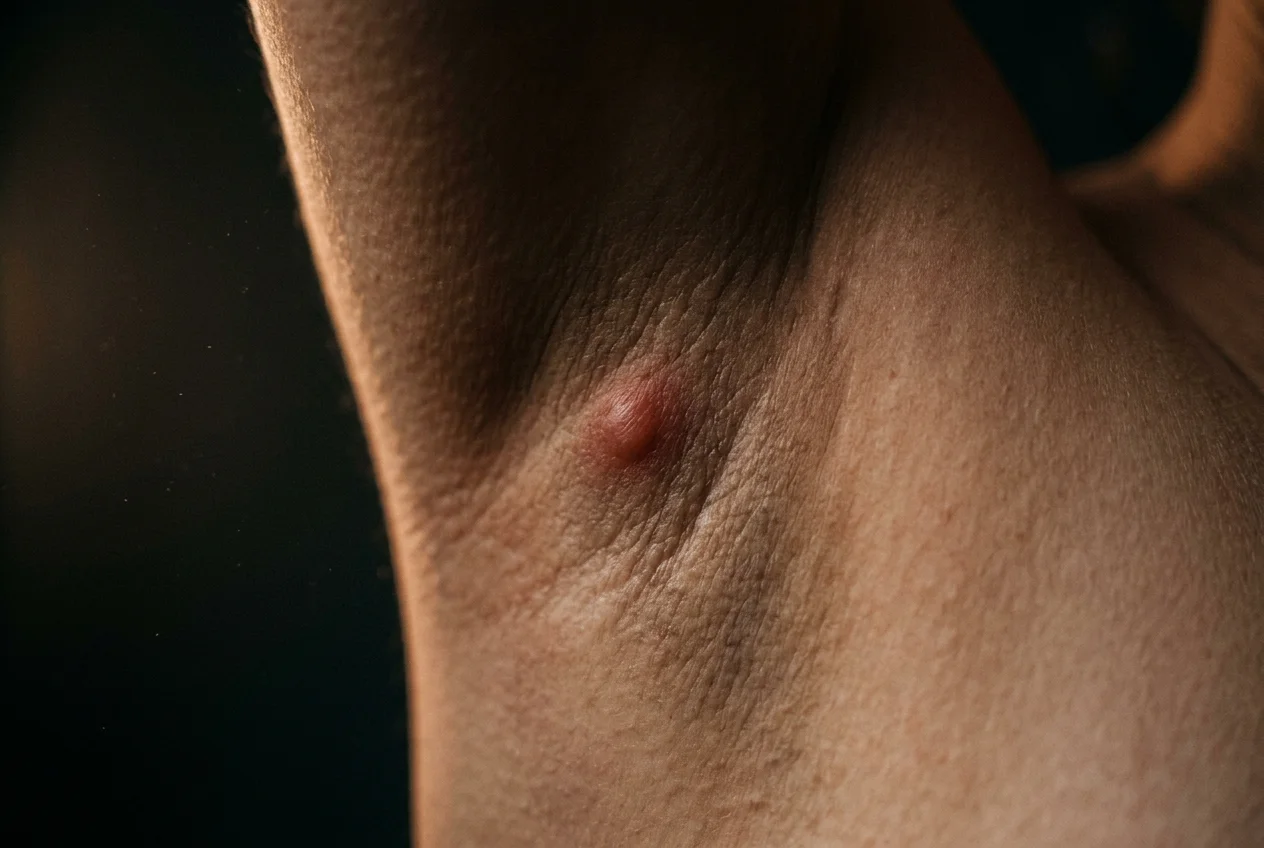
Hidradenitis suppurativa, also known as acne inversa, is a chronic inflammatory skin disease that causes the repeated appearance of painful nodules, abscesses and, over time, tunnels under the skin (fistulas) and scars.
Unlike common acne, it does not mainly affect the face, but the areas where apocrine sweat glands are located and where the skin frequently rubs. The most affected areas are:
- The armpits.
- The groin.
- The genital region.
- The buttocks.
- The fold under the breasts.
- The perianal region.
It is a relatively common disease, although many people go years without receiving a correct diagnosis. Hidradenitis suppurativa is not contagious.
Why does it appear?
This is probably the most important question. For many years it was thought to be an infection of the sweat glands, but today we know that this is not true.
The disease begins with an obstruction of the hair follicle. When this ruptures, it triggers an intense inflammatory reaction that produces the characteristic nodules and abscesses.
Why does it happen to me?
There is no single cause. We know that several factors are involved:
- Genetic predisposition.
- Alteration of the immune system.
- Smoking.
- Obesity or overweight.
- Hormonal factors.
- Constant friction of certain areas.
Why does it always appear in the same areas?
Because they are areas where there is greater rubbing of the skin and a high concentration of hair follicles susceptible to inflammation.
Why does it come back again and again?
Because it is a chronic disease, not a one-off infection. Even if an abscess disappears, the inflammation can persist and favour new flare-ups.
Is it the fault of hygiene?
No. Hidradenitis suppurativa does not appear from lack of hygiene, and washing more does not prevent flare-ups.
What are the symptoms?
Symptoms usually begin with:
- Painful lumps under the skin.
- Localised inflammation.
- A sensation of heat.
- Pain when walking or moving the arms.
Over time the following can appear:
- Abscesses.
- Discharge of pus.
- Bad odour due to drainage of the inflammatory content.
- Fistulas (tunnels under the skin).
- Permanent scars.
Flare-ups usually recur over months or years. The pain can be intense and significantly affect quality of life.
How is it diagnosed?
The diagnosis is fundamentally clinical. The doctor will assess:
- The affected areas.
- The recurrence of flare-ups.
- The presence of nodules, abscesses or fistulas.
- The duration of the disease.
Specific tests are usually not necessary to confirm the diagnosis. Sometimes a skin ultrasound can be performed to determine the extent of the disease and better plan the treatment.
What treatments are available?
One of the most frequent questions is: is there a treatment? Yes. The earlier it is diagnosed, the better the results. Treatment depends on the stage of the disease. It may include:
Topical treatments
In mild forms, topical antibiotics can be used to reduce inflammation.
Oral antibiotics
Some antibiotics are used for several weeks or months for their anti-inflammatory effect, in addition to their action against certain bacteria.
Biologic treatments
In patients with moderate or severe disease there are biologic medications that act on inflammation and can significantly reduce flare-ups.
Surgery
For some persistent lesions it can be the most effective treatment to remove the affected tissue and reduce recurrences.
Why do I need prolonged treatment?
Because the disease is chronic. The aim is not only to treat an abscess, but to control inflammation to prevent new flare-ups and avoid the formation of scars.
What can you do day to day?
In addition to medical treatment, there are measures that help control the disease:
- Stop smoking if you are a smoker.
- Maintain a healthy weight.
- Avoid continuous rubbing from clothing.
- Wear loose, breathable garments.
- Maintain normal hygiene with mild products.
- Do not manipulate or try to burst the nodules.
- Consult early when a new flare-up appears.
When should you seek prompt medical advice?
Seek medical assessment if:
- A very painful abscess appears.
- You have fever or general malaise.
- You observe rapid progression of the lesions.
- The discharge of pus is abundant and persistent.
- The flare-ups are becoming more and more frequent.
- The pain limits your daily activities.
Myths and facts
- Myth: It is a hygiene problem. Fact: No. The disease is not related to lack of hygiene.
- Myth: It is a contagious infection. Fact: It cannot be passed on to other people.
- Myth: It is a type of acne. Fact: Although it also affects the hair follicle, it is a completely different disease from facial acne.
- Myth: It always needs surgery. Fact: Many patients improve with appropriate medical treatments, especially when the diagnosis is early.
- Myth: There is no treatment. Fact: There are currently very effective treatments, including antibiotics, biologic therapies and surgery when indicated.
The key points to remember
- Hidradenitis suppurativa is a chronic inflammatory disease of the hair follicle.
- It is not caused by poor hygiene.
- It is not contagious.
- Early diagnosis prevents the appearance of scars and fistulas.
- There are effective medical and surgical treatments.
- Stopping smoking and controlling weight can improve the course.
- Follow-up by a doctor is essential to control the disease.
Frequently asked questions
Is it contagious?
No.
Is it hereditary?
There is a genetic predisposition in many patients.
Will it go away on its own?
It usually does not. It is a chronic disease that requires medical follow-up.
Does smoking worsen the disease?
Yes. It is one of the factors most clearly associated with a worse course.
Does obesity have an influence?
Yes. Excess weight increases skin friction and favours inflammation.
Can I do sport?
Yes, although it is advisable to wear comfortable clothing that minimises friction.
Will I need surgery?
Only some patients need it.
Do antibiotics cure the disease?
No. They help control flare-ups, but do not eliminate the predisposition to develop it.
Can it leave scars?
Yes. That is why it is important to start treatment as soon as possible.
Can I lead a normal life?
Yes. With early diagnosis and appropriate treatment, most patients manage to significantly control the disease.
Need personalised guidance?
This guide is for information only and does not replace a medical consultation. For an assessment tailored to your case, you may request a consultation.
Request a consultationTopics