Diaper rash (nappy rash)
Frequent and benign irritation of the baby's skin
Diaper rash is a frequent inflammation of the baby's skin caused by moisture and contact with urine and stools. Learn how to prevent it, treat it and when to consult a specialist.
What is diaper rash?
Diaper rash (nappy rash) is an inflammation of the skin that appears in the area covered by the diaper due to prolonged contact with moisture, urine and stools.
It is one of the most frequent skin conditions during the first years of life and, in most cases, it is mild and responds quickly to appropriate treatment.
It is not a contagious disease and it is not caused by a lack of hygiene.
Why does it appear?
The baby's skin is thinner and more delicate than that of the adult. When it remains in contact with moisture for a long time, its barrier function is altered and irritation increases.
The factors that favour its appearance are:
- Remaining many hours with the same diaper.
- Prolonged contact with urine and stools.
- Diarrhoea.
- Introduction of new foods.
- Use of antibiotics.
- Friction of the diaper.
- Especially sensitive skin.
In some cases a Candida (fungal) superinfection may appear, which requires specific treatment.
What are the symptoms?
The most usual symptoms are redness of the skin, irritation, discomfort during the diaper change, a stinging sensation and mild scaling.
Classic irritant dermatitis usually affects the areas of greatest contact with the diaper and usually spares the folds.
How to recognise a Candida infection?
When there is an associated candidiasis, the following may be observed:
- Very intense redness.
- Involvement of the folds.
- Small lesions around the main plaque ("satellite lesions").
- Greater inflammation.
How is the diagnosis made?
The diagnosis is clinical. The paediatrician or the doctor specialising in skin health will assess:
- The distribution of the lesions.
- The intensity of the redness.
- Whether or not the folds are involved.
- The possible presence of a fungal or bacterial infection.
Usually no complementary tests are necessary.
Which diseases can it be confused with?
It can be differentiated from other skin diseases:
- Diaper candidiasis.
- Seborrhoeic dermatitis.
- Atopic dermatitis.
- Infantile psoriasis.
- Allergic contact dermatitis.
- Bacterial infections.
- Langerhans cell histiocytosis (very rare).
What treatments exist?
General measures. They are the most important part of the treatment. It is recommended to change the diaper frequently, to gently clean the skin with warm water or fragrance-free products, to dry the skin carefully without rubbing and to leave the area exposed to the air whenever possible.
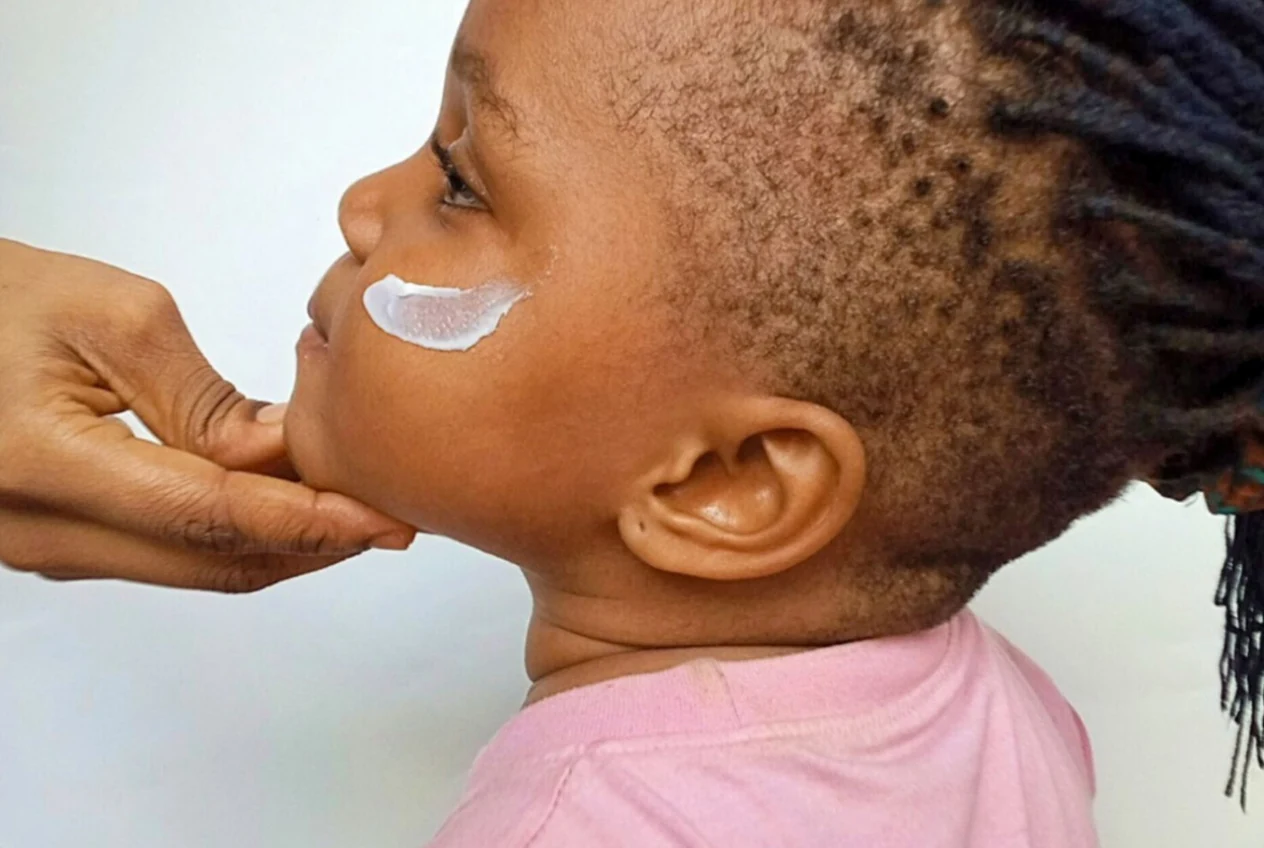
Barrier creams. After each diaper change it is advisable to apply a protective cream with substances such as zinc oxide, petroleum jelly or dimethicone. These creams protect the skin against moisture and favour its repair.
Pharmacological treatment. When there is a lot of inflammation, the doctor may prescribe for a few days low-potency topical corticosteroids. If there is a Candida infection, it will be necessary to add topical antifungals, such as clotrimazole, miconazole or nystatin. Topical antibiotics are only indicated when there is a confirmed bacterial infection.
What can you do in your daily life?
Change the diaper frequently, do not fasten the diaper too tightly, use diapers of the appropriate size, avoid wipes with alcohol or fragrances if they irritate the skin, allow the skin to remain exposed to the air for a few minutes several times a day and use barrier creams preventively if the baby tends to suffer from diaper rash.
When should you consult?
You should consult your paediatrician or a doctor specialising in skin health if the dermatitis does not improve in 3 to 5 days, if fever appears, if there are blisters or ulcers, if you observe pus, if the redness intensely affects the folds, if satellite lesions suggestive of candidiasis appear or if the baby presents a lot of pain or discomfort.
Myths and facts
- Myth: Diaper rash appears because of poor hygiene. Fact: No. It can appear even with adequate hygiene due to continuous contact with moisture.
- Myth: The area must be cleaned forcefully. Fact: Cleaning must be gentle to avoid worsening the irritation.
- Myth: All diaper rashes need antibiotics. Fact: No. Most are irritant and improve with local care and barrier creams.
- Myth: Zinc oxide creams worsen the skin. Fact: They are one of the most effective treatments to protect the skin and favour its recovery.
- Myth: If candidiasis appears, it means hygiene is deficient. Fact: No. Moisture and the use of antibiotics favour the growth of Candida even with correct hygiene.
The essential points to remember
- Diaper rash is a very frequent and benign irritation of the baby's skin.
- It is caused mainly by moisture, urine, stools and rubbing.
- Changing the diaper frequently is the most important preventive measure.
- Barrier creams with zinc oxide constitute the basic treatment.
- When there is an associated candidiasis, it is necessary to add an antifungal treatment.
- Most cases resolve completely within a few days.
Frequently asked questions
Is it frequent?
Yes. It is one of the most usual skin health consultations during childhood.
Is it contagious?
No.
Can it be prevented?
Yes. Changing the diaper frequently and using barrier creams greatly reduces the risk.
Which cream is the most advisable?
Barrier creams with zinc oxide are usually the first choice for prevention and treatment.
Are wet wipes harmful?
Not necessarily. It is preferable to use products without alcohol or fragrances, especially in babies with sensitive skin.
Can I use talcum powder?
Its use is not recommended, since it can irritate the skin and there is a risk of inhalation by the baby.
When should I suspect candidiasis?
When lesions appear in the folds accompanied by small satellite lesions and very intense redness.
Can it come back?
Yes. It is frequent during the period when the baby uses diapers.
Does it leave scars?
No. With appropriate treatment it usually heals completely without leaving sequelae.
Does it have a good prognosis?
Yes. Most cases improve quickly with simple measures and appropriate treatment.
Need personalised guidance?
This guide is for information only and does not replace a medical consultation. For an assessment tailored to your case, you may request a consultation.
Request a consultation