Molluscum contagiosum in children
Benign viral infection very frequent in childhood

Molluscum contagiosum is a very frequent viral infection in childhood that produces small papules with a central depression. Discover how it is transmitted, when to treat it and what its usual evolution is.
What is molluscum contagiosum?
Molluscum contagiosum is a benign skin infection caused by the molluscum contagiosum virus (Molluscum contagiosum virus), belonging to the poxvirus family.
It is a very frequent disease in childhood, especially between 2 and 10 years of age. It is characterised by the appearance of small rounded lesions with a characteristic central depression.
Although they are contagious, the lesions do not usually represent a serious problem and, in most cases, disappear spontaneously.
Why do they appear?
The infection occurs by direct contact with the virus. It can be transmitted through:
- Skin-to-skin contact.
- Contact between children during play.
- Sharing towels, sponges or some personal objects.
- Self-inoculation when scratching, which favours the appearance of new lesions.
Children with atopic dermatitis have a higher risk of developing numerous lesions due to the alteration of the skin barrier.
What are the symptoms?
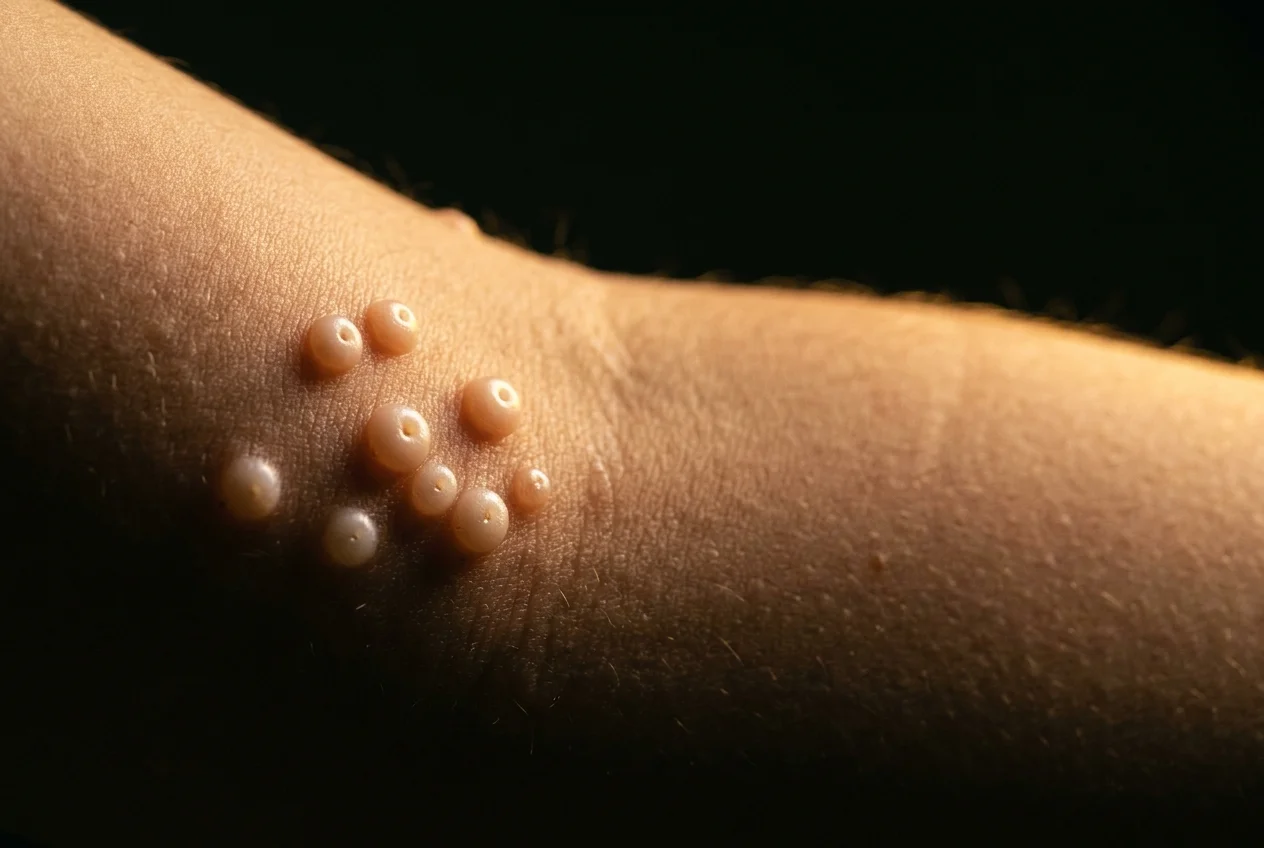
The lesions present as small rounded papules, skin-coloured, whitish or pearly, with a smooth surface and a central depression (umbilicated). Their size is 2 to 5 mm, although some may be larger.
The most frequent areas are the trunk, the armpits, the arms, the legs and the face (especially in young children).
They usually do not cause pain and may cause slight itching. Sometimes they turn red before disappearing, which usually indicates that the immune system is eliminating the lesion.
How is the diagnosis made?
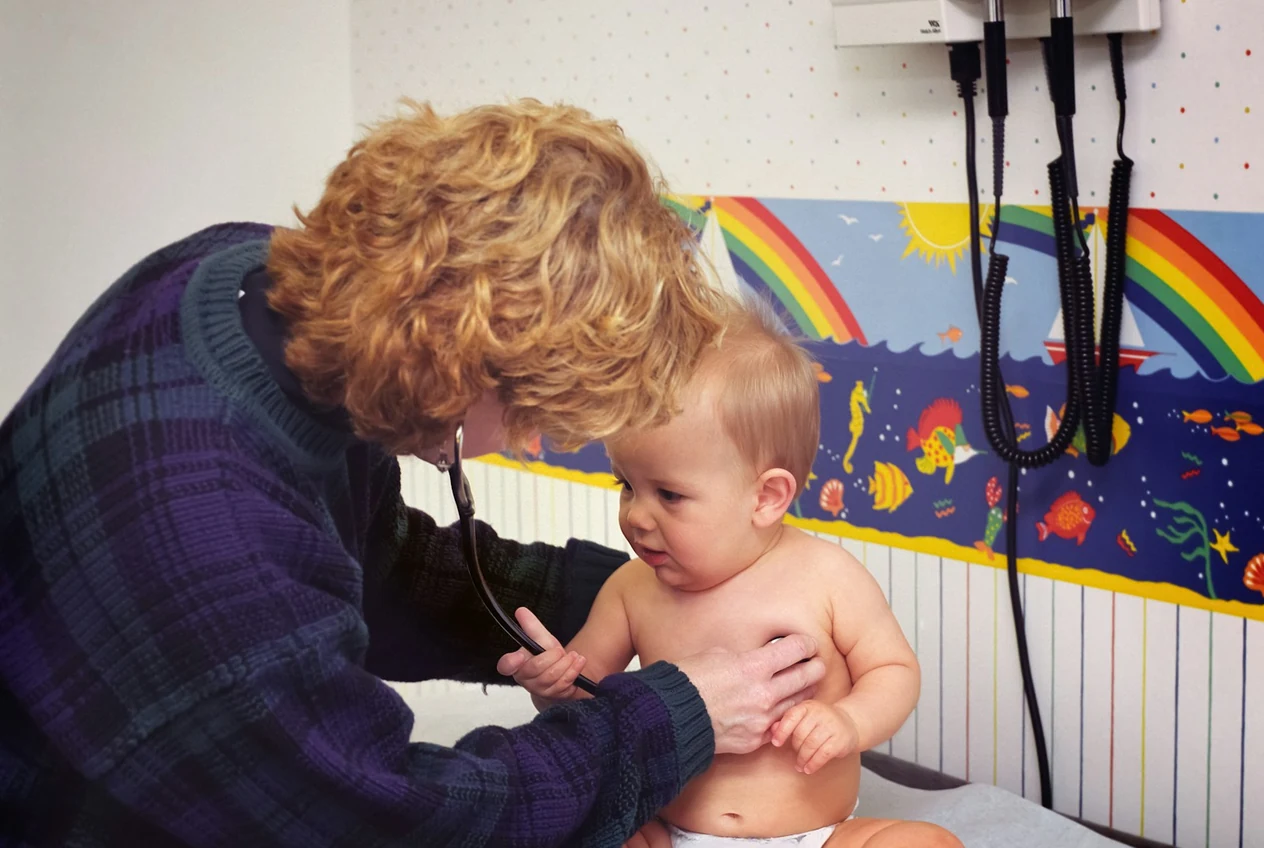
The diagnosis is usually clinical. The doctor specialising in skin health or the paediatrician easily identifies the lesions by their characteristic appearance.
Blood tests, cultures or biopsies are not usually necessary. Only in unusual cases can complementary tests be resorted to.
What treatments exist?
Many lesions disappear spontaneously over a period of 6 to 18 months, although in some children they may persist longer. The decision to treat or not will depend on the number of lesions, their location, the age of the child, the presence of atopic dermatitis and the discomfort or aesthetic impact.
Observation. In many cases the best option is simply to observe the evolution.
Curettage. It consists of removing the content of the lesion with a small instrument called a curette. It is one of the most effective treatments, although it can be uncomfortable in some children.
Cryotherapy. It can be used in older children and adolescents. It is not usually the first choice in young children due to the pain.
Topical treatments. In certain cases the doctor specialising in skin health may prescribe potassium hydroxide, cantharidin (when available), topical retinoids and other selected keratolytic treatments. The choice depends on each patient and on the experience of the specialist.
What happens when a lesion turns red?
It is frequent for a lesion to turn red, become inflamed and form a small crust. In most cases it does not mean it is infected, but that the immune system is reacting and the lesion is beginning to disappear.
A bacterial infection should only be suspected when intense pain, abundant pus, a bad smell or fever appear.
What can you do in your daily life?
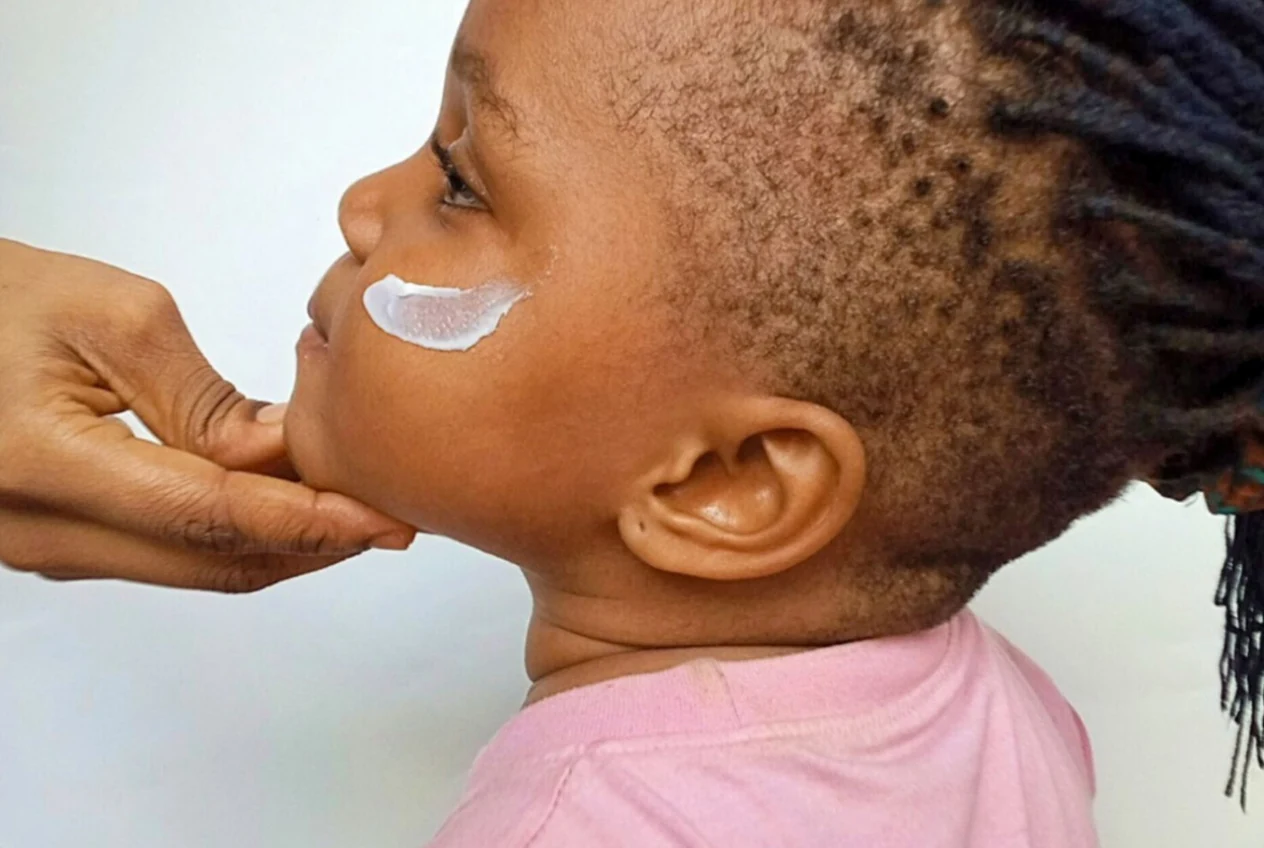
Prevent the child from scratching, keep the nails short, do not share towels or sponges, cover the lesions during contact activities if possible, moisturise the skin well if there is atopic dermatitis and follow the indications of the doctor specialising in skin health.
It is not necessary to exclude the child from school or nursery solely because of having molluscum contagiosum.
When should you consult?
You should consult if many lesions appear, if the lesions affect the eyelids or the genital area, if there is significant dermatitis around the lesions, if clear signs of bacterial infection appear, if the child has low defences or if the lesions persist for a long time or generate significant discomfort.
Myths and facts
- Myth: Molluscum appears due to lack of hygiene. Fact: No. It is a very frequent viral infection in childhood.
- Myth: All molluscum lesions must be eliminated. Fact: Many disappear spontaneously without treatment.
- Myth: If a lesion turns red it means it is infected. Fact: Most frequently it is a normal response of the immune system before its disappearance.
- Myth: The child cannot go to school. Fact: It is not usually necessary to exclude them from school.
- Myth: They always leave scars. Fact: Most disappear without leaving scars, especially if they are not manipulated.
The essential points to remember
- Molluscum contagiosum is a frequent viral infection in childhood.
- It is transmitted by direct contact and by self-inoculation.
- Most disappear spontaneously within months.
- They do not always require treatment.
- The reddening of a lesion usually indicates that it is beginning to resolve.
- Children with atopic dermatitis present a higher risk of developing numerous lesions.
- The prognosis is excellent.
Frequently asked questions
Are they contagious?
Yes. They are transmitted mainly by direct contact with the skin.
Do they disappear on their own?
Yes. In most children they disappear spontaneously over time.
Can they reappear?
Yes. As long as there is contact with the virus or by self-inoculation, new lesions can appear.
Can they appear in adults?
Yes, although they are much more frequent in children.
Do they hurt?
Usually not.
Why does my child have so many?
Children with atopic dermatitis usually develop a greater number of lesions.
Can I let them swim in the pool?
Yes. There is no contraindication, although it is advisable to cover the visible lesions when possible and not to share towels.
Do all molluscum lesions need to be removed?
Not always. The treatment is individualised according to each case.
Which specialist should assess them?
Usually the paediatrician or the doctor specialising in skin health.
Do they have a good prognosis?
Yes. It is a benign disease that usually resolves completely without sequelae.
Need personalised guidance?
This guide is for information only and does not replace a medical consultation. For an assessment tailored to your case, you may request a consultation.
Request a consultationTopics