Ingrown nail (onychocryptosis)
Toe pain and inflammation: causes and treatment
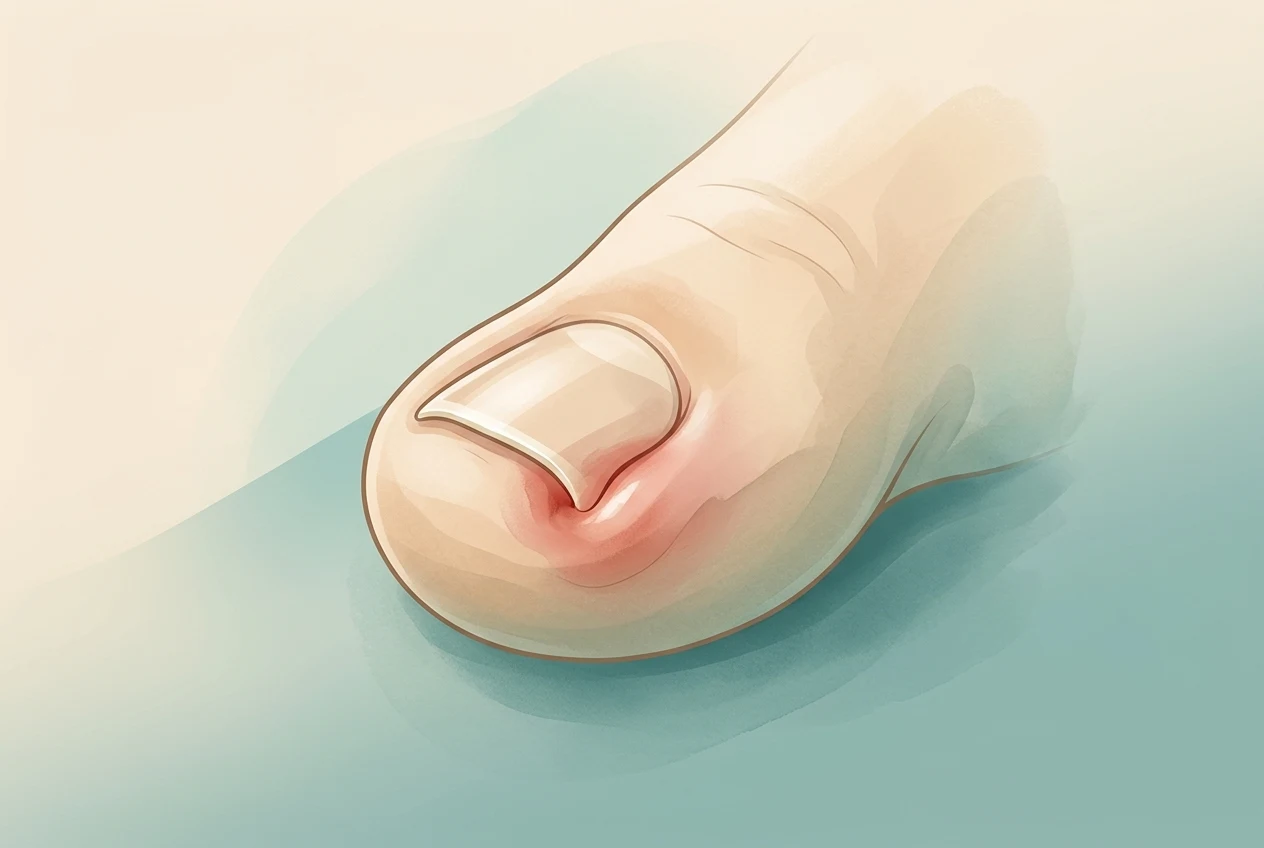
The ingrown nail is a frequent alteration that causes pain, inflammation and even infection. Learn its causes, how to prevent it and which are the most effective treatments to avoid recurrences.
What is an ingrown nail?
The ingrown nail, medically called onychocryptosis, is an alteration in which one or both edges of the nail penetrate the surrounding skin. As a consequence, an inflammatory reaction appears that can produce pain, redness, swelling, infection and the formation of granulation tissue ("spongy flesh").
Although it can affect any nail, more than 90% of cases appear on the big toe. It is a very frequent problem that can affect both adolescents and adults.
Why does it appear?
The ingrown nail is usually due to the combination of several factors.
Inadequate nail cutting. It is the most frequent cause. Cutting the edges too much, excessively rounding the corners and tearing off small fragments of the nail favor its appearance, which makes it easier for the nail to penetrate the skin as it grows.
Inadequate footwear. Shoes that are too narrow or with a very tight toe exert pressure on the nail and favor it digging into the neighboring tissue.
Trauma. Repeated blows, impact sports or direct injuries to the nail can alter its growth.
Natural shape of the nail. Some people have very curved nails (pincer nails) or an anatomical predisposition that favors onychocryptosis.
Other risk factors. Excessive sweating, obesity, diabetes, gait alterations, nail fungi (onychomycosis) and chronic edema of the feet also increase the risk.
What are the symptoms?
At first, pain when pressing the edge of the nail, redness, discomfort when walking and sensitivity to footwear appear.
If it progresses, an important inflammation, suppuration, bleeding, granulation tissue, bad smell and intense pain even at rest can appear.
Can it become infected?
Yes. When the skin breaks, bacteria can penetrate easily and produce a paronychia or infection of the tissue surrounding the nail. In patients with diabetes, arterial disease or immunosuppression, these infections require an early evaluation.
How is the diagnosis made?
The diagnosis is clinical. The doctor will assess the shape of the nail, the degree of inflammation, the presence of infection, the existence of granulation tissue and the possible favoring factors. Complementary tests are generally not necessary.
What treatments exist?
Treatment will depend on the degree of involvement.
Conservative measures. In the initial phases, warm-water baths for 10-15 minutes, keeping the area clean and dry, using wide footwear, avoiding pressure on the nail and placing small devices or dressings to separate the nail edge from the skin when the doctor considers it indicated may be sufficient.
Treatment of the infection. If there is infection, local antiseptics, topical antibiotics or oral antibiotics may be necessary in the indicated cases. Not all ingrown nails need antibiotics.
Nail surgery. When the problem is recurrent or very advanced, the most effective treatment is usually surgery. The most used technique consists of removing only the edge of the nail that produces the problem (partial avulsion) and selectively destroying the corresponding part of the nail matrix through phenolization or other techniques (partial matricectomy), to prevent that fragment from growing back. It is performed under local anesthesia, allows most of the nail to be preserved and has a high cure rate and a low recurrence rate when it is correctly indicated.
How can I prevent an ingrown nail?
To reduce the risk it is advisable to cut the nails straight, without rounding the corners, not cut them too short, use wide and comfortable footwear, maintain good foot hygiene, treat nail deformities when they exist and consult early if the first symptoms appear.
What can you do in your daily life?
Avoid manipulating the nail with scissors or pointed instruments, do not try to tear out the fragment that has become embedded, use breathable socks, keep the feet dry and temporarily decrease the activities that increase the pain.
When should you consult urgently?
You should consult quickly if pus appears, if the pain increases importantly, if there is fever, if the toe presents a redness that spreads, if you have diabetes, circulatory problems or immunosuppression, or if the ingrown nail reappears repeatedly.
Myths and facts
- Myth: It is enough to cut off the piece of nail that bothers you. Fact: On many occasions this worsens the problem and favors new recurrences.
- Myth: Antibiotics are always needed. Fact: No. They are only necessary when there is a bacterial infection.
- Myth: Surgery leaves the nail very deformed. Fact: Modern surgery usually preserves most of the nail and offers an excellent functional and aesthetic result.
- Myth: Once operated it can never reappear. Fact: When a matricectomy is performed correctly, the risk of recurrence is very low, although it is not absolutely impossible.
- Myth: Ingrown nails appear due to lack of hygiene. Fact: No. The main cause is usually an inadequate cut or the pressure of footwear.
The essential points to remember
- The ingrown nail appears when the edge of the nail penetrates the skin.
- The most frequent cause is an incorrect nail cut together with the pressure of footwear.
- It produces pain, inflammation and, occasionally, infection.
- Mild cases can be treated conservatively.
- Recurrent forms are usually resolved through a small surgery under local anesthesia with a high success rate.
- A correct nail cut and adequate footwear help to prevent new recurrences.
Frequently asked questions
Is it always necessary to operate?
No. Mild cases can be resolved with conservative treatment.
Does the surgery hurt?
It is performed under local anesthesia, so the procedure is usually well tolerated.
How long does it take to heal?
Most patients can lead a practically normal life within a few days, although complete healing usually requires several weeks.
Will I be able to walk after the surgery?
Yes. You will usually be able to walk the same day, following the recommendations of your doctor.
Can it reappear?
Yes, especially if the cause is not eliminated or a matricectomy is not performed when it is indicated.
Can children also have ingrown nails?
Yes. They are frequent in adolescents and young adults.
What type of footwear should I use?
Wide shoes, with enough space for the toes and that do not compress the nail.
What happens if I have diabetes?
You should consult early, as the risk of complications is greater.
Can I practice sports?
Yes, although during the acute phase or after the surgery it may be necessary to temporarily reduce the activity.
Does it have a good prognosis?
Yes. With adequate treatment, the vast majority of patients heal completely and recover a normal life.
Need personalised guidance?
This guide is for information only and does not replace a medical consultation. For an assessment tailored to your case, you may request a consultation.
Request a consultation