Nail psoriasis
Psoriasis of the nails: symptoms and treatment
Nail psoriasis is an inflammatory manifestation that can cause pits, thickening, color change and separation of the nails. Discover how it is diagnosed, how to differentiate it from fungi and what its treatments are.
What is nail psoriasis?
Nail psoriasis is the involvement of the nails caused by psoriasis. It can appear on the fingernails, the toenails or both, and it can present both in people with known cutaneous psoriasis and in patients without evident skin lesions.
It affects different structures of the nail: the nail matrix, where the nail is formed; the nail bed, on which it rests; and the periungual folds, which surround the nail. Depending on the affected area, the visible changes can be different. Nail psoriasis is not contagious and is not caused by an infection.
Why does it appear?
Psoriasis is an immune-mediated inflammatory disease. In predisposed people, the immune system generates an inflammation that accelerates and alters the normal growth of the cells of the skin and the nail.
Its appearance is favored by genetic predisposition, cutaneous psoriasis, psoriatic arthritis, repeated trauma, manipulation of the nails, stress, smoking, being overweight and other inflammatory factors. Small traumas can trigger or worsen the lesions through the so-called Koebner phenomenon.
What are the symptoms?
The changes depend on the part of the nail affected.
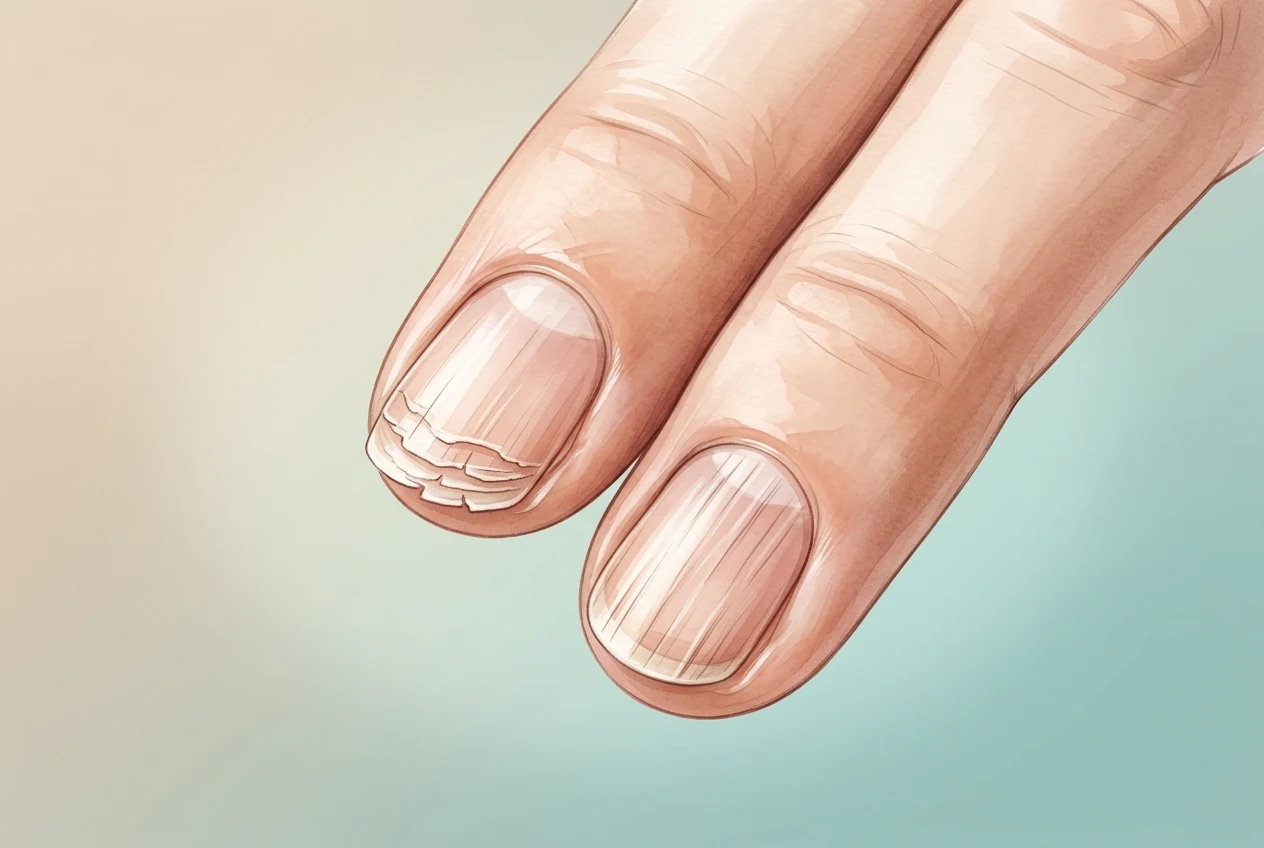
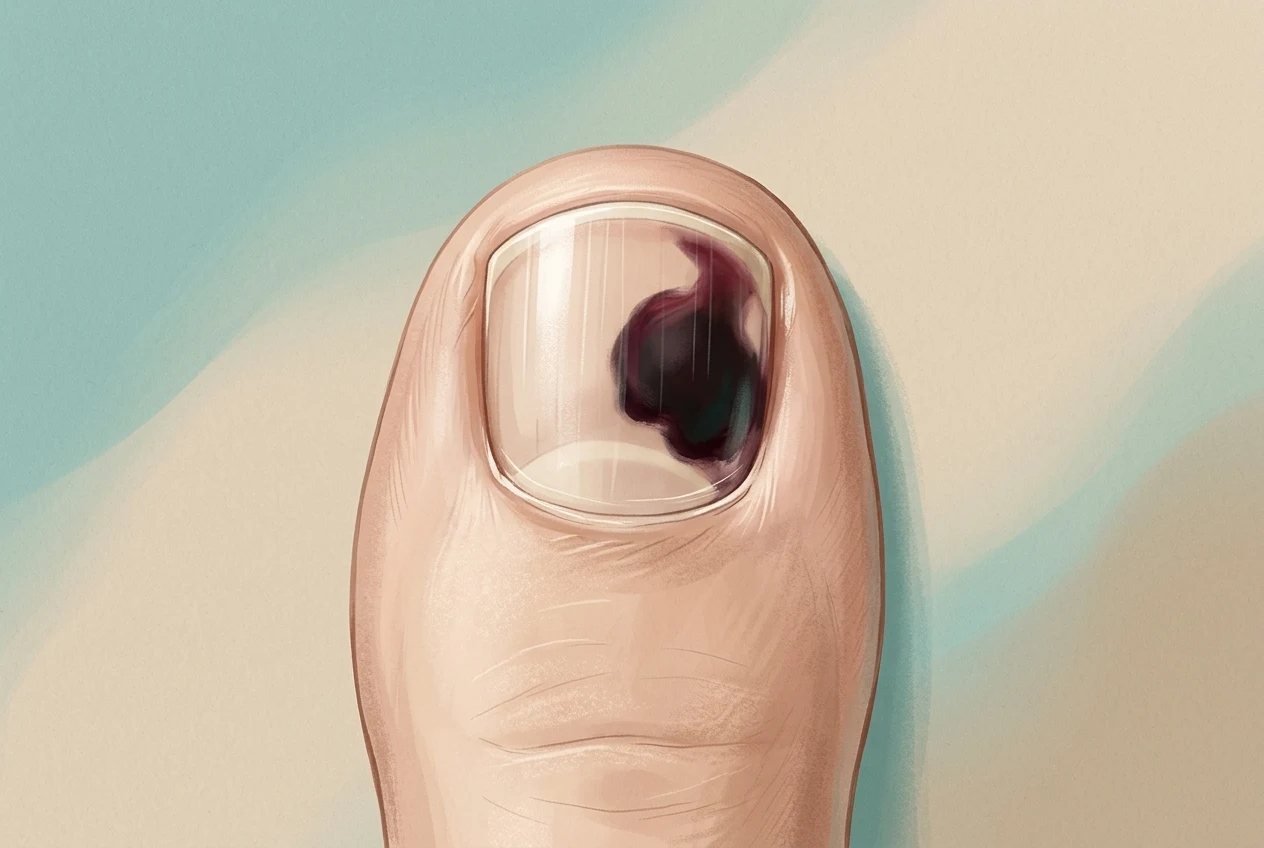
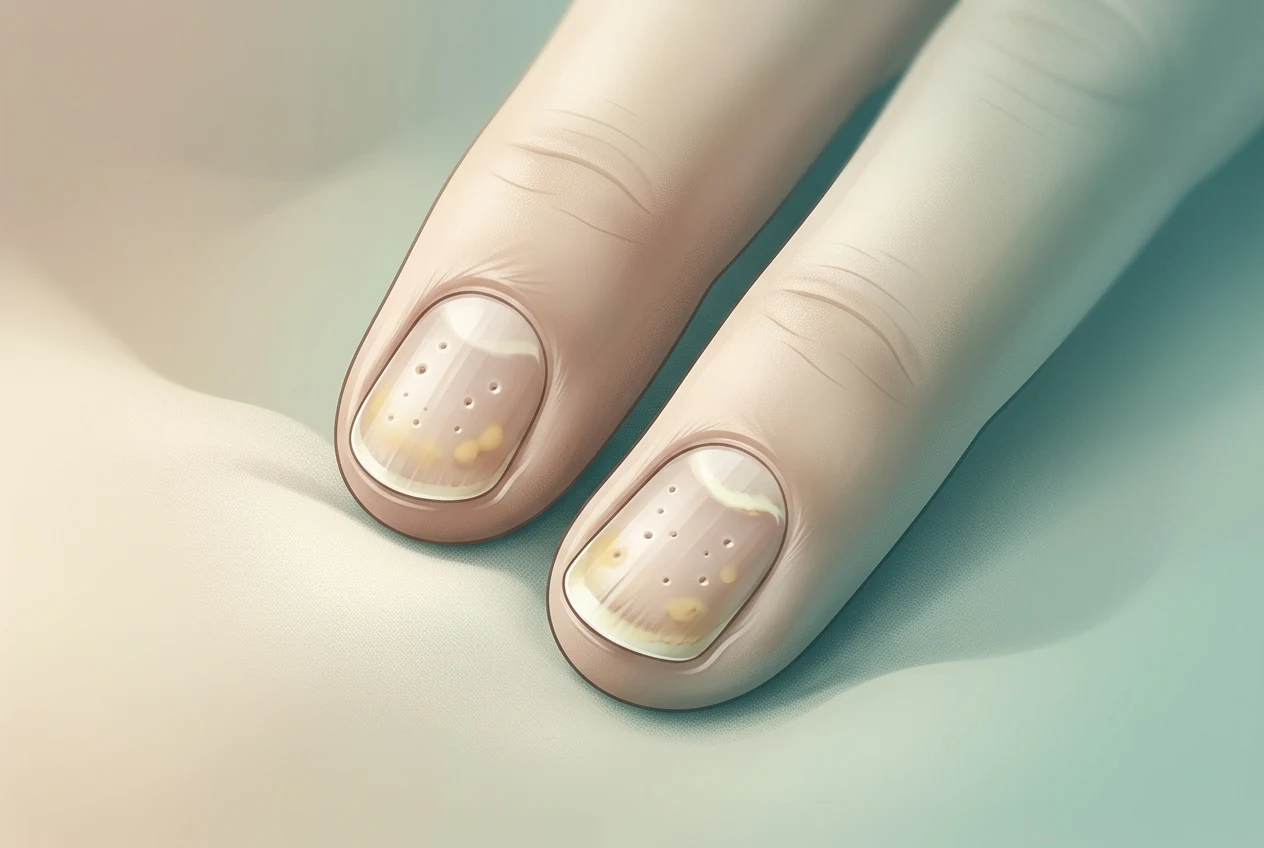
Alterations of the nail matrix. Small pits or depressions on the surface (nail pitting), transverse grooves, roughness, fragility, crumbling of the nail plate and partial or important loss of the nail in severe cases can appear.
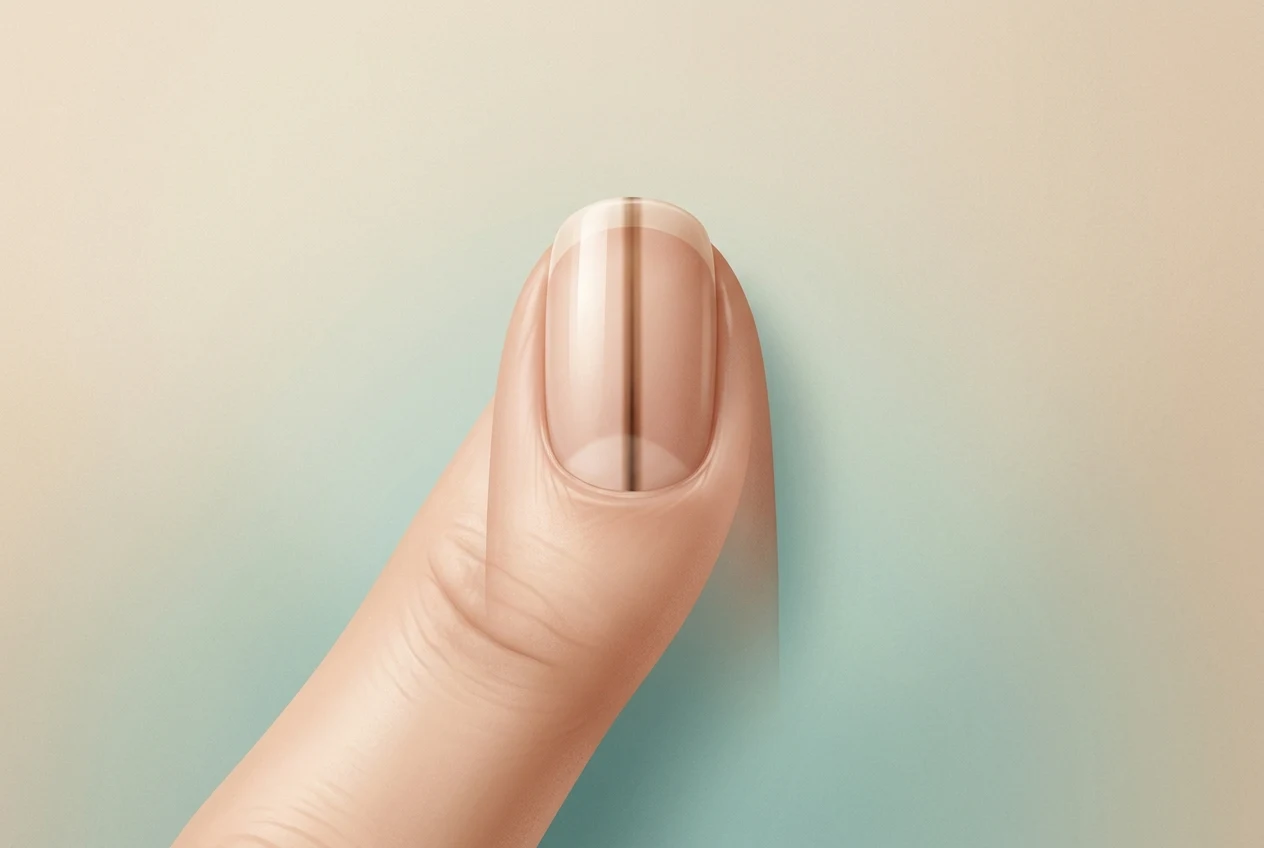
Alterations of the nail bed. The oil-drop or salmon patch (a yellowish or reddish discoloration under the nail), the separation of the nail from the bed (onycholysis), thickening under the nail or subungual hyperkeratosis, small linear hemorrhages, yellowish or whitish discoloration and accumulation of material under the nail can appear.
Other symptoms. It can also produce pain, sensitivity, difficulty in writing, buttoning or manipulating objects, discomfort when walking if it affects the feet, functional limitation and aesthetic and emotional impact.
How is the diagnosis made?
The diagnosis is usually made through the clinical history and the examination of the nails, the skin and the joints. The doctor will assess the number of affected nails, the type and severity of the lesions, the presence of psoriasis in other areas, joint pain or stiffness, family history and possible trauma or aggressive manicures. Nail dermatoscopy can help to identify characteristic signs.
Can it be confused with fungi?
Yes. Nail psoriasis can resemble an onychomycosis because both alterations can produce thickening, color change, onycholysis and accumulation of material under the nail. In addition, both diseases can coexist.
When there are doubts, a direct examination, a mycological culture, a histological study of the nail material or molecular techniques in selected cases can be performed. It is not advisable to start a prolonged antifungal treatment without first confirming that an infection exists.
The nail biopsy is rarely necessary, but it can be considered when the diagnosis is not clear and other tests do not allow other diseases to be excluded.
What treatments exist?
Treatment depends on the number of affected nails, the intensity of the lesions, the affected area of the nail, pain or functional limitation, the presence of cutaneous psoriasis and the existence of psoriatic arthritis. Nails grow slowly, so the results take months to become visible.
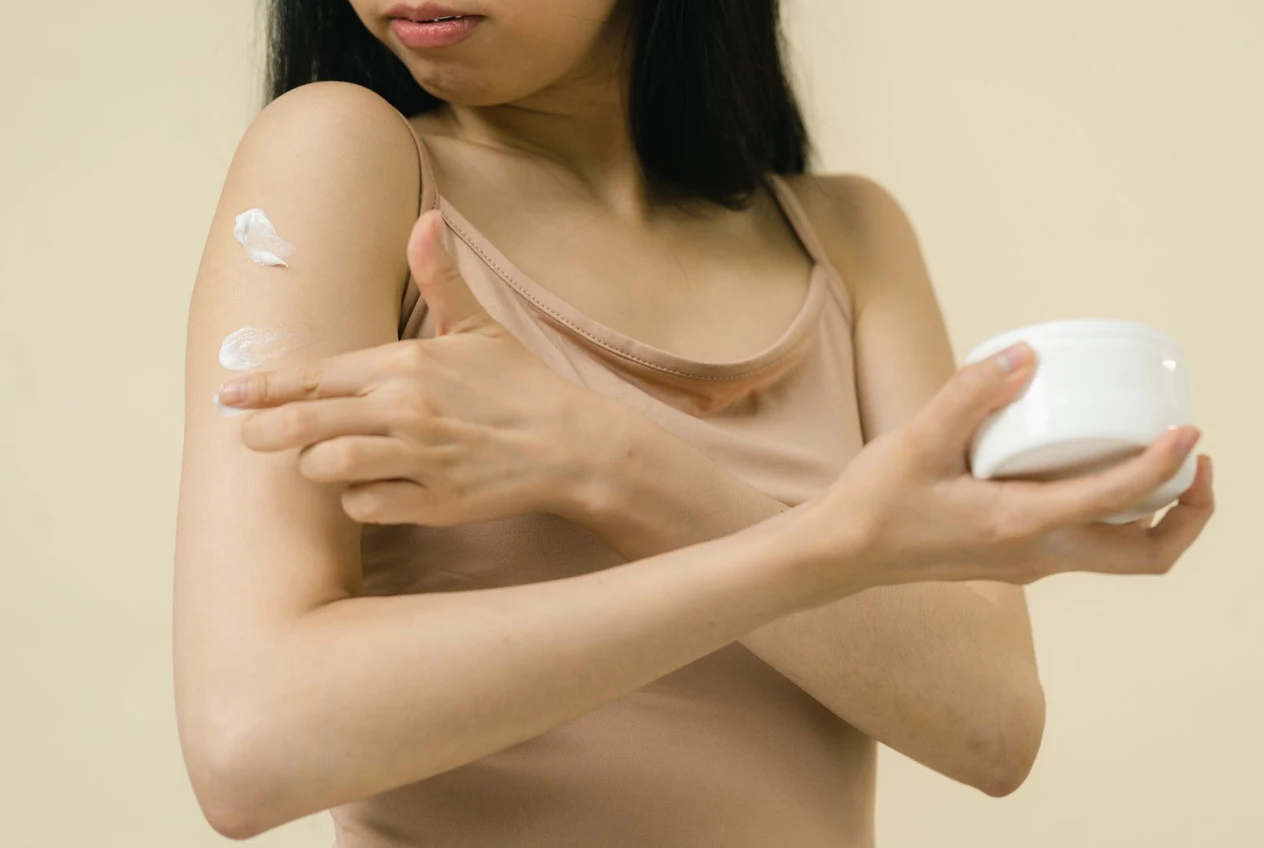
Topical treatments. They are more useful when the involvement is mild and affects few nails. Topical corticosteroids, vitamin D derivatives such as calcipotriol, combinations of corticosteroid and calcipotriol, tazarotene, tacrolimus in certain cases and preparations with urea or salicylic acid to reduce thickening can be used. Sometimes it is necessary to apply the medication around the nail and not only on its surface.
Injections. Corticosteroid injections around the matrix or the bed can be useful in some very affected nails. They can produce discomfort and should be performed by an experienced professional.
Systemic treatments. They are considered when there are many affected nails, there is pain or functional limitation, the cutaneous psoriasis is moderate or severe, there is psoriatic arthritis or the local treatments are not enough. Among the options are methotrexate, ciclosporin, acitretin, apremilast, deucravacitinib and biologic treatments directed against TNF, IL-17, IL-12/23 or IL-23. Biologics are usually especially effective when there is important nail involvement associated with extensive psoriasis or psoriatic arthritis.
Treatment of an associated infection. If a concomitant onychomycosis is confirmed, it should be treated specifically with topical or oral antifungals, depending on the case.
Tips for daily life
To avoid worsening it is recommended to keep the nails short, file them gently, avoid tearing off cuticles or skin, not scrape the material accumulated under the nail, use gloves for wet tasks or with chemical products, avoid blows and repeated pressure, use wide footwear if the toenails are affected, moisturize nails and cuticles daily, avoid aggressive manicures, acrylic nails and traumatic polish removals, and not bite the nails. Cosmetic polishes can be used if they do not irritate and are removed gently.
When should you consult?
It is advisable to consult if pits, thickening or separation of several nails appear, if the changes are persistent, if there is pain, if walking or using the hands is difficult, if there is psoriasis on the skin, if stiffness, pain or swelling appear in the joints, if a single nail presents a progressive unexplained alteration, if a fungal infection is suspected or if the usual treatment does not produce improvement.
The presence of nail psoriasis can be associated with a higher risk of psoriatic arthritis, so joint symptoms should be assessed.
Myths and facts
- Myth: Nail psoriasis is a fungus. Fact: No. It is an inflammatory disease, although it can coexist with a fungal infection.
- Myth: It is contagious. Fact: It is not transmitted by contact, pools, showers or utensils.
- Myth: If it only affects the nails, it cannot be psoriasis. Fact: It can appear without evident skin lesions.
- Myth: The nails heal in a few weeks. Fact: The improvement is slow because the nail must grow again.
- Myth: Tearing off or cutting the whole altered part accelerates healing. Fact: Manipulation can worsen the inflammation and cause new lesions.
- Myth: All patients need systemic treatment. Fact: Mild cases can be controlled with local treatment and protective measures.
The essential points to remember
- Nail psoriasis is an inflammatory manifestation of psoriasis.
- It can affect the matrix, the bed or both structures.
- The most characteristic signs are pitting, the oil-drop patch, onycholysis and subungual hyperkeratosis.
- It can be confused with a fungal infection, so in some cases tests are necessary.
- Treatment can be topical, injected or systemic depending on the severity.
- The improvement is slow because it depends on the growth of a new nail.
- The presence of joint symptoms requires evaluation to rule out psoriatic arthritis.
Frequently asked questions
Can it affect only one nail?
Yes, although it is more frequent for it to affect several. When a single nail changes persistently, it is advisable to rule out other causes.
Does pitting always mean psoriasis?
No. It can also be seen in other diseases, although it is a characteristic sign when it appears together with other compatible data.
Can it disappear completely?
Yes, it can improve notably or disappear, although it can also present relapses.
How long does it take to improve?
The response usually needs several months. Fingernails take approximately four to six months to renew; toenails may need between twelve and eighteen months.
Can I paint my nails?
Yes, as long as there is no irritation and the polish is removed without scraping or damaging the surface.
Are gel or acrylic nails advisable?
They are usually not advised during flare-ups, as they can produce trauma, irritation, contact allergy and worsening.
Does nail psoriasis hurt?
It can hurt, especially when there is onycholysis, important thickening, inflammation or involvement of the feet.
Is it related to psoriatic arthritis?
Yes. Nail involvement is more frequent in people with psoriatic arthritis and can be a risk marker.
Do I need a fungal test?
It can be convenient when there is thickening, color change or separation of the nail, because fungi and psoriasis can resemble each other or coexist.
Do supplements improve the nails?
There is no evidence that supplements cure nail psoriasis, unless there is an independent nutritional deficiency.
Does it have a good prognosis?
Yes, but it requires patience, protection against trauma and a treatment adapted to the severity.
Need personalised guidance?
This guide is for information only and does not replace a medical consultation. For an assessment tailored to your case, you may request a consultation.
Request a consultationTopics