Melanonychia is a brown or black pigmentation of the nail that can have benign causes or, on rare occasions, correspond to a subungual melanoma. Learn its warning signs, how it is diagnosed and when you should consult.
What is melanonychia?
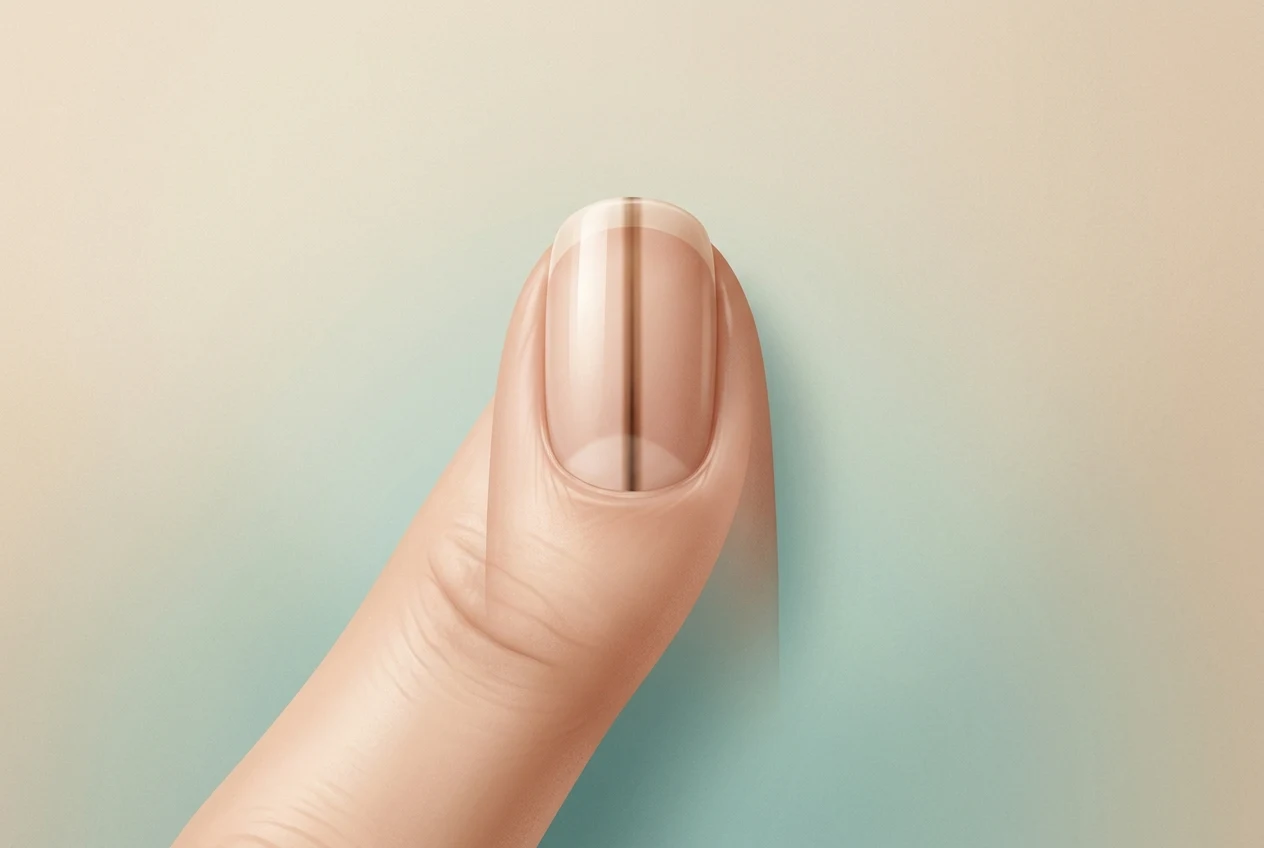
Melanonychia is the appearance of a brown, gray or black band or coloration on a nail, due to the deposit of melanin, the pigment responsible for the color of the skin, the hair and the nails. It can affect a single nail, several nails and the fingernails or toenails.
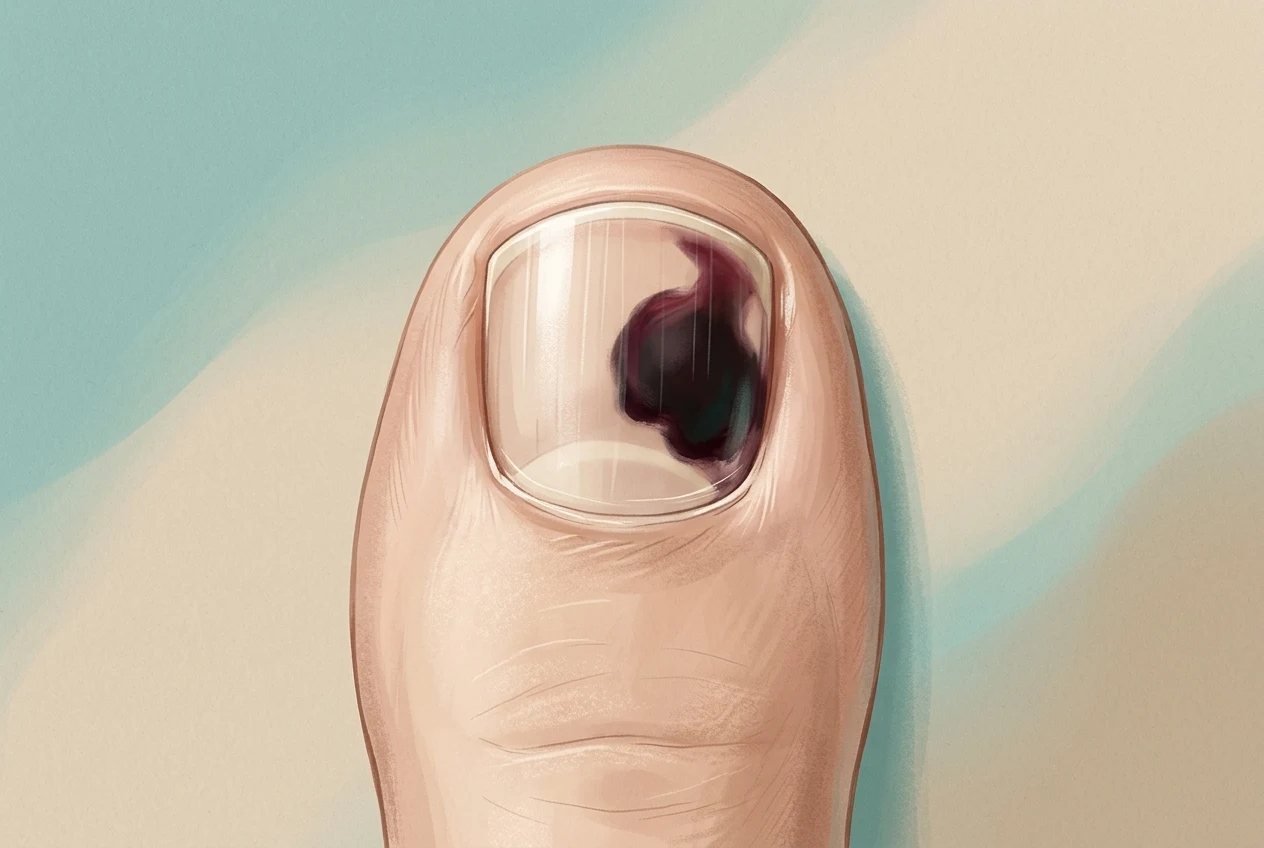
The most frequent form is longitudinal melanonychia, in which a pigmented band appears that extends from the base of the nail to the free edge. Melanonychia is not a diagnosis, but a clinical sign that can have multiple causes, from completely benign situations to diseases that require an early diagnosis, such as subungual melanoma.
Why does it appear?
Melanonychia can occur because the melanocytes (the cells that make melanin) produce more pigment or because their number increases.
Benign causes. The most frequent are physiological variation (especially in people with dark phototypes), repeated trauma, pregnancy, some medications, inflammatory diseases, infections, nevi (moles) of the nail matrix and lentigo of the nail matrix. In people with dark skin it is usual to find several nails affected symmetrically.
Medications. Some treatments can cause melanonychia, among them chemotherapy, minocycline, zidovudine, antimalarials and some immunomodulatory drugs. In these cases several nails are usually affected.
General diseases. It can also appear in Addison's disease, Laugier-Hunziker syndrome, Peutz-Jeghers syndrome, some endocrine diseases and certain genetic disorders.
Subungual melanoma. Although it is an infrequent cause, it is the most important one that must be ruled out. Subungual melanoma is a cancer originating in the melanocytes of the nail matrix and can manifest initially only as a dark band. Early diagnosis improves the prognosis very importantly.
What are the symptoms?
Most melanonychias do not produce pain. What the patient usually observes is a brown or black line, a band that runs along the entire nail, a progressive darkening or the color change of a single nail. When the cause is benign, the band usually remains stable for years.
What signs should draw attention?
It is advisable to consult quickly if any of the following signs appear: involvement of a single nail in an adult, a wide band (especially wider than 3 mm), a very dark or irregular color, several shades of brown or black in the same band, poorly defined edges, progressive widening of the band, rapid change in appearance, extension of the pigment towards the skin surrounding the nail (Hutchinson's sign), bleeding, destruction of the nail or personal or family history of melanoma.
These signs do not necessarily mean that a melanoma exists, but they do justify an urgent medical evaluation.
How is the diagnosis made?
The diagnosis begins with a detailed clinical history. The doctor will ask about the time of evolution, recent changes, trauma, medication, previous diseases and family history. Afterwards, they will examine all the nails, the skin and the mucous membranes.
Nail dermatoscopy. Dermatoscopy makes it possible to analyze the pigmentation pattern of the band and, on many occasions, helps to distinguish benign lesions from suspicious lesions.
Follow-up. When the lesion appears benign, periodic controls with photographs and digital dermatoscopy can be recommended to verify that it remains stable.
Biopsy. When there is a suspicion of melanoma, it may be necessary to perform a biopsy of the nail matrix, which is the only test capable of confirming the diagnosis.
What treatments exist?
Treatment depends completely on the cause.
Physiological melanonychia. It does not need treatment.
Medications. If the pigment is related to a medication, the doctor will assess whether it is necessary to modify the treatment. A medication should never be discontinued on one's own initiative.
Benign lesions. Nevi or lentigos usually require only periodic observation, unless they change in appearance.
Subungual melanoma. When a melanoma is confirmed, treatment consists of surgical removal following the current oncological protocols, and will depend on the stage of the tumor.
What can you do in your daily life?
Observe your nails periodically, photograph the lesion if a new pigmented band appears, avoid repeated trauma, do not manipulate the cuticle and attend the check-ups indicated by the doctor.
When should you consult the doctor?
You should request an evaluation if a new dark band appears, if only one nail is affected, if the band increases in size, if it changes color, if pigment appears on the nearby skin, if the nail begins to deform, if there is pain or bleeding, or if you have a personal or family history of melanoma. An early evaluation makes it possible to differentiate most of the benign lesions from those that require treatment.
Myths and facts
- Myth: Every black line on a nail is a melanoma. Fact: No. Most melanonychias have a benign cause.
- Myth: If it does not hurt, it cannot be serious. Fact: Subungual melanoma is usually painless in its initial phases.
- Myth: Hitting my nail always explains a black band. Fact: A trauma can produce pigmentation or hematomas, but it should not be attributed automatically to that cause without medical evaluation.
- Myth: If it affects several nails there is never anything to worry about. Fact: Although it usually suggests a benign or systemic cause, the clinical context should always be assessed.
- Myth: Painting the nail with polish makes the problem disappear. Fact: The polish only hides the lesion and can delay the diagnosis.
The essential points to remember
- Melanonychia is a brown or black band produced by melanin in the nail.
- Most cases are benign.
- It is fundamental to differentiate it from subungual melanoma.
- Dermatoscopy is an essential tool for its study.
- Some lesions require follow-up and others a biopsy.
- Any progressive change of a pigmented band should be assessed by a specialized doctor.
Frequently asked questions
Is melanonychia a cancer?
No. It is a clinical sign that can have multiple causes, most of them benign.
Can it appear with age?
Yes. It is more frequent with aging and in certain phototypes.
Can it be due to a blow?
Yes, although it must be confirmed through a clinical evaluation.
Can it disappear on its own?
It depends on the cause. Some disappear and others remain stable for years.
Is it contagious?
No.
Do I need a biopsy?
Only when there are signs of suspicion or the diagnosis is not clear.
Can it affect children?
Yes. In children it is usually due to benign lesions, although it must always be evaluated.
What is Hutchinson's sign?
It is the extension of the pigment from the nail towards the skin that surrounds it. It can be a warning sign that requires urgent study, although it does not always indicate melanoma.
How do I differentiate a hematoma from melanonychia?
A hematoma usually moves towards the tip as the nail grows. Melanonychia originates in the matrix and remains attached to it.
Does it have a good prognosis?
Yes. Most melanonychias are benign. The important thing is to identify early the few that correspond to a melanoma.
Need personalised guidance?
This guide is for information only and does not replace a medical consultation. For an assessment tailored to your case, you may request a consultation.
Request a consultationTopics