The skin microbiome: the silent revolution transforming modern dermatology
Understanding its role in acne, rosacea, eczema and skin ageing
Doctor Florian A. Vallecillo Cabrera
Author
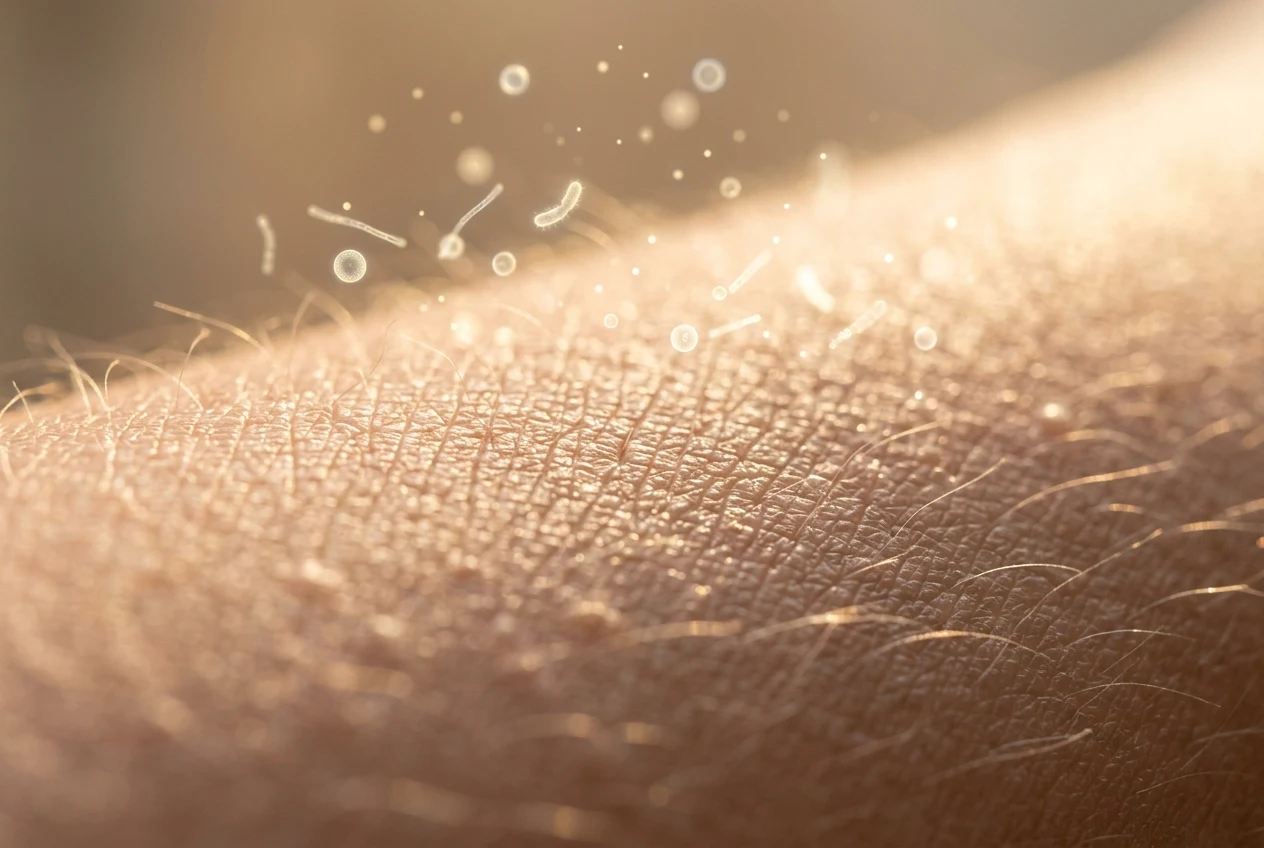
For over a century, medicine regarded the bacteria on our skin as mere microorganisms liable to cause infection. That view is now being profoundly challenged: genetic sequencing has revealed that our skin hosts an extraordinarily complex ecosystem — bacteria, fungi, viruses, bacteriophages and microscopic mites — that actively helps to maintain skin health.
Introduction
For a very long time, dermatology rested on a relatively simple idea: when a bacterium was present on the skin, it was either harmless or responsible for an infection.
This binary view has changed profoundly.
Thanks to the development of modern molecular-biology techniques — in particular next-generation sequencing — researchers have discovered that human skin is colonised by a considerable diversity of microorganisms living in balance.
Today it appears that this balance is often more important than the mere presence or absence of a given species.
A bacterium long regarded as pathogenic may in fact play a protective role when present in certain proportions. Conversely, a usually beneficial bacterium can become harmful when the balance of the ecosystem is disrupted.
This new way of understanding the skin probably represents one of the most important revolutions in dermatology in several decades.
It explains why two people carrying exactly the same bacterium will not necessarily develop the same disease.
It also explains why some modern therapeutic approaches now seek to restore a biological balance rather than systematically eliminate all microorganisms.
Why do we speak of a scientific revolution today?
The progress made over the past fifteen years or so is considerable.
Before 2010, most knowledge came from classic microbiological cultures.
These techniques had several major limitations:
- many species could not be cultured in the laboratory;
- certain very fragile bacteria disappeared rapidly;
- interactions between species remained largely unknown;
- viruses and bacteriophages were very little studied.
The arrival of high-throughput sequencing completely changed this situation.
Researchers can now directly identify the DNA or RNA of the microorganisms present on the skin without having to culture them.
This approach has revealed an unexpected biodiversity.
Healthy skin is not sterile.
On the contrary, it is an extremely living environment where several thousand different species coexist in a dynamic balance.
Recent research shows that this balance varies according to:
- age;
- sex;
- hormones;
- genetics;
- climate;
- occupation;
- sun exposure;
- cosmetics;
- antibiotics;
- diet;
- the gut microbiota;
- certain general diseases.
We have thus moved from a dermatology centred on an infectious agent to a dermatology of ecosystems.
Microbiota, microbiome and metagenome: three different notions
These three terms are often used as synonyms.
Yet they correspond to different concepts.
The microbiota
The microbiota refers to all the living organisms present on a given surface.
In the case of the skin, it includes in particular:
- bacteria;
- fungi;
- viruses;
- bacteriophages;
- certain microscopic mites.
The microbiota therefore corresponds to the organisms themselves.
The microbiome
The microbiome refers to all the genetic material of these microorganisms.
In other words, it is no longer about the species present, but about all of their genes.
This distinction is essential.
Two microbiotas that may contain very similar species can possess very different microbiomes depending on the genes expressed.
And it is these genes that determine the biological functions actually performed.
The metagenome
The metagenome corresponds to all the genetic sequences found in a sample.
It includes:
- the genes of bacteria;
- the genes of fungi;
- viruses;
- but also the human DNA present in the sample.
Metagenomic analysis now makes it possible to study this entire ecosystem simultaneously without prior culture.
A genuine forgotten organ?
Many researchers now regard the microbiota as a genuine functional organ.
This claim may come as a surprise.
Yet several arguments point in this direction.
The microbiota has:
- a complex organisation;
- its own metabolic activity;
- permanent communication with human cells;
- a capacity for adaptation;
- a demonstrated influence on many physiological functions.
The skin microbiota alone represents several billion microorganisms.
The entire human microbiota, across all locations, contains more genes than our own genome.
This genetic richness explains its ability to produce many biologically active molecules.
Some are anti-inflammatory.
Others stimulate immunity.
Some limit the proliferation of pathogenic bacteria.
Others probably contribute to wound healing or to the repair of the skin barrier.
Thus, the skin can no longer be regarded solely as an anatomical organ.
It constitutes a genuine living ecosystem in which human cells and microorganisms cooperate at all times.
Why does this article matter?
For decades, many dermatological treatments had as their main objective to reduce the number of bacteria present on the skin.
Today, research shows that the question is no longer:
"How do we eliminate bacteria?"
but rather:
"How do we restore a balanced microbiota?"
This conceptual shift is already influencing:
- clinical dermatology;
- aesthetic medicine;
- wound healing;
- the prevention of infections;
- daily skincare;
- modern cosmetics;
- the development of new biological treatments.
It will probably reshape a large part of dermatology in the decades to come.
Key points
- The skin hosts an extremely complex ecosystem made up of billions of microorganisms.
- The microbiota is not limited to bacteria: it also includes fungi, viruses, bacteriophages and microscopic mites.
- Maintaining a balance is often more important than the mere presence of a given species.
- Modern sequencing techniques have profoundly transformed our understanding of the skin.
- The microbiota is now regarded as a major player in immunity, wound healing, inflammation and skin ageing.
- Modern dermatology increasingly seeks to restore a biological balance rather than systematically eliminate microorganisms.
The composition of the skin microbiota: a genuine living ecosystem
One skin, several ecosystems
One of the most important discoveries of the past decade is that the skin microbiota is not uniform.
There is not one skin microbiota, but a multitude of micro-ecosystems that coexist on the same person.
Each region of the body has:
- a different temperature;
- a specific level of humidity;
- a variable production of sebum;
- a particular pH;
- different exposure to light;
- a variable density of hair follicles;
- its own concentration of eccrine and apocrine glands.
These differences create genuine ecological niches, comparable to the different terrestrial biomes.
Just as a desert, a tropical forest and a marine environment host different species, the underarms, the scalp, the face and the forearms each possess their own microbiological signature.
The studies of the Human Microbiome Project and more recent work using metagenomic sequencing show that it is practically impossible to define a universal "normal microbiota".
Every individual has a microbial fingerprint that is partly their own.
Bacteria: the most numerous inhabitants
Bacteria are the best-known component of the skin microbiota.
Hundreds of different species can be found on healthy skin.
A few large groups nonetheless dominate the ecosystem.
The main phyla are:
- Actinobacteria;
- Firmicutes;
- Proteobacteria;
- Bacteroidetes.
Within these groups, certain species play a major role in the balance of the skin.
Cutibacterium acnes: much more than an acne bacterium
For decades, Cutibacterium acnes (formerly Propionibacterium acnes) was regarded as the sole cause of acne.
This view is now outdated.
This bacterium is present in the majority of individuals with perfectly healthy skin.
What seems important is not its mere presence, but:
- the diversity of its subtypes (phylotypes);
- their relative balance;
- their interactions with other bacteria;
- their metabolic activity.
Some lineages produce more inflammatory factors.
Others, on the contrary, appear to contribute to the stability of the microbiota.
Thus, acne may result more from an ecological imbalance than from the mere proliferation of a bacterium.
This discovery explains why prolonged antibiotic treatments are now used with greater caution.
They can reduce inflammation, but also durably impoverish bacterial diversity.
Staphylococcus epidermidis: a long-underestimated ally
Staphylococcus epidermidis is probably one of the best examples of a protective bacterium.
Naturally present on healthy skin, it takes part in several essential mechanisms:
- inhibition of pathogenic bacteria;
- production of antimicrobial peptides;
- maintenance of the skin pH;
- modulation of the immune response;
- limitation of inflammation.
Some strains even produce substances capable of inhibiting the growth of Cutibacterium acnes or Staphylococcus aureus.
However, not all strains possess the same properties.
The future of dermatology will probably rest more on understanding the functions of strains than on their mere identification.
Staphylococcus aureus: an opportunist
Unlike S. epidermidis, Staphylococcus aureus is more associated with inflammatory diseases.
It can be found on healthy skin.
However, when it becomes dominant, it is strongly associated with several conditions:
- atopic dermatitis;
- certain skin infections;
- impetigo;
- superinfection of wounds;
- worsening of certain inflammatory dermatoses.
In patients with atopic dermatitis, the decrease in bacterial diversity is often accompanied by a proliferation of S. aureus.
The modern therapeutic goal is therefore not only to suppress this bacterium, but also to restore a sufficiently diverse microbiota to naturally limit its proliferation.
Corynebacterium: the specialists of moist areas
Species of the genus Corynebacterium preferentially colonise:
- the underarms;
- the skin folds;
- the groin area.
They play a major role in transforming certain components of sweat.
This activity contributes in particular to the development of body odour.
It is important, however, to recall that they are part of the normal microbiota.
The goal is therefore not their complete elimination.
Fungi: a long-ignored world
The skin microbiota is not limited to bacteria.
Fungi are also an essential component.
The most abundant genus is Malassezia.
These lipophilic yeasts use the lipids of sebum as an energy source.
They mainly colonise:
- the scalp;
- the face;
- the chest;
- the back;
- the ears.
For a long time, Malassezia was studied only through certain diseases:
- pityriasis versicolor;
- seborrhoeic dermatitis;
- Malassezia folliculitis.
Today, several studies suggest a much more complex role.
Depending on the circumstances, these yeasts may contribute:
- to the balance of the microbiota;
- to immune regulation;
- or, on the contrary, promote inflammation when an imbalance appears.
Here again, the problem seems to lie more in the disruption of the balance than in the presence of the yeast itself.
Viruses: the invisible part of the microbiota
The skin also hosts a very large diversity of viruses.
The majority are not responsible for disease.
We mainly distinguish:
- viruses that infect human cells;
- bacteriophages.
Cutaneous papillomaviruses, certain polyomaviruses and other commensal viruses may be present without causing symptoms.
Their exact role is still poorly understood.
Bacteriophages: the regulators of bacteria
Bacteriophages are viruses specialised in infecting bacteria.
They probably represent one of the most fascinating components of the microbiota.
They are able to:
- destroy certain bacteria;
- modify their behaviour;
- transfer genes;
- influence the overall balance of the ecosystem.
Several teams are currently working on the therapeutic use of bacteriophages in order to target certain pathogenic bacteria without disturbing the whole microbiota.
This approach could represent an interesting alternative to antibiotics in some situations.
Demodex mites
Two species mainly colonise human skin:
- Demodex folliculorum;
- Demodex brevis.
These microscopic mites live in:
- the hair follicles;
- the sebaceous glands.
They are found in a large proportion of adults.
Their mere presence is therefore not pathological.
However, a significant increase in their density is associated with certain forms of rosacea and blepharitis.
The exact relationships between Demodex, the bacteria they carry and the immune response are still being actively studied.
Biofilms: a collective organisation
Skin microorganisms do not always live in isolation.
They can organise themselves into biofilms.
A biofilm is a community of microorganisms surrounded by a protective matrix that they produce themselves.
This organisation gives them several advantages:
- better resistance to antibiotics;
- better resistance to antiseptics;
- protection against the immune system;
- metabolic exchanges between species;
- chemical communication.
Biofilms are now studied in:
- acne;
- chronic wounds;
- certain medical-device infections;
- ulcers;
- complicated scars.
Understanding how they work could allow the development of new therapeutic strategies.
A microbial geography of the skin
The face
The face is rich in sebum.
It is dominated by:
- Cutibacterium acnes;
- Malassezia;
- Staphylococcus epidermidis.
The composition varies between the forehead, the nose, the cheeks and the chin.
The scalp
The scalp is a particularly lipid-rich environment.
Malassezia yeasts occupy a central place there.
The microbiota there probably influences:
- dandruff;
- seborrhoeic dermatitis;
- certain follicular inflammations;
- possibly some forms of alopecia, although the evidence remains limited.
The underarms
The underarms represent a warm, moist and relatively closed environment.
They mainly contain:
- Corynebacterium;
- Staphylococcus;
- various anaerobic bacteria.
The composition of the microbiota strongly influences:
- body odour;
- certain fold dermatitis;
- the changes observed in hyperhidrosis.
The hands
The hands are subjected to repeated washing.
The microbiota there is particularly dynamic.
It varies according to:
- occupational activities;
- the use of soaps;
- antiseptics;
- environmental contacts.
The feet
The feet represent one of the most humid environments of the body.
They host:
- bacteria;
- yeasts;
- dermatophytes in certain pathological situations.
Chronic humidity profoundly modifies this balance.
The dry areas
The forearms, the legs and certain regions of the trunk generally have a greater bacterial diversity than the very oily areas.
These regions are particularly interesting for the study of the stability of the microbiota.
A permanently dynamic microbiota
Contrary to a long-held idea, the skin microbiota is not fixed.
It constantly evolves under the influence of:
- age;
- puberty;
- pregnancy;
- hormones;
- the seasons;
- climate;
- diet;
- sleep;
- stress;
- pollution;
- cosmetics;
- dermatological treatments;
- antibiotics;
- physical activity.
This capacity for adaptation explains why two samples taken from the same individual several months apart are never entirely identical.
The goal of modern dermatology is therefore no longer to define a "perfect" microbiota, but to understand which balances durably promote skin health.
Key points
- Each region of the skin has its own microbiota.
- Bacteria represent only part of this ecosystem, alongside fungi, viruses, bacteriophages and mites.
- Cutibacterium acnes is not only an acne bacterium: some strains appear protective.
- Staphylococcus epidermidis actively contributes to the defence of the skin, whereas Staphylococcus aureus is associated with several inflammatory diseases when it becomes predominant.
- Yeasts of the genus Malassezia are part of the normal microbiota but can become involved in certain dermatoses in the event of imbalance.
- Biofilms represent a form of collective organisation that influences the resistance of microorganisms and the chronicity of certain diseases.
- The skin microbiota is a dynamic ecosystem that evolves throughout life and according to the environment.
The skin microbiota: a true conductor of immunity and of the skin barrier
For a long time, the microbiota was thought to be passive
One of the greatest errors of 20th-century dermatology consisted in regarding skin microorganisms as mere occupants of the skin.
They were present. They could sometimes cause an infection. But they played no particular role when the skin was healthy.
This view has now been completely abandoned.
The research of the last fifteen years shows that the microbiota maintains a constant dialogue with practically all the cells of the epidermis.
In other words, the skin is not simply colonised. It communicates constantly with its microscopic inhabitants.
This communication influences:
- the maturation of the immune system;
- the repair of the skin barrier;
- the intensity of inflammation;
- wound healing;
- protection against infections;
- skin ageing;
- probably even certain responses to dermatological treatments.
The microbiota is today regarded as a functional player in skin physiology.
The skin: an immune organ
The skin constitutes the largest immune organ of the human body.
Each square centimetre contains:
- keratinocytes;
- Langerhans cells;
- macrophages;
- resident lymphocytes;
- dendritic cells;
- mast cells;
- NK cells;
- fibroblasts capable of producing numerous mediators.
These cells constantly monitor the environment.
The microbiota participates directly in their education.
In its absence, several experimental models show a profoundly modified immune response.
In other words, our immune system learns from the very first days of life to distinguish:
- useful microorganisms;
- potentially dangerous microorganisms;
- the cells of our own body.
This learning phase is essential.
The dialogue between the skin and the microbiota
Microorganisms continuously produce:
- enzymes;
- peptides;
- fatty acids;
- metabolites;
- signalling molecules.
Human cells detect these substances thanks to specialised receptors.
Among the most important are:
- Toll-Like Receptors (TLR);
- NOD-Like Receptors;
- various receptors for recognising microbial patterns.
Contrary to what was previously believed, the activation of these receptors does not systematically lead to inflammation.
In many situations, it on the contrary promotes:
- immune tolerance;
- tissue repair;
- the stability of the skin barrier.
The immune system therefore does not seek to eliminate the microbiota. It learns to live with it.
Keratinocytes: much more than a simple barrier
Keratinocytes represent about 90% of the cells of the epidermis.
They were long regarded as simple structural cells.
We now know that they also play a major immunological role.
They are capable of:
- detecting microorganisms;
- producing cytokines;
- secreting chemokines;
- manufacturing antimicrobial peptides;
- recruiting immune cells.
They constantly adapt their behaviour according to the signals sent by the microbiota.
When this balance is broken, they can produce an excessive inflammatory response.
Antimicrobial peptides
The skin naturally manufactures numerous molecules capable of controlling microbial populations.
Among the best known:
- defensins;
- the cathelicidin LL-37;
- psoriasins;
- dermcidins.
These molecules have several functions. They can:
- destroy certain bacteria;
- limit the proliferation of fungi;
- prevent the colonisation of certain pathogens;
- modulate the inflammatory response;
- promote wound healing.
The microbiota directly influences their production. Conversely, these peptides modify the composition of the microbiota.
There is therefore a genuine regulatory loop.
Does the microbiota protect against infections?
Yes. And probably much more than was imagined.
Today we speak of colonisation resistance.
This notion refers to the ability of the normal microbiota to prevent the establishment of pathogenic microorganisms.
Several mechanisms are involved. The microbiota:
- occupies the adhesion sites;
- consumes the available nutrients;
- produces antimicrobial substances;
- modifies the pH;
- stimulates the production of human antimicrobial peptides;
- activates certain protective immune responses.
This protection is often more effective than simple repeated disinfection.
When the balance disappears: dysbiosis
The term dysbiosis refers to a qualitative or quantitative alteration of the microbiota.
It does not necessarily mean that a dangerous bacterium appears.
It may simply be:
- a decrease in diversity;
- an imbalance between several species;
- a loss of certain protective bacteria;
- an excessive proliferation of normally present species.
This notion is fundamental.
A diseased skin is not necessarily colonised by new bacteria. It may simply have lost its ecological balance.
This approach explains why certain diseases persist despite antibiotics.
Microbial diversity: why is it so important?
Recent studies show that healthy skin generally presents an important diversity.
This diversity allows:
- better ecological stability;
- an increased resistance to pathogens;
- better resilience after an aggression;
- a finer modulation of immunity.
Conversely, several diseases are associated with a decrease in this diversity. This is notably the case of:
- atopic dermatitis;
- certain forms of acne;
- certain chronic wounds.
Diversity thus becomes a genuine potential biomarker of skin health.
The microbiota also controls inflammation
Inflammation is not solely determined by our immune system.
Microorganisms directly influence:
- the production of interleukins;
- TNF-α;
- interferons;
- the Th1 pathways;
- the Th2 pathways;
- the Th17 responses;
- regulatory T cells.
Some bacteria stimulate inflammation more. Others, on the contrary, promote anti-inflammatory mechanisms.
The aim is therefore not to eliminate all bacteria, but to maintain a sufficiently balanced population to avoid an excessive activation of the immune system.
Regulatory T cells: the guardians of tolerance
Among the major discoveries of recent years is the role of the microbiota in the maturation of regulatory T cells.
These cells prevent the immune system from reacting excessively. They limit:
- allergies;
- certain autoimmune diseases;
- chronic inflammations.
Several studies show that certain commensal bacteria promote their development.
This interaction could explain why the loss of microbial diversity is sometimes associated with an increase in inflammatory diseases.
Fibroblasts also dialogue with the microbiota
Fibroblasts are mainly known for producing:
- collagen;
- elastin;
- the extracellular matrix.
But they also possess immunological functions.
They respond to microbial signals by modifying:
- their activity;
- the production of cytokines;
- tissue repair;
- wound healing.
This interaction is of particular interest to aesthetic medicine.
It could contribute to explaining certain differences in recovery after:
- fractional laser;
- microneedling;
- peels;
- radiofrequency;
- regenerative injections.
Research is still ongoing, but it opens up important perspectives.
Does the microbiota influence wound healing?
Yes. The experimental data are increasingly numerous.
Normal healing requires:
- a controlled initial inflammation;
- cell proliferation;
- angiogenesis;
- tissue remodelling.
The microbiota participates in each of these stages.
A dysbiosis can:
- prolong inflammation;
- delay the closure of the wound;
- promote certain infections;
- modify the quality of the scar.
Conversely, certain commensal bacteria seem to accelerate tissue repair.
This avenue constitutes today a major field of research.
Antibiotics: a delicate balance
Antibiotics have transformed modern medicine. They remain indispensable in many infections.
However, their prolonged use can also profoundly modify the skin microbiota.
They can:
- reduce bacterial diversity;
- select resistant bacteria;
- modify interactions between species;
- promote certain yeasts;
- disrupt the natural protective mechanisms.
This reality explains why modern dermatological recommendations seek to limit prolonged antibiotic treatments, notably in acne.
The aim is now to preserve, as much as possible, the ecological balance.
Is the microbiota different according to age?
Absolutely. The microbiota evolves continuously.
At birth
The newborn rapidly acquires its first microbiota. This depends in particular on:
- the mode of delivery;
- the environment;
- the first skin contacts;
- breastfeeding.
During childhood
The microbiota gradually becomes more diverse.
At puberty
The increase in sebum production profoundly transforms the bacterial populations. This evolution partly explains why certain diseases appear during this period.
In adulthood
The microbiota generally reaches a relatively stable state.
With ageing
Sebum production decreases. The barrier function changes. Bacterial diversity evolves.
These changes could contribute to skin ageing and to an increased susceptibility to certain infections.
A permanent communication
Today, researchers speak of a genuine communication network.
Human cells send signals to the microbiota. The microbiota responds.
This communication rests on:
- metabolites;
- peptides;
- fatty acids;
- cytokines;
- microRNA;
- numerous other molecules still being studied.
We are probably far from having identified all the mechanisms involved.
Why this discovery changes all of dermatology
For a long time, treating a skin disease mainly consisted in:
- reducing an inflammation;
- eliminating a bacterium;
- suppressing a yeast.
Today, the question becomes much more complex.
The real objective is often to restore a functional ecosystem.
In other words: the health of the skin depends as much on human cells as on the billions of microorganisms living with them.
This new vision explains why current research is exploring:
- skin probiotics;
- postbiotics;
- bacteriophages;
- microbial transplants;
- cosmetics respectful of the microbiota;
- personalised treatments.
We are probably witnessing the emergence of a new discipline: skin ecology.
Key points
- The microbiota is in constant dialogue with the immune system.
- Keratinocytes are immunologically active cells capable of communicating with microorganisms.
- Antimicrobial peptides play an essential role in the balance of the skin.
- Healthy skin naturally resists colonisation thanks to its microbiota.
- Dysbiosis corresponds to a breakdown of the ecological balance, and not simply to the presence of a pathogenic microbe.
- The microbiota directly influences inflammation, wound healing and tissue repair.
- Antibiotics remain indispensable when indicated, but their prolonged use can durably disrupt the skin ecosystem.
- Modern dermatology is evolving towards an approach aimed at restoring the balance of the microbiota rather than systematically eliminating microorganisms.
When the microbiota becomes unbalanced: which skin diseases are involved?
A new way of understanding dermatological diseases
For many years, skin diseases were explained through a relatively linear approach: one cause, one disease, one treatment.
Acne was attributed to a bacterium.
Atopic dermatitis to an immune abnormality.
Rosacea to a vascular disease.
Psoriasis to an inflammatory dysregulation.
Today, this view has become much more nuanced.
Research shows that, in many dermatoses, the microbiota is not necessarily the sole cause of the disease. It is rather one player among others, capable of amplifying, sustaining or, on the contrary, limiting inflammatory phenomena.
In other words, the microbiota does not replace the mechanisms already known. It adds to them and takes part in their modulation.
This approach is particularly important, because it avoids drawing simplistic conclusions. The presence of a dysbiosis does not always mean that it is responsible for the disease: it may also be a consequence of the inflammation.
Acne: a disease of the follicular ecosystem
Acne is probably the most emblematic example of this evolution.
For decades, Cutibacterium acnes was regarded as "the acne bacterium".
Current data show a much more complex reality.
Most people with healthy skin harbour this bacterium in abundance.
What often differentiates acne-prone skin from healthy skin is not the total quantity of C. acnes, but:
- the diversity of the strains present;
- the overall composition of the follicular microbiota;
- sebum production;
- hormonal changes;
- the individual immune response.
Some strains of C. acnes produce more pro-inflammatory factors, whereas others appear to contribute to maintaining a protective balance.
This discovery explains why modern dermatology favours a more reasoned use of antibiotics and is interested in treatments capable of restoring a more balanced microbiota.
Rosacea: a disease in which the microbiota probably plays several roles
Rosacea is a chronic multifactorial condition.
Its origin involves in particular:
- a genetic predisposition;
- vascular abnormalities;
- an immune dysregulation;
- environmental factors.
Over the past few years, the microbiota has enriched this understanding.
Several elements are being studied:
- a modification of the skin flora;
- an increase in Demodex folliculorum in some patients;
- the bacteria associated with these mites;
- an alteration of certain immune pathways.
Studies suggest that these factors could contribute to sustaining inflammation in a subset of patients.
However, no data currently allow us to state that rosacea is an infectious disease.
The microbiota appears more as a modulating factor than as a single cause.
Atopic dermatitis: the most convincing example
Among all dermatological diseases, atopic dermatitis is probably the one for which the evidence is strongest.
In many patients, the following are observed:
- a significant decrease in bacterial diversity;
- a proliferation of Staphylococcus aureus;
- a reduction of certain protective bacteria.
This dysbiosis promotes:
- an increase in inflammation;
- a further alteration of the skin barrier;
- a worsening of itching;
- an increased susceptibility to superinfections.
Conversely, when eczema is properly controlled, bacterial diversity often tends to improve.
This observation reinforces the idea of a bidirectional interaction between inflammation and the microbiota.
Psoriasis: a relationship still being explored
Psoriasis is above all an immune disease.
However, several studies have identified changes in the skin microbiota in some patients.
The results are still sometimes contradictory.
Variations have been observed regarding:
- Staphylococcus;
- Corynebacterium;
- Cutibacterium;
- certain yeasts.
To date, there is no single microbiological signature of psoriasis.
Nevertheless, researchers believe that certain changes in the microbiota could influence the intensity of inflammation or the response to certain treatments.
The level of evidence remains moderate.
Seborrhoeic dermatitis: the central role of Malassezia
Seborrhoeic dermatitis is closely linked to yeasts of the genus Malassezia.
These microorganisms are present in the majority of individuals.
Yet only part of the population develops the disease.
This means that the presence of Malassezia is not sufficient.
The individual immune response, the composition of sebum and the balance of the microbiota appear to play a decisive role.
Some species of Malassezia produce enzymes capable of transforming sebum lipids into irritating molecules, liable to trigger inflammation in predisposed individuals.
Pityriasis versicolor: a normally commensal yeast
Pityriasis versicolor is also caused by yeasts of the genus Malassezia.
These yeasts belong to the normal skin microbiota.
In certain circumstances — heat, humidity, profuse sweating, seborrhoea or immunosuppression — they can adopt a filamentous form and cause the characteristic lesions.
This disease perfectly illustrates the modern concept of the microbiota: a usually beneficial microorganism can become pathogenic when the ecological balance is broken.
Chronic wounds: a profoundly modified microbiota
Chronic ulcers, pressure sores and certain wounds that are difficult to heal often present a microbiota very different from that of healthy skin.
Studies show:
- a decrease in diversity;
- an increase in biofilms;
- a coexistence of several opportunistic bacteria.
Unlike acute infections, these wounds are generally not dominated by a single species.
They are genuine microbial communities capable of interacting with one another.
This collective organisation partly explains the difficulty of treatment.
Current research is trying to develop approaches capable of disrupting these biofilms without destroying the entire microbiota.
Skin infections: preserving the balance after treatment
Bacterial infections often require antibiotic treatment.
However, several studies show that the microbiota sometimes takes several weeks, or even several months, to regain its balance after certain antibiotic therapies.
This observation raises an important question: how can an infection be treated effectively while preserving the protective bacteria?
This is one of the reasons why current recommendations encourage a reasoned use of antibiotics, with an appropriate duration and by avoiding prolonged prescriptions when they are not necessary.
Hyperhidrosis: a modified microbiota, but not a demonstrated cause
Hyperhidrosis is not caused by the microbiota.
It results from excessive activity of the sweat glands.
On the other hand, excessive sweating profoundly modifies the skin environment.
This additional humidity promotes:
- certain fold bacteria;
- yeasts;
- changes in body odour;
- sometimes certain forms of dermatitis.
Effective treatments for hyperhidrosis often restore an environment more favourable to the balance of the microbiota.
The evidence remains insufficient, however, to attribute a causal role to the microbiota in this disease.
Acne, rosacea and antibiotics: an evolution of strategies
For many years, antibiotics were prescribed for several months in certain inflammatory diseases.
Today, this strategy is progressively being called into question.
The reasons are multiple:
- the development of bacterial resistance;
- a decrease in microbial diversity;
- a lasting disruption of the skin ecosystem;
- effects on the gut microbiota.
International recommendations now favour:
- more targeted treatments;
- limited durations;
- combination with other therapeutic approaches in order to reduce as much as possible prolonged exposure to antibiotics.
Are there diseases directly caused by a dysbiosis?
This is probably one of the most frequent questions.
The answer is nuanced.
To date, few dermatological diseases can be attributed solely to a dysbiosis.
In most cases, it constitutes one factor among others:
- genetic;
- immune;
- hormonal;
- environmental;
- metabolic.
The microbiota therefore acts more as a modulator than as a single trigger.
This distinction is essential in order to avoid excessive interpretations of current studies.
What the scientific evidence really shows
The levels of evidence differ according to the disease.
Strong evidence:
- atopic dermatitis;
- the role of Malassezia in seborrhoeic dermatitis and pityriasis versicolor.
Moderate evidence:
- acne;
- rosacea;
- wound healing.
Still limited evidence:
- psoriasis;
- skin ageing;
- hyperhidrosis;
- aesthetic medicine.
Research is progressing rapidly, but many questions remain open.
It is therefore important to distinguish promising hypotheses from already established knowledge.
Key points
- The microbiota is generally not the sole cause of dermatological diseases, but it can influence their onset, their course and their response to treatment.
- Atopic dermatitis is the disease for which the evidence linking dysbiosis and inflammation is currently strongest.
- In acne, the diversity of Cutibacterium acnes strains seems more important than the mere quantity of bacteria.
- Yeasts of the genus Malassezia play a major role in seborrhoeic dermatitis and pityriasis versicolor.
- Chronic wounds often present complex biofilms that complicate healing.
- Antibiotics remain essential when indicated, but their prolonged use must be limited in order to preserve the balance of the microbiota.
- Scientific data are evolving rapidly, and several therapeutic applications are still being evaluated.
The skin microbiota in aesthetic and regenerative medicine: what impact on modern treatments?
A new dimension of aesthetic medicine
For a long time, aesthetic medicine was mainly concerned with anatomy, the ageing of tissues and the techniques that make it possible to correct the visible signs of age.
Today, a new player is attracting the attention of researchers: the skin microbiota.
Every aesthetic treatment modifies, to a greater or lesser extent, the biological environment of the skin. The microorganisms that live on its surface are therefore inevitably affected.
The question is no longer whether treatments influence the microbiota, but to understand:
- which modifications are transient;
- which are beneficial;
- which could increase the risk of complications;
- and how to preserve the balance of this ecosystem while optimising aesthetic results.
This is a field of research that is still young, but particularly promising.
Every intervention temporarily modifies the skin ecosystem
Even when carried out under optimal conditions, an aesthetic procedure causes a local disturbance.
This disturbance may affect:
- the skin barrier;
- the pH of the skin;
- hydration;
- sebum production;
- the local immune response;
- the expression of antimicrobial peptides.
The microbiota actively participates in the return to balance.
In the majority of patients, this restoration is rapid.
However, certain factors can slow down this recovery:
- advanced age;
- diabetes;
- smoking;
- corticosteroid therapy;
- recent antibiotic therapy;
- pre-existing dysbiosis;
- chronic inflammatory diseases.
These elements partly explain why two patients receiving exactly the same treatment can heal differently.
Lasers: a complex interaction with the microbiota
Fractional lasers, whether ablative or non-ablative, deliberately create micro-treatment zones intended to stimulate skin regeneration.
During the first few hours, the barrier function is temporarily reduced.
This phase represents a period of particularly intense dialogue between:
- the keratinocytes;
- the immune cells;
- the fibroblasts;
- the skin microbiota.
The available studies show that the composition of the microbiota changes in the days following a laser treatment, before gradually regaining its balance.
To date, no solid evidence demonstrates that a specific modification of the microbiota systematically improves or worsens laser results. On the other hand, it is likely that a diverse microbiota contributes to more harmonious healing.
Chemical peels
Peels induce a controlled exfoliation of the superficial layers of the skin.
They temporarily modify:
- the skin pH;
- the cohesion of the horny layer;
- the availability of surface lipids.
These modifications also lead to transient variations of the microbiota.
The available data remain limited, but they suggest that the microbial balance generally re-establishes itself rapidly when skin repair is correct.
This underlines the importance of avoiding aggressive care or unnecessary antiseptics after a peel, unless medically indicated.
Microneedling: repairing without unbalancing
Microneedling creates thousands of micro-channels through the epidermis.
This technique stimulates:
- the fibroblasts;
- collagen synthesis;
- neoangiogenesis;
- the natural repair mechanisms.
As with lasers, the microbiota participates in the restoration of the skin barrier.
Current recommendations emphasise:
- careful preparation of the skin;
- rigorous aseptic conditions;
- post-procedure care respectful of the skin balance.
The scientific evidence does not yet allow us to state that a specific microbiota directly improves the results of microneedling, but several studies are exploring this hypothesis.
Injections: a sterile technique in a living environment
Injections of botulinum toxin, hyaluronic acid, biostimulators or polynucleotides are performed under sterile conditions.
However, the skin crossed by the needle is never sterile.
The microbiota therefore constitutes the first interface between the medical device and the body.
The risk of infection remains extremely low when the rules of asepsis are respected.
On the other hand, excessive or repeated disinfection outside medical procedures brings no demonstrated benefit and could, in the long term, disrupt the balance of the microbiota.
Polynucleotides: a field still little explored
Polynucleotides are used to improve:
- the quality of the skin;
- hydration;
- tissue repair;
- the stimulation of fibroblasts.
To date, very few studies have evaluated their direct interaction with the skin microbiota.
The benefits observed appear mainly linked to:
- the modulation of inflammation;
- tissue repair;
- the improvement of the extracellular matrix.
It is nonetheless possible that these modifications indirectly create an environment more favourable to maintaining a balanced microbiota.
This hypothesis remains to be confirmed.
Skinboosters
Skinboosters mainly improve dermal hydration.
Better-hydrated skin generally presents:
- a more effective barrier function;
- better elasticity;
- a decrease in insensible water loss.
As the quality of the barrier directly influences the microbiota, some researchers are interested in the indirect impact of these treatments.
To date, no clinical study demonstrates a lasting modification of the microbiota after skinboosters.
Exosomes: many promises, still few certainties
Exosomes represent one of the most dynamic fields of regenerative medicine.
They carry:
- proteins;
- lipids;
- messenger RNA;
- microRNA;
- signalling factors.
Their aim is to promote cellular communication.
Several teams are currently studying their interaction with:
- the fibroblasts;
- the keratinocytes;
- the immune cells.
Their direct influence on the microbiota remains very poorly documented.
It is likely that exosomes mainly modify the immune environment of the skin, which could indirectly influence the microbial ecosystem.
The evidence remains insufficient, however, to draw definitive conclusions.
PRP
Platelet-rich plasma contains numerous growth factors.
It stimulates:
- tissue repair;
- angiogenesis;
- cell proliferation;
- collagen synthesis.
Here again, studies evaluating the microbiota are rare.
PRP seems to act mainly on human cells rather than directly on microorganisms.
Any interaction with the microbiota appears secondary and still largely unexplored.
Skin ageing and the microbiota
The ageing of the skin does not depend solely on collagen or elastin.
With age, several modifications occur:
- a decrease in sebum production;
- an alteration of the skin barrier;
- a reduction of certain bacterial populations;
- a change in microbial diversity.
These changes could contribute to:
- skin dryness;
- skin fragility;
- certain infections;
- slower healing.
Researchers are now exploring the concept of "ageing of the microbiota", which could accompany the biological ageing of the skin.
Inflammaging: a new avenue
The term inflammaging refers to a low-grade chronic inflammation that accompanies ageing.
This inflammation is influenced by many factors:
- genetics;
- sun exposure;
- pollution;
- diet;
- stress;
- the gut microbiota;
- the skin microbiota.
Several studies suggest that a decrease in microbial diversity could promote this chronic inflammation.
Conversely, preserving a balanced microbiota could help to maintain skin more resistant to ageing.
This hypothesis is currently the subject of much research.
"Microbiome-friendly" cosmetics
For a few years now, many products have claimed to be "microbiota-friendly".
This expression, however, is not always clearly defined.
A cosmetic genuinely designed to preserve the microbiota should:
- respect the physiological pH of the skin;
- avoid unnecessary antiseptics;
- limit irritating substances;
- preserve the barrier function;
- be evaluated according to scientific criteria.
To date, the clinical evidence remains limited for many marketing claims.
It is therefore essential to distinguish advertising arguments from the available scientific data.
The aesthetic medicine of tomorrow will probably be more ecological
The current trend consists in seeking treatments capable of stimulating the natural repair capacities of the skin rather than replacing them.
This approach fits perfectly with the emerging knowledge about the microbiota.
The objective will probably no longer be only to obtain an immediate aesthetic result, but also to preserve a favourable biological environment in the long term.
This could lead to the development of personalised treatments integrating:
- the genetic profile;
- the microbiota;
- lifestyle habits;
- the immune characteristics of each patient.
What the scientific evidence really says
The available data now make it possible to state that:
- aesthetic treatments temporarily modify the microbiota;
- these modifications are generally transient;
- the rapid restoration of the skin barrier promotes the return to balance.
On the other hand, the evidence remains limited concerning:
- the direct effect of polynucleotides on the microbiota;
- the effect of exosomes on the skin ecosystem;
- the benefits of so-called "microbiome-friendly" cosmetics;
- the possibility of predicting aesthetic results from a patient's microbiota.
These fields represent major areas of research for the coming years.
Key points
- Every aesthetic procedure temporarily modifies the biological environment of the skin.
- The microbiota actively participates in the repair of the skin barrier after treatments.
- The data are solid concerning the interaction between healing, immunity and the microbiota, but still limited for many aesthetic techniques.
- Polynucleotides, PRP and exosomes could indirectly influence the microbiota by improving tissue quality, but this remains to be confirmed.
- Claims about "microbiome-friendly" cosmetics must be interpreted with caution in the absence of robust clinical evidence.
- The future of aesthetic medicine is moving towards a more personalised approach, integrating skin biology, immunity and the microbiota.
The gut-skin axis: how our gut microbiota influences skin health
A long-unsuspected connection
For many years, the skin and the gut were studied as two totally independent organs.
Today, this view has profoundly evolved.
Research shows that the gut, its microbiota, the immune system and the skin communicate constantly.
This interaction is now known as the gut-skin axis.
It does not mean that all skin diseases come from the gut, nor that changing one's diet makes it possible to cure a dermatosis.
On the other hand, the scientific data indicate that the state of the gut microbiota can influence systemic inflammation, the immune response, certain metabolic functions and, indirectly, several skin diseases.
This approach opens up new therapeutic perspectives, but also requires great caution in order to avoid oversimplifications and unfounded promises.
The gut microbiota: an even vaster ecosystem
If the skin microbiota is impressive, that of the gut is even more so.
It comprises several tens of thousands of microbial species.
In an adult, it is estimated to contain several hundred billion microorganisms belonging mainly to the phyla:
- Firmicutes;
- Bacteroidetes;
- Actinobacteria;
- Proteobacteria;
- Verrucomicrobia.
This ecosystem plays an essential role in:
- digestion;
- the production of vitamins;
- the metabolism of bile acids;
- the fermentation of dietary fibre;
- immune development;
- protection against certain pathogens.
It also acts as a genuine metabolic factory, capable of producing hundreds of biologically active molecules.
How does the gut communicate with the skin?
Several mechanisms explain this communication.
Bacterial metabolites
Gut bacteria produce numerous compounds capable of circulating in the body.
Among the most studied are:
- short-chain fatty acids (butyrate, propionate, acetate);
- certain tryptophan derivatives;
- vitamins;
- polyamines.
These molecules participate in:
- immune regulation;
- the reduction of certain inflammatory responses;
- the maintenance of the intestinal barrier.
Their influence on the skin is currently the subject of much research.
The immune system
Nearly 70% of the body's immune cells are associated with the digestive tract.
The gut microbiota participates in their maturation.
A significant modification of this balance can influence:
- the production of cytokines;
- regulatory T cells;
- systemic inflammatory responses.
These modifications can then have an impact on distant organs, including the skin.
Intestinal permeability
The intestinal barrier normally prevents the passage of many molecules into the bloodstream.
When this barrier becomes more permeable, certain substances can cross more easily.
This increase in intestinal permeability is sometimes observed in certain inflammatory diseases.
However, it is important to emphasise that the concept of a "leaky gut" is often exaggerated on the Internet.
Not all skin diseases are linked to an increase in this permeability.
The evidence exists for certain situations, but it remains limited for many others.
Acne and the gut-skin axis
The idea of a relationship between diet, the gut and acne is not new.
Recent work suggests several possible mechanisms:
- modulation of inflammation;
- the influence of the gut microbiota on hormonal metabolism;
- interaction with insulin and IGF-1;
- the production of anti-inflammatory metabolites.
However, the data are still insufficient to recommend probiotics to all patients suffering from acne.
Conventional dermatological treatments remain the basis of management.
Atopic dermatitis
Atopic dermatitis is probably one of the diseases for which the links between the gut microbiota and the skin are best studied.
In some infants, differences in the gut microbiota precede the onset of eczema.
This does not mean that these modifications directly cause the disease.
They could, however, influence the maturation of the immune system during the first years of life.
In adults, the results remain more variable.
Psoriasis
Psoriasis is associated with chronic systemic inflammation.
Several studies show that some patients present modifications of the gut microbiota.
However:
- the results are heterogeneous;
- no universal bacterial signature has been identified;
- there is currently no validated treatment specifically targeting the gut microbiota in this disease.
Research is actively continuing.
Rosacea
Rosacea is another interesting example.
Several studies have suggested an association with certain digestive diseases:
- Helicobacter pylori infection (a controversial relationship);
- small intestinal bacterial overgrowth (SIBO) in some patients;
- inflammatory digestive diseases.
These associations do not concern all patients.
International recommendations do not advise systematic screening in the absence of digestive symptoms.
Diet: a major factor
The gut microbiota is extremely sensitive to diet.
A few days are sometimes enough to modify its composition.
Dietary habits rich in:
- fibre;
- vegetables;
- fruit;
- legumes;
- whole grains;
- fermented foods,
generally promote greater microbial diversity.
Conversely, a diet very rich in:
- ultra-processed products;
- refined sugars;
- saturated fats,
is often associated with a decrease in this diversity.
It is important, however, to recall that no single food alone can durably improve or worsen a dermatological disease.
It is the whole lifestyle that counts.
Fibre: probably the true allies of the microbiota
Dietary fibre is the main source of energy for many gut bacteria.
Its fermentation produces short-chain fatty acids.
Butyrate, in particular, is associated with several beneficial effects:
- maintenance of the intestinal barrier;
- immune modulation;
- the reduction of certain inflammatory responses.
These observations explain why nutritional recommendations place more emphasis on fibre than on food supplements.
Probiotics
Probiotics are living microorganisms administered with the aim of providing a health benefit.
Not all strains are equivalent.
Their effects depend on:
- the species;
- the strain;
- the dose;
- the duration of administration.
In dermatology, the results are variable.
The evidence is most encouraging in certain situations:
- prevention of atopic dermatitis in some at-risk infants (depending on the strains used);
- modest improvement of certain associated digestive symptoms.
For acne, psoriasis or rosacea, the data are still insufficient to recommend their systematic use.
Prebiotics
Prebiotics are non-digestible substances that promote the growth of certain beneficial bacteria.
They include in particular:
- inulin;
- fructo-oligosaccharides;
- galacto-oligosaccharides.
Their main interest is to feed the microbiota already present rather than to introduce new bacteria.
Postbiotics
Postbiotics constitute an emerging field.
They correspond to the molecules produced by microorganisms:
- metabolites;
- cell fragments;
- peptides;
- enzymes.
Unlike probiotics, they do not contain living bacteria.
Several dermatological applications are currently being studied.
The results are promising but still preliminary.
Synbiotics
Synbiotics combine:
- a probiotic;
- a prebiotic.
The aim is to improve the survival of the administered bacteria.
The clinical data remain limited in dermatology.
Food supplements: beware of excessive promises
The market for supplements aimed at the microbiota is experiencing spectacular growth.
Yet not all formulations are based on solid scientific evidence.
Before recommending a supplement, several questions must be asked:
- which strains have been studied?
- are there controlled clinical trials?
- for which indication?
- for how long?
- with what level of evidence?
The absence of standardisation is today one of the main limitations of this sector.
Sleep, stress and physical activity
The gut microbiota is also influenced by:
- the quality of sleep;
- the circadian rhythm;
- chronic stress;
- regular physical activity.
These factors indirectly modify:
- hormones;
- inflammation;
- immune responses.
They probably contribute to the benefits observed with a holistic approach to health.
Personalised medicine: a realistic prospect?
Can we imagine that one day each patient will benefit from a complete analysis of their microbiota before a dermatological treatment?
Scientifically, this idea is attractive.
In practice, several obstacles persist:
- strong individual variability;
- absence of universal reference values;
- the cost of analyses;
- difficulty of interpretation.
Personalised microbiota medicine is probably a reality of the future, but it is not yet integrated into routine clinical practice.
What the scientific evidence really shows
The current data make it possible to state that:
- the gut and the skin communicate through immune, metabolic and endocrine pathways;
- a diet rich in fibre promotes a diverse gut microbiota;
- the gut microbiota indirectly influences certain inflammatory responses.
On the other hand, the evidence remains limited concerning:
- the systematic use of probiotics in dermatological diseases;
- so-called "microbiota-repairing" diets;
- the commercial microbiota tests offered to the general public.
A cautious, evidence-based approach remains indispensable.
Key points
- The gut-skin axis is a major field of current research.
- The gut microbiota indirectly influences skin health through immune and metabolic mechanisms.
- A varied diet, rich in fibre and little processed, generally promotes better microbial diversity.
- Probiotics can be useful in certain specific situations, but their use is not justified systematically in dermatology.
- Prebiotics, postbiotics and synbiotics represent promising avenues of research.
- Food supplements must be evaluated with a critical eye, because not all formulations have the same level of evidence.
- Personalised medicine based on the microbiota is in development, but its clinical application remains limited.
The skin microbiota: what science really demonstrates, what remains hypothetical and the future prospects
A discipline in full revolution… but still young
The skin microbiota is today one of the most dynamic fields of dermatology.
Each year, several thousand scientific articles are published on the subject.
Yet it is essential to recall a fundamental point: the accumulation of studies does not automatically mean that knowledge is definitive.
We are currently going through a period of transition.
Some discoveries are now solidly established.
Others remain promising but still require confirmation.
Finally, many claims widely relayed on the Internet rest on no robust scientific evidence.
Understanding this hierarchy of evidence is indispensable in order to distinguish science from marketing.
What science demonstrates today with a high level of evidence
Several facts are now widely accepted by the scientific community.
Studies consistently show that:
- the skin possesses an extremely rich and diverse microbiota;
- each region of the body possesses its own microbial ecosystem;
- the microbiota is in constant dialogue with the immune system;
- a decrease in bacterial diversity is observed in certain inflammatory diseases, notably atopic dermatitis;
- Malassezia plays a major role in seborrhoeic dermatitis and pityriasis versicolor;
- the microbiota contributes to protection against certain pathogens through the phenomenon of colonisation resistance;
- antibiotics profoundly modify the skin and gut microbiota.
These elements constitute today the foundation of knowledge.
What seems very likely, but is still being confirmed
Other observations are very consistent with the current data, without being fully demonstrated.
It is likely that:
- certain bacterial strains are more important than the species themselves;
- the microbiota influences the quality of wound healing;
- the composition of the microbiota contributes to skin ageing;
- the interactions between the gut microbiota and the skin explain part of certain inflammatory diseases;
- the restoration of a diverse microbiota improves the stability of certain dermatoses.
These hypotheses are supported by many studies, but they still require large-scale clinical trials.
What remains speculative today
Conversely, several claims circulate widely without having a sufficient level of evidence.
For example:
- that a microbiota test would make it possible to choose the best aesthetic treatment;
- that there would be a "perfect" microbiota;
- that probiotics cure acne;
- that all skin diseases come from a gut dysbiosis;
- that "microbiome-friendly" cosmetics are systematically superior to others;
- that a skin microbiota transplant will rapidly become a common treatment.
These ideas are interesting, but today they go beyond the available scientific data.
The main limitations of current studies
The study of the microbiota is particularly complex.
Several difficulties explain why some publications reach different results.
An immense individual variability
Each individual possesses a unique microbial signature.
Two people in perfect health can present very different microbiotas.
This variability makes comparisons enormously complicated.
Different analytical methods
Depending on the study, researchers use:
- 16S gene sequencing;
- shotgun metagenomics;
- metatranscriptomics;
- metabolomics.
These techniques do not analyse exactly the same parameters.
Comparing their results directly is therefore difficult.
A permanent evolution
The microbiota changes continuously.
It is influenced by:
- the season;
- age;
- sleep;
- diet;
- cosmetics;
- climate;
- medications;
- hormones;
- stress.
A single sample therefore represents only a momentary snapshot.
Correlation or causation?
This is probably the most important difficulty.
When a study shows that a patient with rosacea has a different microbiota, several explanations are possible:
- the microbiota promotes the disease;
- the disease modifies the microbiota;
- a third factor simultaneously influences both.
Distinguishing these mechanisms requires particularly complex trials.
The major errors of interpretation
The media success of the microbiota has led to several excesses.
The first consists in attributing practically all diseases to the microbiota.
This approach is scientifically false.
The microbiota is an important player.
It is almost never the sole culprit.
Dermatological diseases generally result from a combination of factors:
- genetic;
- immune;
- hormonal;
- environmental;
- metabolic;
- microbiological.
The microbiota is part of this whole.
It does not replace it.
Marketing excesses
The term "microbiota" has become a major commercial argument.
Today, many products claim to:
- protect the microbiota;
- repair the microbiota;
- balance the microbiota;
- restore the microbiota.
Yet few manufacturers specify:
- which species are concerned;
- which studies have been carried out;
- which biological criteria have been evaluated;
- what the duration of the observed effects is.
The consumer must therefore remain cautious.
The use of the word "microbiota" on packaging does not constitute scientific evidence.
Commercial microbiota tests
For a few years now, several companies have been offering analyses of the skin or gut microbiota.
These examinations are attractive.
However, several limitations persist:
- the absence of universal normal values;
- a lack of standardisation of the techniques;
- interpretation that is still difficult;
- few validated therapeutic applications.
At present, these tests remain mainly research tools.
Their use in clinical practice must be interpreted with caution.
New therapeutic avenues
Research is currently exploring several particularly promising approaches.
Bacteriophages
Bacteriophages could make it possible to target certain pathogenic bacteria without destroying the entire microbiota.
This approach is of particular interest for acne and certain resistant infections.
Skin probiotics
Unlike digestive probiotics, they would be applied directly to the skin.
Several trials are underway.
The level of evidence remains moderate.
Postbiotics
Certain molecules produced naturally by the microbiota could be used as treatments.
This strategy would avoid the use of living bacteria.
Antimicrobial peptides
The synthesis of peptides inspired by the natural defences of the skin represents a particularly active field.
They could limit certain infections while being more respectful of the microbiota.
Precision cosmetics
In the future, it is likely that some care products will be adapted to:
- the microbiota;
- the skin type;
- the inflammatory profile;
- the genetic heritage.
This personalised medicine nonetheless remains under development.
Artificial intelligence
Artificial intelligence is also beginning to transform microbiota research.
Metagenomic analyses produce millions of data points.
AI makes it possible to:
- identify complex microbial profiles;
- detect interactions invisible to classic analysis;
- build predictive models.
These tools could considerably accelerate the discoveries of the coming years.
What will the dermatology of tomorrow probably look like?
It is unlikely that classic treatments will disappear.
On the other hand, they will probably be complemented by approaches intended to preserve or restore the balance of the microbiota.
Dermatology will progressively become more personalised.
The choice of treatments could integrate:
- the clinical characteristics of the patient;
- their immune background;
- their lifestyle;
- their microbiota;
- their genetic profile.
This evolution will still require several years of research, but it is already underway.
The Valorian analysis
The skin microbiota undoubtedly represents one of the major developments of modern dermatology.
However, the enthusiasm generated by this field must not lead to overestimating current knowledge.
At Clínica Valorian, we consider that the microbiota constitutes a fundamental element of skin health, but always within a holistic approach integrating genetics, hormones, lifestyle, nutrition, sun exposure, medical treatments and the characteristics specific to each patient.
This vision explains our interest in care aimed at preserving the barrier function, limiting unnecessary aggressions and promoting a physiological repair of the skin.
On the other hand, we remain cautious in the face of commercial promises that attribute unproven benefits to the microbiota.
Our approach remains resolutely based on the most solid scientific evidence available.
Key points
- The microbiota is one of the most promising fields of modern dermatology.
- Not all discoveries possess the same level of scientific evidence.
- Atopic dermatitis and diseases related to Malassezia currently have the most robust evidence.
- Many applications in aesthetic medicine and cosmetics are still being evaluated.
- Commercial microbiota tests and certain marketing claims must be interpreted with caution.
- Future advances could rely on bacteriophages, postbiotics, antimicrobial peptides and personalised medicine.
- A critical, evidence-based approach is indispensable in order to integrate these innovations into clinical practice.
General conclusion
The discovery of the skin microbiota represents one of the most important advances of contemporary dermatology.
It reminds us that the skin is not simply an organ of protection, but a genuine living ecosystem in which human cells and microorganisms cooperate at all times.
This new vision profoundly changes our way of understanding many inflammatory diseases, wound healing, skin ageing and, more broadly, preventive medicine.
However, it is essential to maintain a rigorous approach. While some knowledge is now solidly established, other knowledge remains under validation.
The future probably belongs to a more ecological, more personalised dermatology, based more on understanding the interactions between the host, its immune system and its microbiota.
The Valorian commitment
At Clínica Valorian, we consider that the skin microbiota constitutes one of the emerging pillars of modern dermatology.
Our approach rests on three principles:
- Preserve: limit unnecessary aggressions against the skin barrier and the microbial ecosystem.
- Repair: promote physiological healing and maintain functional skin, even before seeking an aesthetic result.
- Personalise: adapt treatments to the patient as a whole, taking into account their background, their lifestyle, their inflammatory state and the most recent scientific data.
The microbiota should not be regarded as a fashion, but as a new scientific paradigm that enriches our understanding of the skin. Conversely, commercial promises that go beyond the available evidence must be approached with caution.
Our commitment is to offer evidence-based medicine, integrating innovations when they are validated and remaining critical in the face of hype.
Key points
- ◆The skin hosts an extremely complex ecosystem made up of bacteria, fungi, viruses, bacteriophages and microscopic mites.
- ◆The microbiota actively participates in protection against infections, in maintaining the skin barrier and in modulating the immune system.
- ◆A dysbiosis corresponds to a loss of balance of the microbiota and not simply to the presence of a microorganism.
- ◆The scientific evidence is particularly solid in atopic dermatitis and diseases related to Malassezia.
- ◆The microbiota probably influences wound healing, skin ageing and certain responses to aesthetic treatments, but several questions remain open.
- ◆The gut-skin axis is a major field of research.
- ◆Future therapeutic approaches will probably aim to restore a balanced microbiota rather than to eliminate microorganisms.
Valorian level of evidence
- Existence and diversity of the skin microbiota(very high)
- Microbiota–immune system dialogue(very high)
- Atopic dermatitis and dysbiosis(very high)
- Role of Malassezia in seborrhoeic dermatitis and pityriasis versicolor(very high)
- Colonisation resistance(very high)
- Gut-skin axis(high)
- Acne and dysbiosis(high)
- Rosacea and the microbiota(moderate)
- Wound healing and the microbiota(moderate)
- Skin ageing(moderate)
- Polynucleotides and the microbiota(limited)
- Exosomes and the microbiota(limited)
- Cosmetics targeting the microbiota(limited)
- Skin microbiota transplant(experimental)
Our conclusion
The microbiota is not an enemy: it is an indispensable partner of the normal functioning of the skin. Modern dermatology increasingly seeks to preserve this balance rather than to systematically eliminate microorganisms.
References
- Oh J, Voigt AY. The human skin microbiome: from metagenomes to therapeutics. Nature Reviews Microbiology. 2025;23:771-787.
- Byrd AL, Belkaid Y, Segre JA. The human skin microbiome. Nature Reviews Microbiology. 2018;16:143-155.
- MacGibeny MA, Adjei S, Pyle H, et al. The skin microbiome in dermatologic disease. Journal of the American Academy of Dermatology. 2025;93(2):339-348.
- Hong JY, Kwon D, Park KY. Microbiome-Based Interventions for Skin Aging and Barrier Function: A Comprehensive Review. Annals of Dermatology. 2025;37(5):259-268.
- Smith A, Dumbrava R, Ghori NUH, et al. An Overview of the Skin Microbiome, the Potential for Pathogen Shift, and Dysbiosis in Common Skin Pathologies. Microorganisms. 2025;13:54.
- Wojciechowska K, Dos Santos Szewczyk K. The Skin Microbiome and Bioactive Compounds: Mechanisms of Modulation, Dysbiosis, and Dermatological Implications. Molecules. 2025;30:4363.
- Jimenez-Sanchez M, Celiberto LS, Yang H, Vallance BA. The gut-skin axis: a bi-directional, microbiota-driven relationship with therapeutic potential. Gut Microbes. 2025.
- Salem I, Ramser A, Isham N, Ghannoum M. The gut microbiome as a major regulator of the gut-skin axis.
- Belkaid Y, Tamoutounour S. The influence of skin microorganisms on cutaneous immunity.
- Naik S, et al. Compartmentalized control of skin immunity by resident commensals.
- Grice EA, Segre JA. The skin microbiome.
- Kong HH, et al. Temporal shifts in the skin microbiome associated with disease flares and treatment in atopic dermatitis.
- Nakatsuji T, et al. Antimicrobials from human skin commensal bacteria protect against Staphylococcus aureus.
- O'Neill AM, Gallo RL. Host-microbiome interactions and acne vulgaris.
- Dreno B, et al. Cutibacterium acnes and acne pathophysiology.
- Two AM, Wu W, Gallo RL, Hata TR. Rosacea: part I. Introduction, categorization, histology, pathogenesis and risk factors.
- Canesso MCC, et al. Skin microbiota and wound healing.
- Johnson TR, Gómez BI, McIntyre MK, et al. The cutaneous microbiome and wound repair.
- Human Microbiome Project Consortium. Structure, function and diversity of the healthy human microbiome.
- NIH Human Microbiome Project.
Frequently asked questions
Is the skin microbiota the same as the skin flora?
Yes, but the term microbiota is now preferred. It refers to all the microorganisms living naturally on the skin (bacteria, fungi, viruses, bacteriophages and microscopic mites), whereas the term 'skin flora' is older and less precise.
Can you have a 'perfect' microbiota?
No. There is no ideal universal microbiota. Each individual has a unique microbial signature influenced by their age, genetics, environment, diet, lifestyle, sun exposure and medical treatments. The aim is therefore not to obtain an identical microbiota in everyone, but to preserve a functional balance.
Are antibacterial soaps better for the skin?
Not necessarily. Outside particular medical situations, antiseptic soaps used daily have not demonstrated a benefit in people with healthy skin. They may even promote an alteration of the barrier function when used excessively.
Should you take probiotics to improve your skin?
To date, no scientific recommendation justifies systematic intake of probiotics to improve skin quality. Some strains show promising results in specific indications, but their efficacy depends on the strain used, the dose and the disease concerned. Probiotics never replace a validated dermatological treatment.
Are 'microbiome-friendly' cosmetics really effective?
The concept is scientifically interesting. However, not all commercial claims are based on solid evidence. The choice of a cosmetic must above all favour good tolerance, respect for the skin barrier and a formulation adapted to the skin type.
Do antibiotics permanently destroy the microbiota?
No. Antibiotics modify the microbiota, sometimes significantly. In the majority of cases, it gradually regains a new balance. However, prolonged or repeated treatments can lead to more lasting modifications.
Can the skin microbiota be analysed in consultation?
Techniques exist. However, they are today mainly used within the framework of research. Their value in clinical practice remains limited.
Does diet really influence the skin?
Yes. Diet mainly influences the gut microbiota, which then interacts with the immune system. A varied diet, rich in fibre and vegetables and low in ultra-processed products, seems to promote better overall health, including of the skin.
Does the microbiota play a role in skin ageing?
Current data suggest that it does. With age, microbial diversity changes and could contribute to certain modifications of the barrier function and of chronic inflammation. Research is, however, still ongoing.
What is the main message of research today?
The microbiota is not an enemy. It is an indispensable partner of the normal functioning of the skin. Modern dermatology therefore increasingly seeks to preserve this balance rather than to systematically eliminate microorganisms.
Topics