Varicose veins
Dilated leg veins: causes, symptoms and treatment
Varicose veins are dilated leg veins caused by chronic venous insufficiency. Learn why they appear, their symptoms, their possible complications and the most effective treatments, from compression stockings to sclerotherapy and endovenous laser.
What are varicose veins?
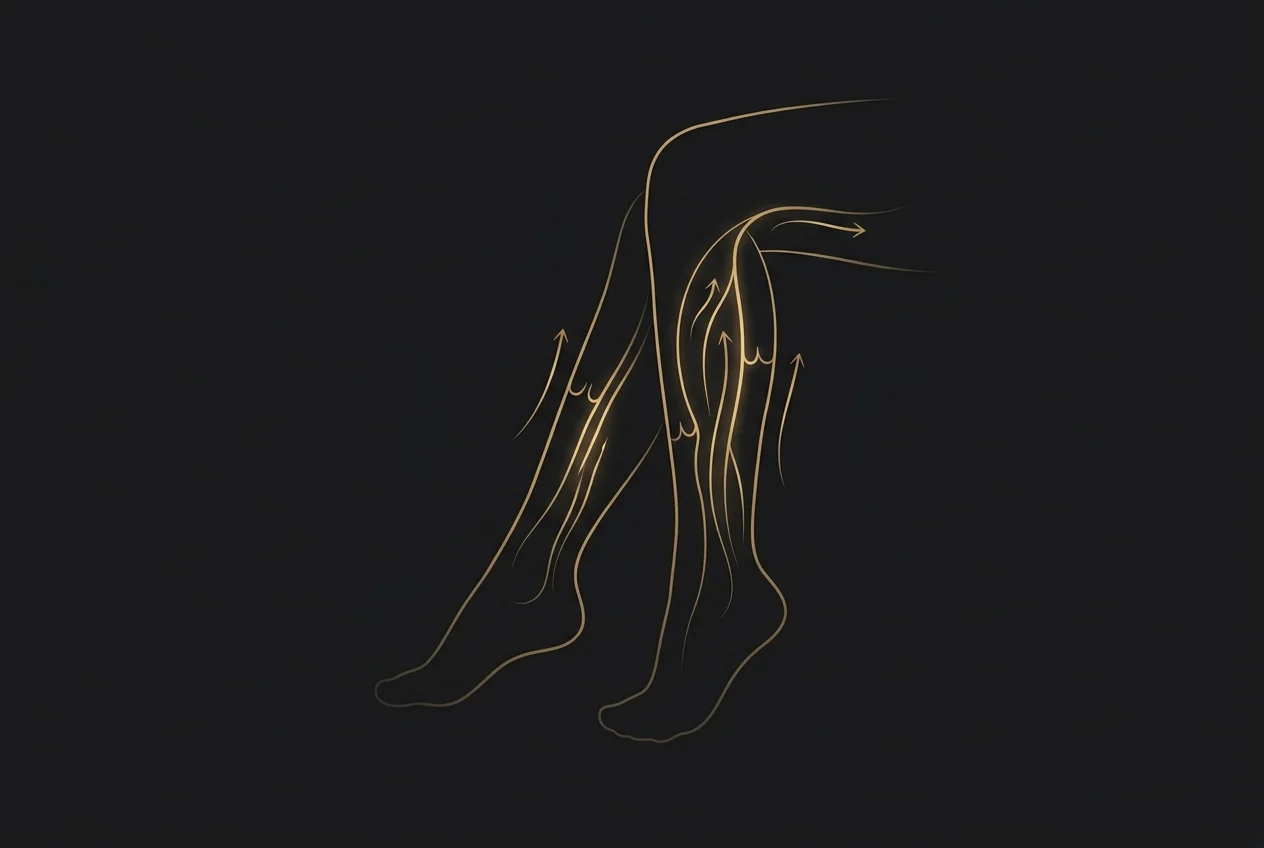
Varicose veins are dilated and tortuous superficial veins that appear when the valves inside them stop working correctly, hindering the return of blood to the heart. As a consequence, blood accumulates in the legs, increasing the pressure inside the veins and favouring their dilation.
Varicose veins are a manifestation of chronic venous insufficiency, a very frequent disease that especially affects the lower limbs. In addition to their aesthetic impact, they can produce significant discomfort and, in some cases, complications if they are not treated properly.
Why do they appear?
Veins contain small valves that prevent blood from flowing backwards due to gravity. When these valves deteriorate, blood accumulates in the veins, progressively increasing their size.
The main risk factors are:
- Family history.
- Age.
- Female sex.
- Pregnancy.
- Obesity.
- Standing or sitting for many hours.
- Sedentary lifestyle.
- Hormonal changes.
- Previous venous thrombosis.
Genetic predisposition is one of the most important factors.
What are the symptoms?
Many people present only an aesthetic problem. However, the following can also appear:
- Sensation of heaviness in the legs.
- Pain or discomfort.
- Tiredness at the end of the day.
- Swelling of the ankles.
- Night cramps.
- Itching.
- Sensation of heat or burning.
- Worsening after standing for a long time.
The symptoms usually improve when walking or elevating the legs.
What complications can they produce?
Although most evolve slowly, the following can appear:
- Persistent oedema.
- Changes in skin colour.
- Venous stasis dermatitis.
- Lipodermatosclerosis.
- Venous ulcers.
- Bleeding from the rupture of a varicose vein.
- Superficial thrombophlebitis.
These complications require medical evaluation.
How is the diagnosis made?
The diagnosis begins with the clinical examination. The doctor will assess the distribution of the varicose veins, the presence of oedema, changes in the skin, personal history and symptoms.
Doppler ultrasound. Venous Doppler ultrasound is the test of choice. It makes it possible to know which veins are affected, the functioning of the valves, the direction of the blood flow and the existence of thrombosis. This information is fundamental before considering a treatment.
What treatments exist?
Treatment depends on the severity and the symptoms.
General measures. It is recommended to walk daily, maintain a healthy weight, avoid remaining immobile for many hours, elevate the legs when possible and practise physical exercise regularly.
Compression stockings. Compression stockings help to improve venous return, decrease swelling and reduce the sensation of heaviness. They must be used with the appropriate compression indicated by a professional.
Medical treatments. In some patients, venotonic medications can be used to relieve the symptoms, although they do not eliminate the varicose veins.
Sclerotherapy. Small varicose veins and some reticular veins can be treated by sclerotherapy, injecting a substance that closes the vein. Sclerosing foam can also be used in certain cases.
Endovenous thermal treatments. They currently constitute one of the reference treatments for many varicose veins. They include endovenous laser and radiofrequency. They are performed in a minimally invasive way and allow a rapid recovery.
Surgery. In some patients it remains the best option. The techniques used will depend on the type of venous insufficiency and the anatomy of each patient.
What can you do in your daily life?
Walk frequently, avoid crossing your legs for a long time, control your weight, use comfortable footwear, avoid prolonged intense heat (saunas, very hot baths), moisturise the skin if there is dryness and wear compression stockings if they have been prescribed.
When should you consult?
Request a medical evaluation if the varicose veins produce significant pain, if a leg swells greatly and suddenly, if you observe redness and hardening over a vein, if bleeding occurs, if an ulcer appears, if there is a significant change in skin colour or if the symptoms worsen progressively.
If a leg swells suddenly and is accompanied by intense pain or difficulty breathing, you must go to an emergency service to rule out a deep vein thrombosis.
Myths and facts
- Myth: Varicose veins are only an aesthetic problem. Fact: They can also produce symptoms and complications if they progress.
- Myth: Crossing the legs causes varicose veins. Fact: There is no evidence that crossing the legs is a direct cause.
- Myth: Creams eliminate varicose veins. Fact: Creams can relieve some discomfort, but they do not make dilated veins disappear.
- Myth: After treatment they never come back. Fact: Treatment eliminates the diseased veins, but new varicose veins can appear over time.
- Myth: Only older people have varicose veins. Fact: They can appear even in young adults, especially when there is a genetic predisposition.
The essential points to remember
- Varicose veins are a manifestation of chronic venous insufficiency.
- They are produced by a malfunction of the venous valves.
- They can cause heaviness, pain, oedema and changes in the skin.
- Doppler ultrasound is the most important test to plan the treatment.
- There are effective treatments such as sclerotherapy, endovenous laser, radiofrequency and surgery.
- Maintaining an active lifestyle helps to relieve the symptoms and prevent their progression.
Frequently asked questions
Do varicose veins disappear on their own?
No. They generally evolve slowly if they are not treated.
Is exercise recommended?
Yes. Walking, swimming or cycling favour venous return.
Does pregnancy favour varicose veins?
Yes. Hormonal changes and the increase in pressure in the veins increase the risk.
Do stockings cure varicose veins?
No. They improve the symptoms and help to prevent progression, but they do not eliminate veins that are already dilated.
Can I sunbathe?
Yes, although intense heat can increase the sensation of heaviness and swelling.
Does sclerotherapy hurt?
It generally produces mild discomfort and is performed on an outpatient basis.
Can varicose veins bleed?
Yes. A superficial varicose vein can rupture after a small trauma.
Which specialist treats varicose veins?
Usually the specialist in angiology and vascular surgery, although doctors specialised in skin health also perform treatments such as sclerotherapy of certain superficial venous lesions.
Are spider veins the same as varicose veins?
No. Spider veins (telangiectasias) are much smaller and more superficial vessels.
Do they have a good prognosis?
Yes. With appropriate treatment and healthy habits, most patients achieve excellent control of the symptoms and a significant improvement in their quality of life.
Need personalised guidance?
This guide is for information only and does not replace a medical consultation. For an assessment tailored to your case, you may request a consultation.
Request a consultation