Facial sagging
Loss of facial firmness and treatments to recover it

Facial sagging is a consequence of the loss of collagen, elastin and tissue support. Learn about its causes, how to prevent it and the medical treatments available to improve firmness and maintain a natural appearance.
What is facial sagging?
Facial sagging is the progressive loss of firmness and tension of the skin and of the tissues of the face. As a consequence, the face loses definition, drooping appears and the facial contours become less defined.
It is part of natural aging, although its intensity varies greatly from one person to another.
There are currently numerous medical treatments that make it possible to improve sagging progressively and naturally, without modifying the identity of the face.
Why does it appear?
Sagging is the result of several processes that occur simultaneously over time.
Decrease in collagen. From 25-30 years of age, a progressive reduction in the production of collagen begins. As a consequence, the skin loses firmness, the resistance of the tissues decreases and the support capacity is reduced.
Loss of elastin. Elastin provides elasticity to the skin. With age, its quantity and quality decrease, favouring the drooping of the tissues.
Changes in facial fat. Aging modifies the distribution of the fat compartments of the face. Some areas lose volume while others descend due to the effect of gravity.
Bone remodelling. Over the years, some bones of the face also change slowly, decreasing the support of the soft tissues.
External factors. Sagging can be accelerated by accumulated sun exposure, tobacco, pollution, stress, hormonal changes, significant weight loss, inadequate diet and lack of sleep.
Which areas are usually affected?
The areas where sagging is most evident are the cheeks, the jawline, the neck, the submental region, the cheekbones, the contour of the mouth and the eyelids.
The most frequent signs include the loss of the facial oval, the appearance of jowls, the descent of the cheeks, more marked furrows and a tired appearance.
Who is at greater risk?
Sagging can appear earlier in people with intense sun exposure, repeated weight loss, smoking, menopause, genetic predisposition or significant photodamage.
It can also be observed in young people after significant weight loss.
How is it diagnosed?
The diagnosis is based on a personalised medical assessment. The specialist will analyse the quality of the skin, the elasticity, the distribution of the facial volume, the muscular activity, the proportions of the face, the degree of aging and the expectations of the patient.
Sagging does not depend only on the skin; the fatty tissue, the ligaments and the bone structure also intervene.
What treatments exist?
The treatment will depend on the degree of sagging and on the characteristics of each patient. In many cases the best result is obtained by combining different techniques.
Collagen biostimulators. They constitute one of the fundamental treatments for initial and moderate sagging. They stimulate the natural production of collagen and progressively improve firmness, elasticity and the quality of the skin. The results appear gradually over several months.
Polynucleotides. They favour cellular regeneration and improve the quality of the skin tissue. They are especially useful when the skin presents a loss of elasticity.
Skinboosters. They improve deep hydration and the quality of the skin, although they do not replace the treatments intended to restore firmness.
Hyaluronic acid. It can be used to recover certain facial support points when there is a loss of volume. The objective is not to fill excessively, but to restore facial harmony.
Neuromodulators. In some patients they help to balance certain muscular forces that favour the descent of the tissues. Their indication depends on each case.
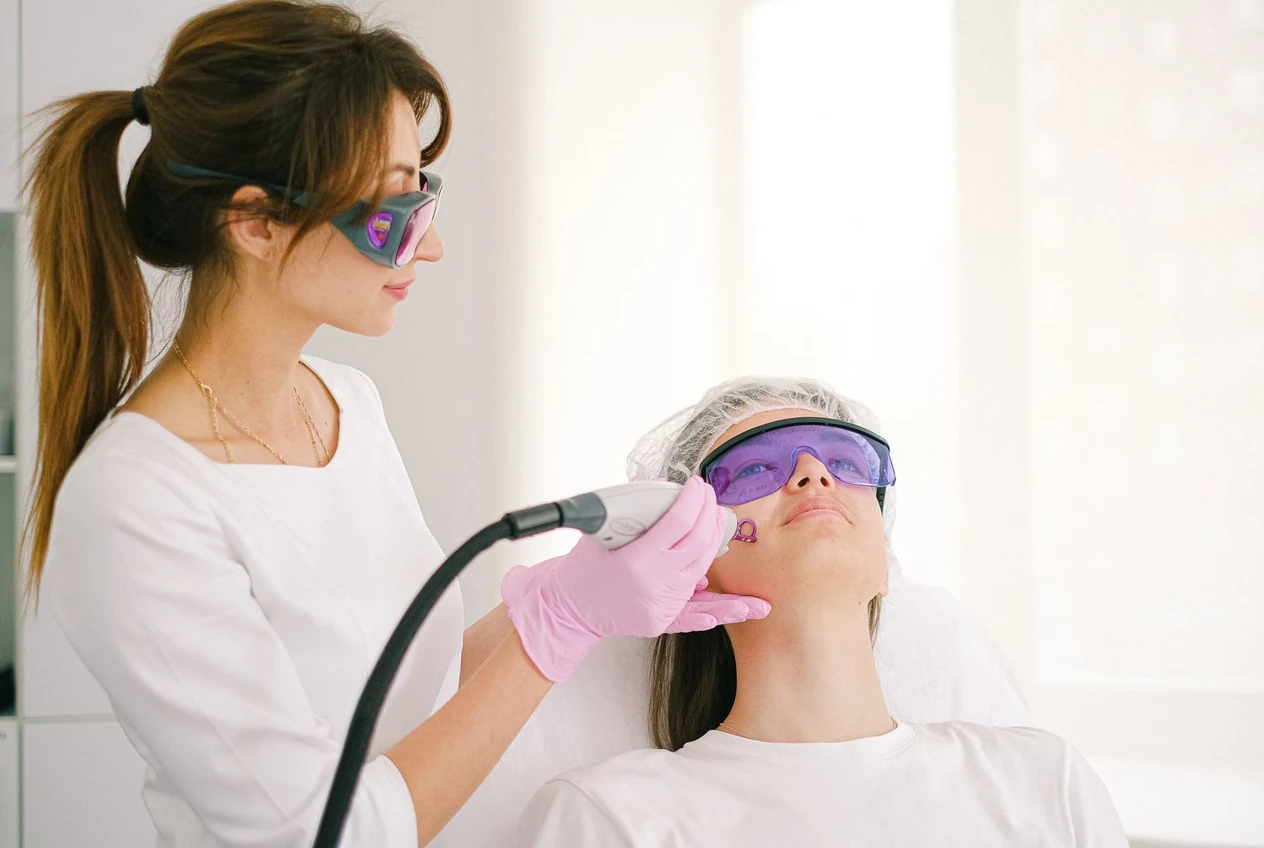
Fractional lasers. They stimulate the formation of new collagen and improve the quality of the skin. They can be combined with other regenerative treatments.
Radiofrequency and focused ultrasound. In selected patients they can contribute to stimulating the formation of collagen and improving firmness progressively. The indication must be individualised.
Microneedling. It favours dermal remodelling and can be combined with regenerative active ingredients.
Surgery. When the sagging is very advanced, the facelift continues to be the most effective treatment to reposition the tissues. Medical treatments do not replace surgery when there is a significant excess of skin.
What results can be expected?
The current objectives are to improve firmness, to partially recover the facial oval, to achieve a rested appearance, to maintain naturalness and to delay the progression of aging.
The results are usually progressive and require maintenance.
What can you do to prevent it?
Although it cannot be completely avoided, sagging can be delayed through daily sun protection, a balanced diet, regular physical exercise, not smoking, sleeping adequately, maintaining a stable weight and taking care of the quality of the skin with an adapted cosmetic routine.
When to consult?
It is advisable to consult when the definition of the face begins to be lost, when sagging appears on the jaw or the neck, when you observe a descent of the cheeks, when you want to prevent aging before it is very evident or when you are looking for a natural and personalised treatment.
A medical assessment will make it possible to determine which structures are involved and what the most appropriate strategy is.
Myths and facts
- Myth: Sagging only affects the skin. Fact: Facial fat, ligaments, muscles and bone support also intervene.
- Myth: All patients need fillers. Fact: No. In many cases the main problem is the loss of collagen and not the lack of volume.
- Myth: A single treatment eliminates all sagging. Fact: A better result is usually obtained by combining different techniques.
- Myth: It only appears at advanced ages. Fact: It can begin to be noticed from 30-40 years of age, depending on genetics and lifestyle.
- Myth: Aesthetic medicine can always replace surgery. Fact: When the sagging is very significant, surgery remains the most effective option.
The essential points to remember
- Facial sagging is part of natural aging and affects the skin and the deep structures of the face.
- The loss of collagen is one of the main responsible mechanisms.
- Prevention begins with photoprotection and a healthy lifestyle.
- Regenerative treatments make it possible to improve firmness progressively and naturally.
- In many cases the combination of techniques offers better results.
- Surgery continues to be the most effective option when there is very advanced sagging.
Frequently asked questions
At what age does sagging begin?
There is no fixed age. In many people it begins to become visible between 35 and 45 years of age.
Can weight loss increase sagging?
Yes. Significant weight loss can favour the drooping of the tissues.
Does sagging also affect the neck?
Yes. The neck is often one of the first areas where it becomes evident.
Do biostimulators produce volume?
No. Their main objective is to stimulate the production of collagen and improve the firmness of the skin.
Are the results immediate?
No. Most regenerative treatments act progressively.
Do men also present facial sagging?
Yes. Although the male anatomy is different, aging affects both sexes.
Can it be prevented?
Not completely, but it can be delayed significantly with healthy habits and preventive treatments.
Will I need several sessions?
It will depend on the chosen treatment and on the degree of sagging.
Can it be combined with other procedures?
Yes. It is frequent to combine biostimulators, lasers, skinboosters and other treatments to obtain more complete results.
Can a natural result be achieved?
Yes. The objective is to recover firmness while always respecting facial expression and identity.
Need personalised guidance?
This guide is for information only and does not replace a medical consultation. For an assessment tailored to your case, you may request a consultation.
Request a consultation