Seborrhoeic keratoses are very common benign lesions that appear with skin ageing. Learn about their causes, how to distinguish them from other lesions and the treatments available when they cause discomfort or for aesthetic reasons.
What are seborrhoeic keratoses?
Seborrhoeic keratoses are benign skin tumours, extremely common, that appear over the years.
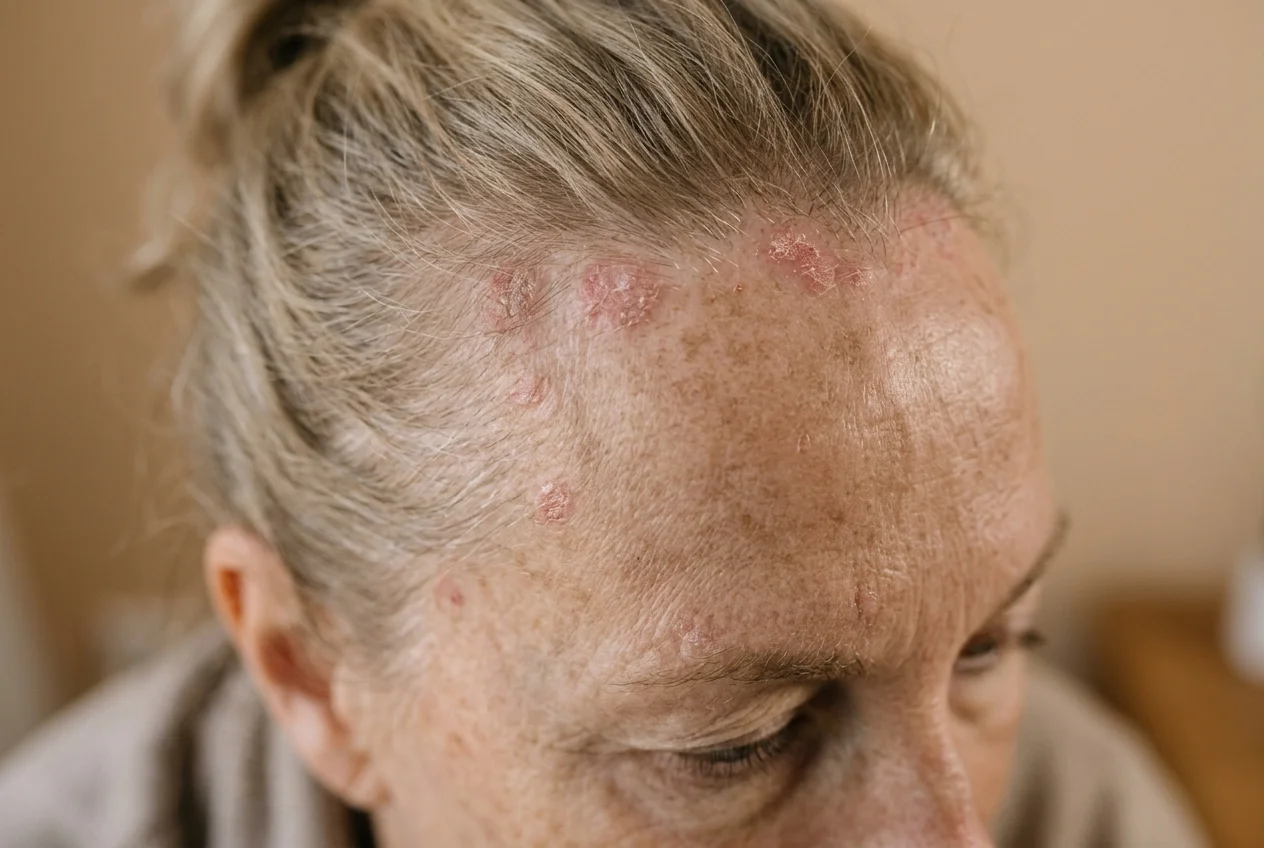
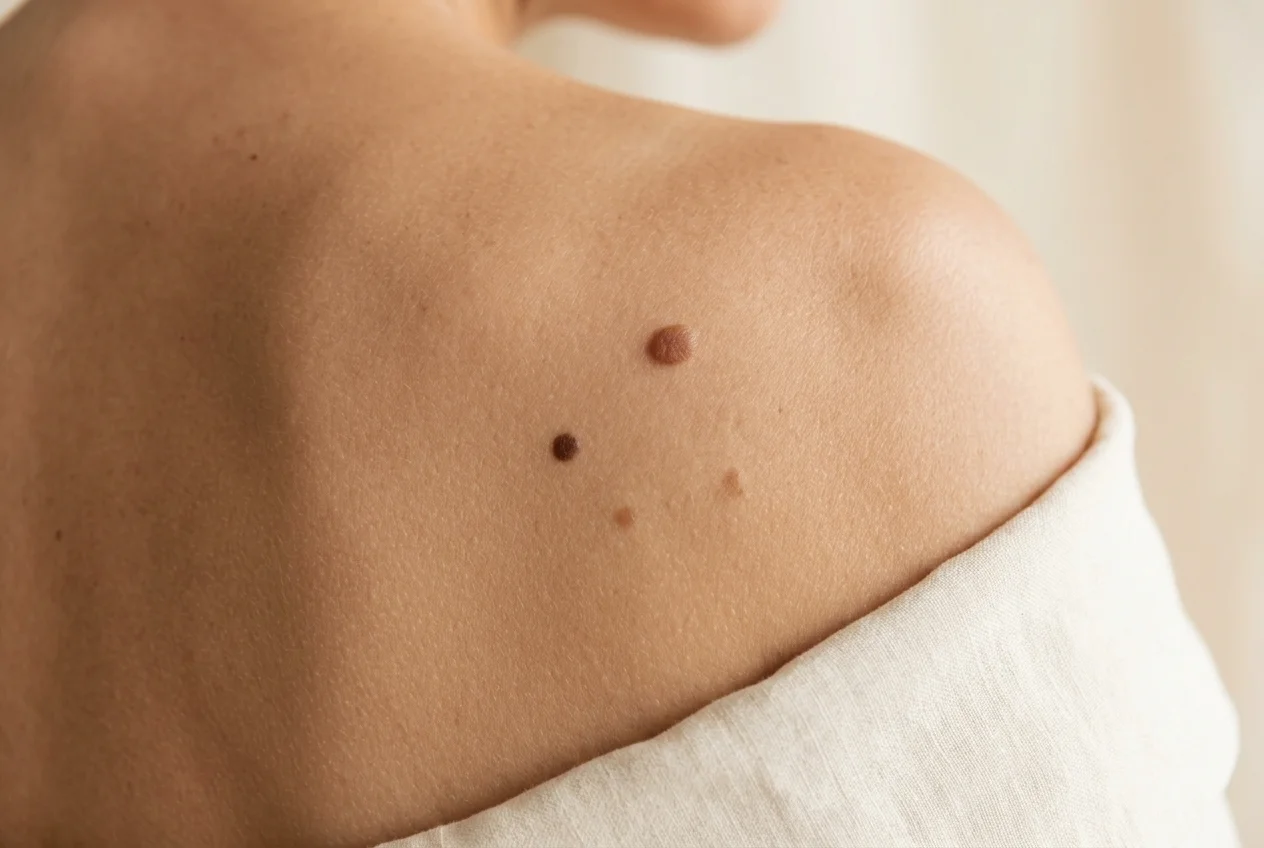
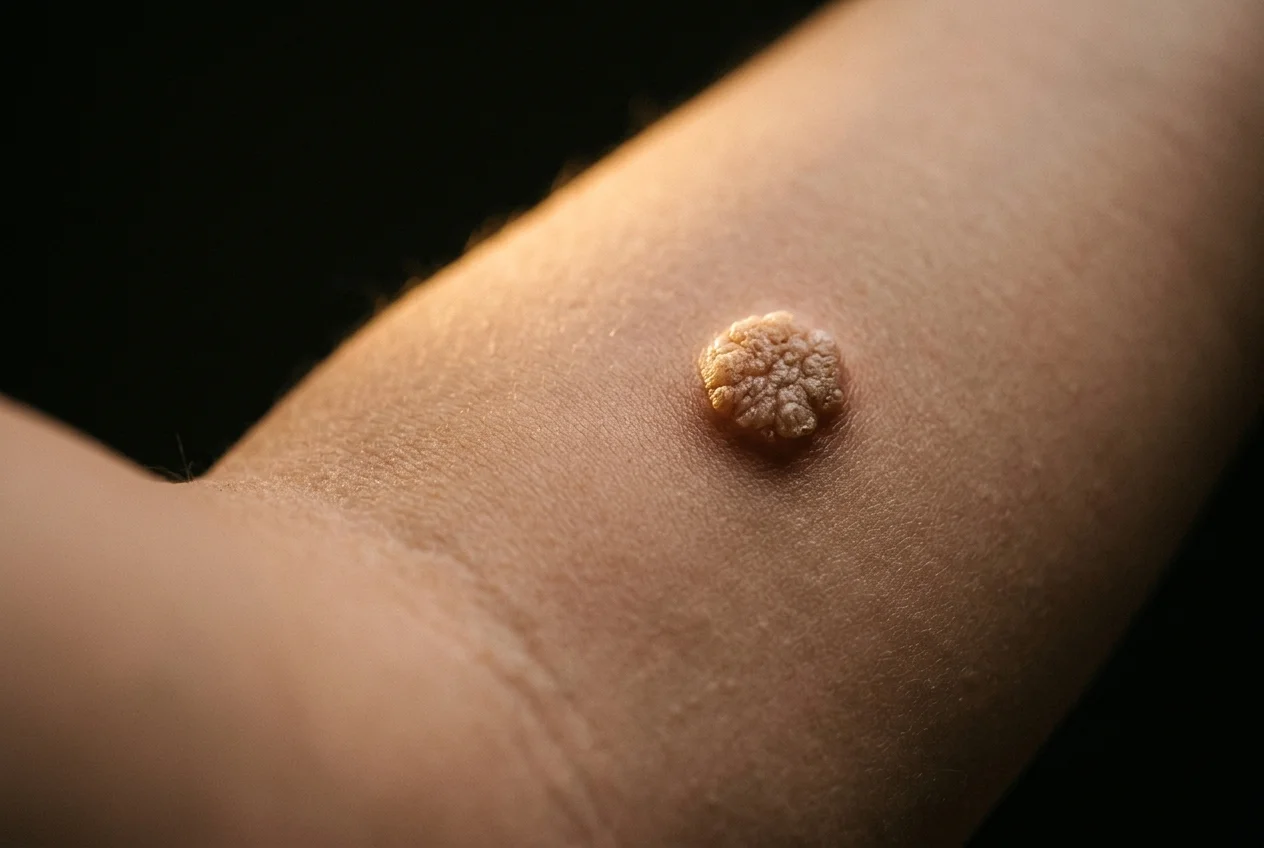
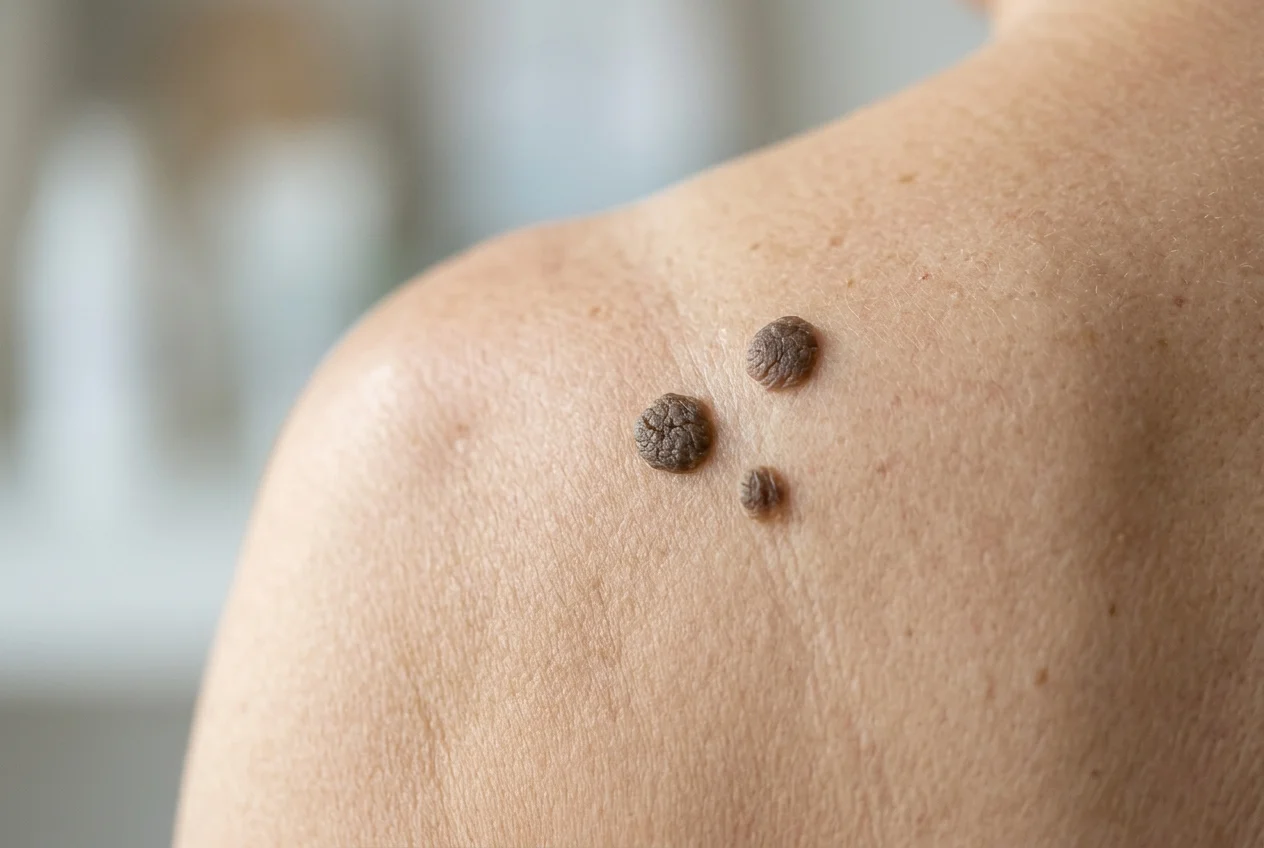
They present as raised lesions of light brown, dark brown or black colour, with a characteristic appearance of being «stuck on» the skin.
Although many people confuse them with moles or even with skin cancer, seborrhoeic keratoses are not a cancer and do not turn into cancer.
They can appear in isolation or in large numbers, especially from the age of 40 or 50.
The most common locations are: the face, scalp, neck, back, chest and abdomen. They do not usually appear on the palms of the hands or the soles of the feet.
Why do they appear?
This is one of the most frequent questions in consultation. The answer is that seborrhoeic keratoses appear mainly due to the natural ageing of the skin and genetic predisposition.
Unlike other pigmented lesions, the sun is not the main cause, although it can favour their appearance in some people.
Why do they appear with age? Over the years, some cells of the most superficial layer of the skin begin to multiply in a benign way, giving rise to these lesions.
Why do some people have many? There is a significant family predisposition. It is common for several members of the same family to develop numerous seborrhoeic keratoses.
Why do new ones keep appearing? Because they are part of the natural process of skin ageing. Removing one lesion does not prevent others, different, from appearing over time.
Why do some change colour? They can darken progressively due to the accumulation of keratin and pigment, without this necessarily meaning that there is a problem. However, any striking change should be assessed by a doctor.
What are the symptoms?
Seborrhoeic keratoses have very typical characteristics:
- Slightly raised or very prominent lesions.
- An appearance of being adhered or «stuck on» the skin.
- A rough, warty or waxy surface.
- Light brown, dark brown, black or even skin-coloured colour.
- A very variable size, from a few millimetres to several centimetres.
They generally do not cause discomfort. However, some can itch, become irritated by friction, become inflamed or bleed if they are accidentally traumatised.
How is it diagnosed?
In most cases, diagnosis is made through clinical examination. The doctor will use a dermatoscope, which allows the typical characteristics of these lesions to be identified.
It is important to differentiate them from moles (nevi), melanoma, actinic keratoses and pigmented basal cell carcinoma.
In doubtful cases a biopsy may be necessary.
What treatments are available?
One of the most usual questions is: «Is it necessary to remove them?» The answer is: not always. As they are benign lesions, removal is only recommended when they: cause discomfort from friction, bleed repeatedly, become irritated frequently, cause an aesthetic problem or when there is diagnostic doubt.
The main options are:
Cryotherapy
It consists of applying liquid nitrogen to destroy small or superficial lesions.
Curettage
The lesion is removed with a specific instrument after local anaesthesia. It is one of the most used treatments.
Electrocoagulation
It makes it possible to remove the lesion using high-frequency electric current.
Laser
In some cases it can be used with excellent aesthetic results.
Surgical excision
It is reserved only for atypical lesions or when there is diagnostic suspicion.
Will they come back? The treated lesion usually does not reappear. However, new seborrhoeic keratoses can appear in other areas of the skin, since the predisposition continues to exist.
What can you do day to day?
Seborrhoeic keratoses do not require special care. It is recommended to:
- Not pull them off.
- Avoid manipulating them.
- Consult if a lesion changes rapidly.
- Maintain medical check-ups when there are numerous pigmented lesions.
Although the sun is not their main cause, adequate photoprotection is always advisable to maintain skin health.
When should you seek prompt medical advice?
Seek medical assessment if a lesion:
- Rapidly changes in size.
- Has several different colours.
- Bleeds without trauma.
- Ulcerates.
- Has very irregular borders.
- A new lesion appears with an appearance very different from the rest.
In these cases it is important to confirm that it really is a seborrhoeic keratosis and not another lesion.
Myths and facts
- Myth: Seborrhoeic keratoses are a type of cancer. Fact: No. They are completely benign lesions.
- Myth: They must always be removed. Fact: Only when they cause discomfort, there is an aesthetic indication or there are doubts about the diagnosis.
- Myth: They are contagious. Fact: No. They cannot be transmitted to other people.
- Myth: If I remove them, they will stop appearing. Fact: You may continue to develop new lesions due to genetic predisposition and skin ageing.
- Myth: All raised brown spots are seborrhoeic keratoses. Fact: No. Some lesions may correspond to other diseases and should be evaluated by a doctor.
The key points to remember
- Seborrhoeic keratoses are very common benign tumours.
- They are not a cancer and do not evolve into skin cancer.
- They usually appear with age and there is a significant genetic predisposition.
- They do not need treatment unless they cause discomfort, an aesthetic problem or there is diagnostic doubt.
- There are simple and very effective treatments to remove them.
- Any lesion that rapidly changes in appearance should be evaluated by a doctor.
Frequently asked questions
Are seborrhoeic keratoses dangerous?
No. They are benign lesions.
Can they turn into cancer?
No. They do not turn into skin cancer.
Are they hereditary?
There is a significant genetic and family predisposition.
Why do I have so many?
It is common for multiple lesions to appear over the years.
Is it normal for them to itch?
Yes. Some can become irritated or cause itching, especially if they rub against clothing.
Can they come back?
The removed lesion usually disappears definitively, but new lesions can appear in other areas.
Does treatment leave a scar?
The aesthetic result is generally very good, although it depends on the size of the lesion and the treatment used.
Should I remove them for prevention?
No. As they are benign, it is not necessary to remove them if they do not cause discomfort.
How do I know if it really is a seborrhoeic keratosis?
Only a medical examination allows it to be confirmed with certainty.
Can I lead a normal life?
Yes. These lesions do not limit daily activity nor represent a health risk.
Need personalised guidance?
This guide is for information only and does not replace a medical consultation. For an assessment tailored to your case, you may request a consultation.
Request a consultationTopics